مقدمة
غالبًا ما توصف البلمرة بأنها تفاعل كيميائي، إلا أن نجاح الإنتاج الصناعي يعتمد على عوامل تتجاوز بكثير حركيات التفاعل. فمع زيادة معدل التحويل ونمو سلاسل البوليمر، تظهر ظواهر النقل — بما في ذلك انتقال الحرارة، وانتقال الكتلة،, توزيع زمن البقاء (RTD), ، وسلوك التدفق — تصبح تدريجيًّا العوامل المهيمنة التي تحدد جودة المنتج، واستقرار العملية، وإنتاجية المصنع. وفي العديد من عمليات البلمرة التجارية، تحدد هذه القيود الهندسية في نهاية المطاف ما إذا كان من الممكن توسيع نطاق تركيبة معملية بنجاح لتصبح عملية تصنيع موثوقة.
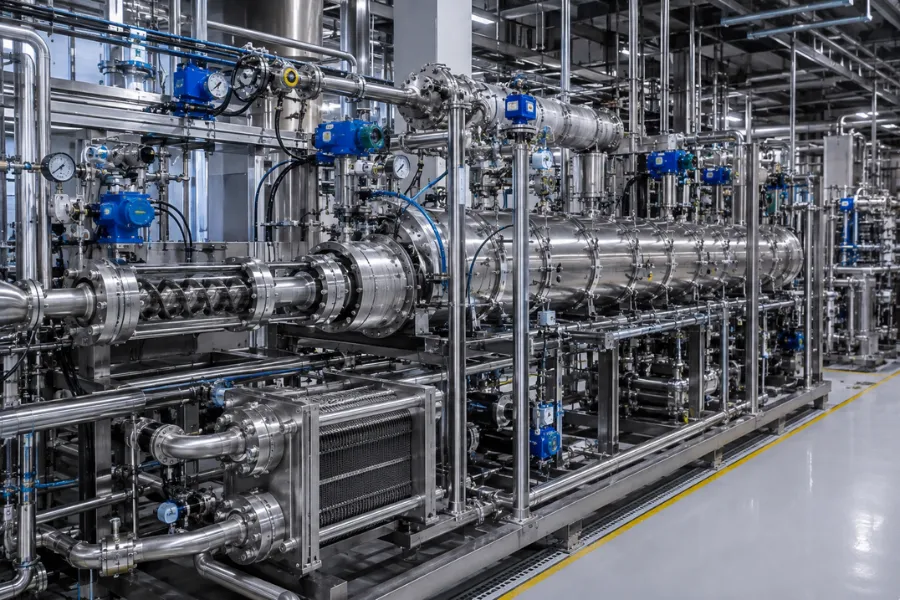
ويتجلى هذا التحدي بشكل خاص في الأنظمة شديدة الإطلاق الحراري، مثل البلمرة الجذرية الحرة المستخدمة في تصنيع LDPE، PVC، PS، PMMA، PVAc، وSBR. مع ارتفاع تركيز البوليمر، تزداد اللزوجة بسرعة، ويتباطأ الانتشار الجزيئي، وتزداد صعوبة إزالة الحرارة تدريجيًّا. قد تؤدي التدرجات المحلية في درجة الحرارة إلى تسريع حركية التفاعل، في حين أن قيود الانتشار واتساع نطاق التدرج الحراري (RTD) يمكن أن يغيرا توزيع الوزن الجزيئي، وسلوك التفرع، والبنية المجهرية للبوليمر. وأثناء التوسع إلى النطاق التجاري، تصبح هذه التأثيرات أكثر وضوحًا لأن حجم المفاعل يزداد بوتيرة أسرع من مساحة سطح نقل الحرارة المتاحة، مما يجعل إدارة الحرارة أحد العوائق الهندسية الرئيسية.
على مدى عقود، ركزت عملية تحسين العمليات بشكل أساسي على المفاعلات الأكبر حجمًا أو على زيادة قوة التحريك. أما في العصر الحديث، هندسة تفاعلات البوليمرات, ، ومع ذلك، فقد تحول الاتجاه نحو تكثيف العملية—استراتيجية متكاملة تهدف إلى تحسين كفاءة النقل بدلاً من الاكتفاء بزيادة حجم المعدات. وبدلاً من التعامل مع عملية الخلط كعملية منفصلة، فإن تكثيف العمليات يجمع بين تصميم المفاعل،, الخلط التفاعلي, ، وتحسين نقل الحرارة، وتحسين التدفق، والمعالجة المستمرة للحفاظ على بيئات تفاعل مستقرة طوال عملية إنتاج البوليمرات.
تُعد الخلاطات الثابتة من بين أكثر تقنيات تكثيف العمليات نضجًا وانتشارًا. وعلى الرغم من تصنيفها غالبًا على أنها خلاطات ثابتة أما بالنسبة للمزج المباشر، فإن قيمتها الصناعية تتجاوز بكثير مجرد تجانس السوائل. فمن خلال إعادة توزيع المواد المتدفقة بشكل مستمر، وتحسين النقل الشعاعي، وتعزيز التبادل الحراري، وتقليص توزيع زمن البقاء، تساعد الخلاطات الثابتة في التغلب على العديد من قيود النقل التي تظهر أثناء عملية البلمرة.
والأهم من ذلك، لا ينبغي النظر إلى الخلاطات الثابتة على أنها معدات قائمة بذاتها. فمصانع البوليمرات الحديثة غالبًا ما تدمجها مع المفاعلات الأنبوبية، والمفاعلات الحلقية، والمفاعلات الدقيقة، وأنظمة البثق التفاعلي، والمبادلات الحرارية المتطورة، وتقنيات المراقبة في الوقت الفعلي مثل التصميم بمساعدة CFD و تكنولوجيا التحليل العملي (PAT). وتشكل هذه التقنيات مجتمعة حلاً هندسيًّا شاملاً يضمن تشغيلًا أكثر أمانًا، واتساقًا أعلى في المنتجات، ونشرًا تجاريًّا أكثر موثوقية.
تستكشف هذه المقالة الأسباب التي تجعل عملية البلمرة تتحول بسرعة إلى تحدٍ هندسي يتجاوز مجرد عملية الخلط البسيطة، وكيف تعالج تقنية تكثيف العمليات هذه القيود، ولماذا أصبحت الخلاطات الثابتة مكونًا أساسيًّا في صناعة البوليمرات الحديثة، بدلاً من أن تكون مجرد جهاز خلط مدمج في خط الإنتاج.
لماذا أصبحت عملية البلمرة تحديًا هندسيًّا يتجاوز مجرد عملية الخلط
تبدأ العديد من المناقشات حول معدات البلمرة بموضوع كفاءة الخلط. لكن في الواقع الصناعي، نادرًا ما يكون الخلط غير الكافي السبب الجذري لقيود العملية. فمع تقدم عملية البلمرة، تصبح حركيات التفاعل مرتبطة بشكل متزايد بظواهر النقل، مما يتطلب من المهندسين التحكم في الوقت نفسه في درجة الحرارة واللزوجة والانتشار وتوزيع التدفق ووقت البقاء، بدلاً من الاكتفاء بتحسين معلمة تشغيل واحدة.
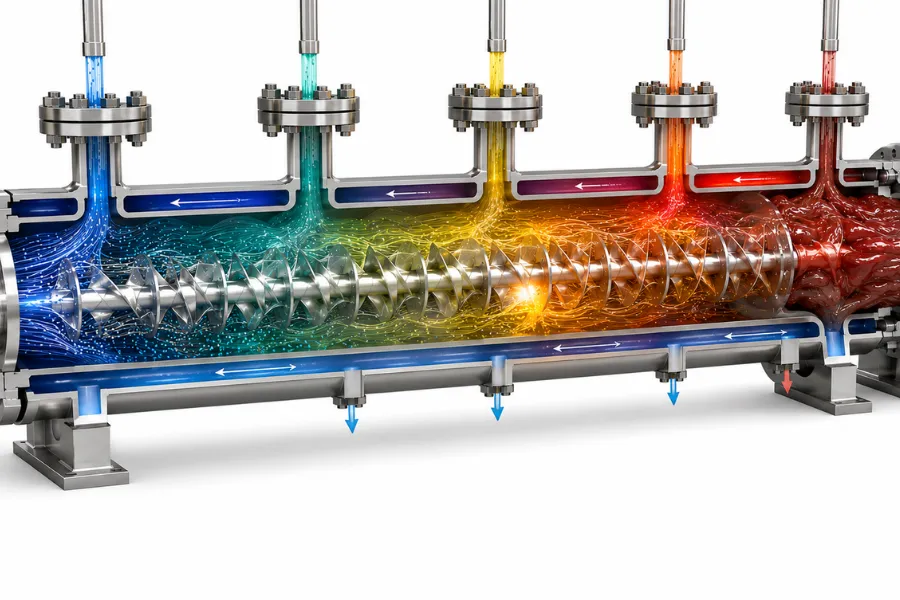
يُعد توليد الحرارة عادةً التحدي الرئيسي الأول. فمعظم تفاعلات البلمرة هي تفاعلات طاردة للحرارة بدرجة كبيرة، وتتسارع معدلات إطلاق الحرارة مع زيادة نسبة التحويل. وعندما لا تتمكن عملية التبريد من مواكبة حركية التفاعل، تؤدي الزيادات الموضعية في درجة الحرارة إلى تسريع عملية البلمرة بشكل أكبر، مما يؤدي إلى تكوين حلقة تغذية مرتدة إيجابية. وفي البلمرة الجذرية الحرة، ترتبط هذه الظاهرة عادةً بـ تأثير الهلام (تأثير ترومسدورف), ، حيث تؤدي انخفاض حركة السلسلة إلى تثبيط تفاعلات الإنهاء، وزيادة تركيز الجذور الحرة، وتسريع عملية البلمرة بشكل كبير. وبدون إدارة حرارية مناسبة، قد تؤدي هذه الظروف إلى تباين في الوزن الجزيئي، أو تدهور البوليمر، أو حتى حدوث اندفاع حراري.
وفي الوقت نفسه، تؤدي زيادة اللزوجة إلى تغيير جذري في الديناميكا الهيدروليكية للمفاعل. فاللزوجة الأعلى تضعف الحمل الحراري، وتبطئ الانتشار، وتقلل من فعالية عمليات التقليب التقليدية. وحتى المفاعلات المصممة جيدًا قد تظهر فيها تدرجات محلية في درجة الحرارة أو اختلافات في التركيز، مما يتسبب في اختلاف مسار التفاعل في مناطق مختلفة من المفاعل.
يطرح توزيع زمن البقاء تحديًا هندسيًّا آخر. فالتوزيع الواسع لزمن البقاء يعني أن أجزاءً من المادة المتفاعلة تبقى داخل المفاعل لفترات زمنية تختلف بشكل كبير. ونظرًا لأن الوزن الجزيئي والتفرع والتحويل تستمر في التغير طوال فترة البقاء، فإن التوسع المفرط في توزيع وقت البقاء يؤدي إلى توزيعات أوسع للوزن الجزيئي وخصائص بوليمر أقل اتساقًا. ويعد هذا الأمر بالغ الأهمية بشكل خاص في عملية البلمرة المستمرة، حيث تعتمد جودة المنتج على الحفاظ على سجلات حرارية وتفاعلية متطابقة تقريبًا لكل عنصر من عناصر المادة.
تصبح قيود انتقال الكتلة ذات أهمية مماثلة مع ارتفاع اللزوجة. وقد لا تتوزع المبادرات، والمحفزات، والمونومرات المشاركة، والمواد المضافة بشكل متجانس قبل حدوث تفاعل ملحوظ. ضعف الخلط الدقيق يمكن أن يؤدي ذلك إلى حدوث رد فعل مبالغ فيه في مناطق محددة، أو انحراف في التركيب، أو تفرع غير متساوٍ، في حين أن عدم كفاية النقل الشعاعي يزيد من تفاقم هذه الاختلافات خلال مرحلة الإنتاج التجاري.
تفسر هذه القيود المترابطة على عمليات النقل سبب عدم إمكانية تحقيق البلمرة الناجحة بمجرد زيادة شدة التحريك. وبدلاً من ذلك، يسعى المهندسون إلى تحسين كفاءة النقل الإجمالية — من خلال تحقيق التوازن بين نقل الحرارة، ونقل الكتلة، ومعدل التغير في درجة الحرارة (RTD)، وانخفاض الضغط، وإدارة اللزوجة طوال العملية.
| التحدي الهندسي | نتيجة صناعية نموذجية |
|---|---|
| عدم كفاية التبريد | النقاط الساخنة، خطر الانفلات الحراري، تدهور البوليمر |
| زيادة اللزوجة | انخفاض كفاءة انتقال الحرارة والكتلة |
| توزيع واسع لوقت البقاء | توزيع أوسع للوزن الجزيئي وتفاوت في جودة البوليمر |
| ضعف عملية الخلط الدقيق | التوزيع غير المتساوي للمُحفِّز أو المُحفِّز الكيميائي، والتفاعلات الجانبية |
| قيود الانتشار | انخفاض كفاءة التحويل عند ارتفاع نسبة المواد الصلبة |
| التلوث والترسبات على الجدران | انخفاض معامل نقل الحرارة وعدم استقرار التشغيل على المدى الطويل |
وتزداد أهمية هذه التحديات الهندسية بشكل أكبر أثناء التوسع الصناعي. فالمفاعلات المختبرية غالبًا ما تحافظ على تحكم حراري ممتاز بفضل النسبة العالية بين المساحة السطحية والحجم، لكن المفاعلات التجارية تتصرف بشكل مختلف تمامًا. فالمعدات الأكبر حجمًا تكون أكثر عرضة للتدرجات الحرارية، والمناطق الميتة، والتلوث، وتوسع نطاق مقاييس درجة الحرارة المقاومة (RTD)، مما يجعل إزالة الاختناقات في العمليات وتحسين النقل جزءان أساسيان من التكامل الهندسي بدلاً من تحسينات اختيارية في العمليات.
نظرة ثاقبة على القطاع الصناعي
تجاري LDPE ويُجسِّد الإنتاج هذا التحدي جيدًا. فمع زيادة معدل التحويل، ترتفع اللزوجة بسرعة بينما يتسارع توليد الحرارة، مما يجعل التحكم الحراري أكثر أهمية بكثير من مجرد زيادة قوة التحريك. لذلك تعتمد مصانع البوليمرات الحديثة على استراتيجيات متكاملة لتكثيف العمليات — بما في ذلك التكوين المُحسّن للمفاعلات، وأنظمة نقل الحرارة المحسّنة، والخلاطات الثابتة — لتثبيت ظواهر النقل قبل التركيز على معدلات إنتاج أعلى. ويشكل هذا النهج الذي يضع الهندسة في المقام الأول الأساس لنجاح التحقق من صحة العمليات, ، والتوسع من المرحلة التجريبية إلى النطاق التجاري، وموثوقية الإنتاج على المدى الطويل.
تكثيف العمليات: استراتيجية أوسع نطاقًا من الخلط الثابت
غالبًا ما يُنظر إلى الخلاطات الثابتة على أنها أجهزة خلط قائمة بذاتها، لكن هذه النظرة تتجاهل قيمتها الهندسية الحقيقية. ففي مجال تصنيع البوليمرات الحديث، لا تمثل هذه الخلاطات سوى عنصر واحد ضمن نظام أوسع بكثير تكثيف العمليات (PI) الاستراتيجية. لا يقتصر هدف «PI» على تحسين عملية المزج فحسب، بل يمتد إلى إعادة تصميم عمليات النقل بحيث تظل حركية التفاعل، ونقل الحرارة، ونقل الكتلة، وسلوك التدفق متوازنة طوال عملية البلمرة بأكملها.
يعتمد التوسع التقليدي عادةً على استخدام أوعية تقليب أكبر حجمًا أو زيادة قوة التقليب لزيادة الطاقة الإنتاجية. ورغم أن هذه الأساليب قد تحسّن الدوران الشامل، إلا أنها نادرًا ما تقضي على قيود النقل الناتجة عن زيادة اللزوجة وحجم المفاعل. ومع انخفاض نسبة المساحة السطحية إلى الحجم، تقل كفاءة إزالة الحرارة تدريجيًا، ويتسع توزيع زمن البقاء، وتزداد صعوبة التحكم في تدرجات التركيز الموضعية. وفي النهاية، تصبح ظواهر النقل هذه — وليس حركيات التفاعل — هي القيود الرئيسية على الإنتاجية واتساق المنتج.
تتصدى عملية تكثيف العمليات لهذه العقبات من خلال دمج حلول هندسية متعددة بدلاً من الاعتماد على مفاعل أو خلاط واحد. واعتمادًا على آلية البلمرة، قد يقوم المهندسون بدمج الخلاطات الثابتة، والمفاعلات الأنبوبية، والمفاعلات الحلقية، والمفاعلات الدقيقة، ومفاعلات الخلط الثابتة (SMRs)، وأنظمة البثق التفاعلي، والمبادلات الحرارية المكثفة، وتقنيات التحكم المتقدمة في العمليات في نظام إنتاج واحد منسق.
بدلاً من النظر إلى عملية الخلط على أنها عملية منفصلة، تعمل تكثيف العمليات على تحسين عدة أهداف هندسية في آن واحد:
- تعزيز عملية التبريد أثناء عملية البلمرة شديدة الإطلاق الحراري.
- توزيع ضيق لوقت البقاء من أجل تطور متسق للوزن الجزيئي.
- تحسين الخلط الدقيق لتقليل تدرجات التركيز.
- زيادة النقل الشعاعي في أنظمة البوليمرات عالية اللزوجة.
- دعم عملية بلمرة مستمرة ومستقرة مع جودة منتج يمكن التنبؤ بها.
- تمكين إزالة الاختناقات في العمليات وتوسيع نطاق الإنتاج الصناعي بشكل أكثر كفاءة.
- تبسيط التكامل الهندسي بين التفاعل، والفصل، والمعالجة اللاحقة.
مع تحول إنتاج البوليمرات نحو التصنيع المستمر، أصبح تكثيف العمليات مسألة تتعلق بفلسفة تطوير العمليات أكثر مما يتعلق باختيار المعدات. وهو يتيح للمهندسين تحقيق إنتاجية أعلى، وسلامة محسّنة، ومرونة تشغيلية أكبر دون زيادة حجم المصنع بشكل متناسب.
معوقات البلمرة واستراتيجيات تكثيف العمليات
| العقبة الهندسية | التأثير الصناعي | استراتيجية نموذجية لتكثيف العمليات |
|---|---|---|
| عدم كفاية التبريد | النقاط الساخنة، خطر الخروج عن السيطرة | مفاعلات الخلط الثابتة، ومفاعلات نقل الحرارة متعددة الأنابيب |
| البحث والتطوير الواسع النطاق | تقلب الوزن الجزيئي | المفاعلات الأنبوبية، الخلاطات الثابتة، تصميمات التدفق السدادي |
| لزوجة عالية | ضعف النقل الشعاعي | الخلاطات الثابتة، البثق التفاعلي، وحدات SMR |
| انتقال الكتلة البطيء | تحويل غير متساوٍ | المفاعلات الصغيرة، الخلط الثابت المدمج في خط الإنتاج |
| التوزيع غير المتكافئ للمحفز أو المُبادِر | عدم اتساق المنتج | الخلط التفاعلي وحقن المواد الأولية المُحسَّن |
| حملات الإنتاج الطويلة | التراكمات وانخفاض الكفاءة | استراتيجيات المعالجة المستمرة المدمجة وإزالة الاختناقات |
مسار اتخاذ القرار بشأن تكثيف العمليات
تحديد القيد الرئيسي في العملية
 │
 ▼
 هل يمثل التخلص من الحرارة عنق الزجاجة؟
 │
 نعم ─────────────► مفاعل الخلط الثابت
 │
 لا
 ▼
 هل توزيع وقت البقاء أمر حاسم؟
 │
 نعم ─────────────► مفاعل أنبوبي / خلاط ثابت
 │
 لا
 ▼
 هل تزداد اللزوجة بسرعة؟
 │
 نعم ─────────────► آلة البثق التفاعلية / الخلاط الثابت
 │
 لا
 ▼
 هل التفاعل سريع للغاية أم طارد للحرارة بدرجة عالية؟
 │
 نعم ─────────────► مفاعل دقيق
 │
 لا
 ▼
 تحسين تكوين المفاعل وتكامل العملية
يوضح مسار العمل هذا، الذي يضع الجانب الهندسي في المقام الأول، أن اختيار المعدات يجب أن يستند دائمًا إلى تحليل العملية، وليس إلى تفضيلات معينة بشأن المعدات. ويبدأ اختيار تقنية PI المناسبة بتحديد العائق الرئيسي في عملية النقل الذي يحد من أداء العملية.
نظرة ثاقبة على القطاع الصناعي
ومن الأمثلة الجيدة على ذلك PET الإنتاج. خلال المراحل النهائية من عملية التكثيف المتعدد للذوبان، تصبح معدلات التفاعل مقيدة بشكل متزايد بعملية إزالة المنتجات الثانوية المتطايرة، وليس بالديناميكا الكيميائية وحدها. لذلك، تجمع مصانع البولي إيثيلين تيريفثالات (PET) الحديثة بين إزالة المتطاير بكفاءة، ومفاعلات الأغشية الرقيقة أو الأقراص، والإدارة الحرارية المُحسَّنة بدلاً من مجرد زيادة شدة التحريك. وهذا يوضح أن نجاح تكثيف العملية يعتمد بشكل أساسي على إزالة عنق الزجاجة في العملية بدلاً من تعظيم طاقة الخلط.
كيف تعمل الخلاطات الثابتة على تحسين أداء عملية البلمرة
من بين جميع تقنيات تكثيف العمليات، تظل الخلاطات الثابتة واحدة من أكثر الحلول العملية، لأنها تعمل على تحسين العديد من ظواهر النقل في آن واحد، دون الحاجة إلى مكونات ميكانيكية دوارة. وتمتد فوائدها إلى ما هو أبعد بكثير من مجرد خلط السوائل. ففي عملية البلمرة، تعمل على تعزيز نقل الحرارة، وتوزيع التدفق، والتحكم في زمن البقاء، والخلط التفاعلي, ، مما يتيح للمفاعلات الحفاظ على ظروف تشغيل مستقرة مع ارتفاع اللزوجة.
على عكس الأوعية التقليدية المزودة بمحركات تقليب، حيث يتم إدخال الطاقة فقط بالقرب من الدوارات الدوارة، تعمل الخلاطات الثابتة بشكل مستمر على تقسيم المواد المتدفقة وتدويرها وإعادة دمجها على طول خط العملية. ويؤدي هذا التوزيع المتكرر إلى زيادة النقل الشعاعي، وتقليل المناطق الراكدة إلى أدنى حد، وخلق مجالات حرارية وتركيزية أكثر اتساقًا دون الحاجة إلى إضافة أجزاء متحركة. وتجعل هذه الخصائص الخلاطات الثابتة ذات قيمة خاصة في أنظمة البلمرة المستمرة، حيث يُعد الاتساق أكثر أهمية من ذروة الاضطراب.
تعزيز نقل الحرارة في عملية البلمرة الطاردة للحرارة
تُطلق معظم تفاعلات البلمرة كميات كبيرة من الحرارة. ومع زيادة اللزوجة، تقل فعالية الحمل الحراري التقليدي، مما يسمح لارتفاعات محددة في درجة الحرارة بتسريع حركية التفاعل.
تعمل عناصر الخلط الثابتة على نقل المادة بشكل متكرر بين جدار المفاعل وتدفق القلب، مما يزيد من انتقال الحرارة الشعاعي ويحسّن معاملات نقل الحرارة الإجمالية. وتساعد أنماط درجات الحرارة الأكثر اتساقًا على الحد من تأثير الهلام, ، والحد من التحلل الحراري، والحفاظ على نمو مستقر للبوليمر طوال فترة التشغيل المستمر.
في حالة التفاعلات شديدة الإطلاق الحراري LDPE في عملية الإنتاج، يسهم هذا التوحيد الحراري المحسّن بشكل مباشر في تعزيز سلامة التشغيل وضمان جودة أكثر اتساقًا للبوليمر.
تضييق توزيع زمن البقاء
يؤثر توزيع زمن البقاء تأثيرًا مباشرًا على البنية المجهرية للبوليمر. وتخضع المواد التي تمر بأزمنة بقاء مختلفة لتاريخ حراري مختلف أيضًا، مما يؤدي إلى توزيعات أوسع للوزن الجزيئي وخصائص متغيرة للبوليمر.
تعمل الخلاطات الثابتة على تقليل التدفق الجانبي والمناطق الميتة والتشتت المحوري، مما ينتج عنه سلوك تدفق يقترب بشكل أكبر من ظروف التدفق السدادي. كما أن استخدام RTD أضيق يحسّن اتساق عملية التحويل ويساعد في إنتاج بوليمرات ذات توزيعات وزن جزيئي أكثر اتساقًا.
وهذا أمر مهم بشكل خاص في الحالات المستمرة بولي أوليفين الإنتاج، حيث يسهم استقرار درجة الحرارة والضغط (RTD) في استخدام أكثر اتساقًا للمحفز وتحسين قابلية تكرار المنتج.
تحسين عمليات الخلط الدقيق والخلط التفاعلي
يصبح التوزيع المتساوي للمبادرات، والمحفزات، وعوامل نقل السلسلة، والمونومرات المشاركة أمراً يزداد صعوبة مع ارتفاع اللزوجة.
تسهم الخلاطات الثابتة في تحسين الأداء بشكل ملحوظ الخلط الدقيق, ، مما يسمح للمواد المضافة بالتشتت قبل حدوث تفاعل كبير. أفضل الخلط التفاعلي يقلل من تدرجات التركيز، ويحد من التفاعلات الجانبية الموضعية، ويحسن التحكم في التفرع والبنية المجهرية للبوليمر.
بالنسبة لـ البولي بروبيلين (PP) في إنتاج البوليمرات المتآلفة ذات التأثير، حيث تؤثر ديناميكا المفاعلات المائية تأثيرًا قويًّا على شكل البوليمر وتوزيع أطواره، غالبًا ما يكون الحفاظ على استقرار ظروف النقل أكثر أهمية من مجرد تحقيق أقصى درجة من كثافة الخلط.
دعم التصنيع المستمر للبوليمرات
يتطلب الإنتاج المستمر أن تخضع كل مادة لظروف معالجة متطابقة تقريبًا.
تدعم الخلاطات الثابتة تحقيق هذا الهدف من خلال الحفاظ على نقل شعاعي مستقر، مع إمكانية دمجها بسهولة مع المفاعلات الأنبوبية، والمفاعلات الحلقية، وأنظمة الجرعات المدمجة في خط الإنتاج، ووحدات إزالة المركبات المتطايرة، ومعدات المعالجة اللاحقة. كما أن تصميمها المدمج يُسهّل التكامل الهندسي, ، مما يجعلها مكونات قيّمة في أنظمة التصنيع المستمر الأكبر حجمًا، بدلاً من أن تكون مجرد أجهزة خلط منفصلة.
لماذا تُعد الخلاطات الثابتة أكثر من مجرد أجهزة خلط
من الناحية الهندسية، تقوم الخلاطات الثابتة في آن واحد بما يلي:
- تحسين نقل الحرارة والكتلة الشعاعي.
- تحسين الخلط التفاعلي في ظروف اللزوجة العالية.
- توزيع ضيق لوقت البقاء.
- تقليل تدرجات التركيز والتفاعلات الجانبية.
- تحسين استقرار المعالجة المستمرة.
- الدعم التحقق من صحة العمليات خلال المرحلة التجريبية ومرحلة التوسع التجاري.
- تكملة تحسين أداء المفاعل القائم على حسابات الديناميكا الحسابية للسوائل (CFD) ومراقبة العمليات المدعومة بتقنية التحليل التشغيلي (PAT).
ويُظهر انتشار استخدامها على نطاق واسع في صناعة البوليمرات أن أهم مساهمتها لا تكمن في عملية الخلط الميكانيكي بحد ذاتها، بل في تحسين ظواهر النقل التي تحدد في نهاية المطاف استقرار التفاعل، واتساق المنتج، ونجاح التسويق الصناعي.
نظرة ثاقبة على القطاع الصناعي
تجاري بولي أوليفين نادرًا ما تقوم المصانع بتركيب الخلاطات الثابتة لمجرد “تحسين عملية الخلط”. بل يتم استخدامها في الحالات التي يمكن فيها تحسين النقل الشعاعي، أو تضييق نطاق التدرج الحراري (RTD)، أو تحسين توحيد درجة الحرارة، مما يؤدي إلى إزالة معوقات الإنتاج. وعند دمجها مع CFD التحليل أثناء التصميم و PAT أثناء التشغيل، تصبح الخلاطات الساكنة جزءًا من استراتيجية أوسع نطاقًا لتكثيف العمليات، والتي تدعم التصنيع المستمر الموثوق به، وجودة المنتج المتسقة، والاستقرار التشغيلي على المدى الطويل.
مقارنة بين معدات تكثيف عمليات البلمرة
على الرغم من أن الخلاطات الثابتة تُعد من بين تقنيات تكثيف العمليات الأكثر انتشارًا، إلا أنها نادرًا ما تكون الحل الوحيد في مجال تصنيع البوليمرات على نطاق تجاري. فكل مسار من مسارات البلمرة ينطوي على قيود نقل مختلفة، ويعتمد الاختيار الناجح للمعدات على تحديد القيد الهندسي السائد بدلاً من اختيار المفاعل الأكثر تطورًا.
على سبيل المثال، تُعطي عملية البلمرة الجذرية الحرة شديدة الإطلاق الحراري الأولوية لإزالة الحرارة بسرعة، في حين يتعين على عملية البلمرة الحجمية التعامل مع اللزوجة المتزايدة باستمرار. ويُركز إنتاج البولي أوليفين على استخدام المحفزات وتوزيع زمن البقاء، في حين أن البلمرة بالتكثيف غالبًا ما تكون مقيدة بعملية إزالة المنتجات الثانوية المتطايرة. وتفسر هذه الاختلافات السبب وراء تزايد اعتماد مصانع البوليمرات الحديثة على دمج تقنيات متعددة لتكثيف العمليات بدلاً من الاعتماد على تكوين مفاعل واحد.
الهدف هو نفسه دائمًا: تحسين ظواهر النقل بحيث تتمكن حركيات التفاعل من الاستمرار في ظل ظروف مستقرة وقابلة للتحكم طوال مراحل الإنتاج التجاري.
مقارنة بين التقنيات الشائعة لتكثيف العمليات
| التكنولوجيا | تطبيق نموذجي للبلمرة | القوة الهندسية الأساسية | القيود المعتادة |
|---|---|---|---|
| الخلاط الثابت (الخلاط غير المتحرك) | الخلط التفاعلي المباشر، البلمرة المستمرة | خلط شعاعي معزز، نقل حراري محسّن، RTD أضيق | انخفاض إضافي في الضغط |
| مفاعل الخلط الثابت (SMR) | البلمرة بالكتلة والبلمرة بالذوبان | التفاعل وإزالة الحرارة في آن واحد | تصميم مفاعل أكثر تعقيدًا |
| مفاعل أنبوبي | البلمرة المستمرة بواسطة الجذور الحرة | سلوك شبه التدفق الخطي، وRTD مستقر | التراكم في ظروف اللزوجة العالية |
| مفاعل حلقي | إنتاج البولي إيثيلين والبولي بروبيلين | دوران ممتاز، واستخدام فعال للمحفز | نظام دوران أكبر |
| المفاعل الصغير | التفاعلات السريعة أو شديدة الإطلاق الحراري | نقل الحرارة والكتلة الفائق | قدرة إنتاجية محدودة للبوليمرات الأساسية |
| آلة البثق التفاعلية | البلمرة عالية اللزوجة والبلمرة بالتكثيف | الخلط، إزالة المركبات المتطايرة، المعالجة التفاعلية | تعقيد ميكانيكي أعلى |
بدلاً من التنافس فيما بينها، تتكامل هذه التقنيات مع بعضها البعض. وغالبًا ما يجمع خط البلمرة التجاري بين الخلاطات الثابتة، والمفاعلات الأنبوبية، والمبادلات الحرارية، ووحدات إزالة المركبات المتطايرة، وأنظمة التحكم المتطورة، في عملية متكاملة واحدة.
مطابقة المعدات مع آليات البلمرة
تتطلب آليات البلمرة المختلفة أولويات هندسية مختلفة.
البلمرة الجذرية الحرة ويتميز هذا العملية بإطلاق الحرارة وزيادة اللزوجة. وتعد المعدات القادرة على الحفاظ على كفاءة نقل الحرارة واستقرار منحنيات درجة الحرارة أمرًا ضروريًا للحد من تأثير الهلام, ، وتقليل تباين الوزن الجزيئي إلى أدنى حد، ومنع حدوث الاندفاع الحراري.
البلمرة بالكتلة يصبح النقل محدودًا بشكل متزايد مع زيادة سماكة البوليمر المنصهر. تعمل مفاعلات الخلط الثابتة وأنظمة البثق التفاعلية على تحسين النقل الشعاعي، وتقليل التدرجات الحرارية، والحفاظ على تحويل أكثر اتساقًا في الحالات التي تفقد فيها الدوافع التقليدية كفاءتها.
إنتاج البولي أوليفين, ، بما في ذلك HDPE و LLDPE والبولي بروبيلين, ، يضيف مزيدًا من التعقيد لأن سلوك المُحفِّز، وشكل الجسيمات، ودرجة الحرارة النسبية (RTD) تؤثر بشكل مباشر على توزيع الوزن الجزيئي، ودمج المونومر المشارك، والخصائص الميكانيكية النهائية. التجاري المفاعلات الحلقيّة يتم اعتمادها على نطاق واسع لأن الدوران المستمر يحسّن التحكم في درجة الحرارة مع الحفاظ على إنتاجية المحفز في ظل التشغيل عالي الإنتاجية. وغالبًا ما يتم تركيب الخلاطات الثابتة في أقسام العمليات المساعدة لتحسين تشتت المواد المضافة، وتثبيت توزيع المواد المدخلة، ودعم المعالجة المستمرة في المراحل اللاحقة.
البلمرة بالتكثيف, ، ممثلة بـ PET و النايلون, ، تتبع فلسفة هندسية مختلفة. ففي هذه الحالة، غالبًا ما يكون العامل المحدد هو إزالة المنتجات الثانوية المتطايرة مثل الماء أو الميثانول أو الجليكولات، وليس حركيات التفاعل نفسها. وبالتالي، يركز تكثيف العملية على إزالة التطاير، وتكوين الأغشية الرقيقة، ونقل الكتلة بين الغاز والسائل، وتحسين زمن البقاء، بدلاً من الاكتفاء بزيادة شدة الخلط وحدها.
تُظهر هذه الأمثلة أن الفعالية تحسين عمليات البوليمرات يبدأ الأمر بتحديد القيود السارية على النقل قبل اختيار المعدات.
نظرة ثاقبة على القطاع الصناعي
نادرًا ما تشتري مصانع البوليمرات التجارية المعدات لمجرد أنها تُعتبر “متطورة”. بل يبدأ المهندسون أولاً بتحديد ما إذا كان نقل الحرارة، أو قياس درجة الحرارة المقاوم (RTD)، أو اللزوجة، أو نقل الكتلة، أو إزالة المواد المتطايرة هي العوامل التي تحد من الإنتاج. وعندها فقط يختارون المزيج المناسب من المفاعلات، والخلاطات الثابتة، وأنظمة إزالة المواد المتطايرة، والمعدات اللاحقة. ويُفسر هذا النهج القائم على الهندسة سبب نجاح تطوير العمليات يركز على إزالة العقبات بدلاً من تعظيم أداء كل جهاز على حدة.
المفاضلات الهندسية في اختيار الخلاط الساكن
ورغم أن الخلاطات الثابتة توفر مزايا كبيرة لتكثيف عملية البلمرة، إلا أنها لا تُختار أبدًا بناءً على قدرتها على الخلط وحدها. فكل قرار تصميمي ينطوي على تحقيق التوازن بين تحسين عملية النقل من جهة، والأداء الهيدروليكي وموثوقية التشغيل ومتطلبات الصيانة وتكلفة دورة الحياة من جهة أخرى.
من بين الاعتبارات الأولى ما يلي: انخفاض الضغط. إن زيادة عدد عناصر الخلط تؤدي عمومًا إلى تحسين النقل الشعاعي والتجانس الحراري، ولكنها تزيد أيضًا من المقاومة الهيدروليكية. وفي أنظمة البوليمرات عالية اللزوجة، يؤدي الفقد المفرط في الضغط إلى ارتفاع استهلاك طاقة الضخ، وزيادة تكاليف التشغيل، وقد يحد من الطاقة الإنتاجية.
ويشكل تحسين نقل الحرارة مفاضلة هندسية أخرى. فالتحسين في النقل الشعاعي يعزز نقل الحرارة عبر الجدران ويقلل من التدرجات الحرارية، لكن عناصر الخلط الإضافية تؤدي في نهاية المطاف إلى عوائد متناقصة بمجرد انتقال مقاومة نقل الحرارة من السائل إلى جدار المفاعل أو وسيط التبريد. وما بعد هذه النقطة، تؤدي زيادة شدة الخلط إلى زيادة استهلاك الطاقة دون تحقيق فائدة حرارية متناسبة.
كما أن تطور اللزوجة يزيد من تعقيد عملية اختيار المعدات. فغالبًا ما تظهر المواد البوليمرية المنصهرة تغيرات ريولوجية جذرية مع زيادة معدل التحويل. وقد يؤدي الخلاط الثابت الذي يعمل بكفاءة خلال المراحل المبكرة من عملية البلمرة إلى خسائر ضغط أعلى بكثير بالقرب من مخرج المفاعل. وبالتالي، يقوم المهندسون بتقييم أداء الخلاط عبر منحنى اللزوجة الكامل بدلاً من الاكتفاء بحالة تشغيل واحدة.
ينطوي التشغيل طويل الأمد للمنشأة على تحديات إضافية. فقد يؤدي ترسب البوليمرات والتلوث والزيادة التدريجية في انخفاض الضغط إلى انخفاض كفاءة نقل الحرارة وتعطيل عمليات الإنتاج. ولذلك، لا يقتصر اختيار المعدات على أداء الخلط فحسب، بل يشمل أيضًا سهولة الوصول إليها لأغراض الصيانة، وإجراءات التنظيف، وموثوقية التشغيل على المدى الطويل.
تستخدم فرق الهندسة الحديثة بشكل متزايد محاكاة CFD أثناء تصميم المفاعل للتنبؤ بتوزيع التدفق، وانخفاض الضغط، والأداء الحراري قبل البدء في البناء. وأثناء تشغيل المحطة،, PAT (التكنولوجيا التحليلية للعمليات) يوفر مراقبة مستمرة لمتغيرات العملية، مما يتيح للمشغلين اكتشاف الانحرافات في عملية النقل في وقت مبكر وتحسين التحقق من صحة العمليات أثناء مرحلة التوسع والإنتاج التجاري.
مصفوفة المفاضلات الهندسية
| هدف التصميم | الفوائد الهندسية | المفاضلة الهندسية |
|---|---|---|
| خلط شعاعي أقوى | تحسين نقل الحرارة والكتلة | انخفاض أكبر في الضغط |
| المزيد من عناصر المزج | نطاق RTD أضيق واتساق تحويل محسّن | زيادة طاقة الضخ |
| تحسين عملية التبريد | تقليل مخاطر ظهور البقع الساخنة وتأثير الهلام | تصميم حراري أكثر تعقيدًا |
| حجم مفاعل مدمج | زيادة العائد الزماني-المكاني | صعوبة الوصول لأغراض الصيانة |
| تكثيف العمليات بشكل مكثف | زيادة الإنتاجية | حساسية أكبر تجاه التلوث والمقاومة الهيدروليكية |
| تكامل أكبر بين العمليات | تحسين الكفاءة الإجمالية للمصنع | تحسين النظام بشكل أكثر تعقيدًا |
ولذلك، فإن أنجح مشاريع البلمرة هي تلك التي تعمل على تحسين العملية برمتها بدلاً من السعي إلى تعظيم أي معلمة بمفردها. حيث يتم تقييم نقل الحرارة، ومقاومة التغير في درجة الحرارة (RTD)، وانخفاض الضغط، وتغير اللزوجة، واستراتيجية الصيانة بشكل متكامل لتحقيق أفضل توازن بين الإنتاجية وجودة المنتج والسلامة وتكلفة التشغيل.
نظرة ثاقبة على القطاع الصناعي
تحقق العديد من مشاريع البوليمرات الصناعية أكبر تحسن في الأداء من خلال إزالة الاختناقات في العمليات بدلاً من تركيب مفاعلات جديدة تمامًا. فالتحسين الهندسي للخلاط الثابت، وتحسين مواقع حقن المواد الأولية، ودمج تصميم التدفق المستند إلى الحسابات الديناميكية للانسياب (CFD)، والتحقق من صحة ظروف التشغيل من خلال تقنية التحليل التشغيلي (PAT)، غالبًا ما تحقق فوائد أكبر على المدى الطويل مقارنة بمجرد زيادة شدة الخلط. وتُعد هذه النظرة على مستوى النظام سمة مميزة للـ هندسة تفاعلات البوليمرات وأحد الأسباب الرئيسية التي جعلت تكثيف العمليات عنصراً أساسياً في صناعة البوليمرات التجارية.
اعتبارات التوسع في إطار تكثيف عملية البلمرة
إن استراتيجية تكثيف العملية التي تحقق أداءً جيدًا في مفاعل مختبري لا تؤدي تلقائيًّا إلى نفس النتائج في الإنتاج التجاري. يُعد توسيع نطاق البلمرة تحديًا هندسيًا في الأساس أكثر منه تحديًا هندسيًا. فمع زيادة حجم المفاعل، تتغير في آن واحد كل من عملية نقل الحرارة، وسلوك التدفق، وانخفاض الضغط، وتطور اللزوجة، وتوزيع زمن البقاء. وغالبًا ما تصبح ظواهر النقل المترابطة هذه العوائق الرئيسية التي تحول دون نجاح التسويق التجاري.
يُعد انخفاض كفاءة نقل الحرارة أحد أهم التحديات. يزداد حجم المفاعل بوتيرة أسرع بكثير من زيادة المساحة السطحية المتاحة لنقل الحرارة، مما يقلل من نسبة المساحة السطحية إلى الحجم. وفي الوقت نفسه، ترتفع لزوجة البوليمر باستمرار أثناء عملية التحويل، مما يضعف نقل الحرارة بالحمل الحراري ويجعل التخلص من النقاط الساخنة الموضعية أمراً يزداد صعوبة. وفي الأنظمة شديدة الطاقات الحرارية، يمكن أن تؤدي الإدارة الحرارية غير الملائمة إلى تأثير الهلام, ، أو توسيع نطاق توزيع الوزن الجزيئي، أو تسريع عملية التحلل، أو حتى إحداث انفلات حراري.
كما يتغير سلوك التدفق أثناء عملية التوسع في الحجم. فالمعدات الأكبر حجمًا تكون أكثر عرضة لظهور «المناطق الميتة» و«توجيه التدفق» و«اتساع نطاق جهاز قياس درجة الحرارة المقاوم» (RTD). وتخضع المواد التي تمر عبر مسارات تدفق مختلفة لتاريخ حراري مختلف، مما يؤثر بشكل مباشر على الوزن الجزيئي للبوليمر، والتفرع، والبلورية، والأداء الميكانيكي النهائي. ونادرًا ما تظهر هذه التأثيرات في التجارب المختبرية، لكنها تصبح حاسمة أثناء الإنتاج التجاري.
هناك اعتبار عملي آخر يتمثل في التشغيل المستمر. فعلى عكس المفاعلات المختبرية التي تعمل لعدة ساعات، غالبًا ما تعمل مصانع البوليمرات الصناعية بشكل مستمر لأسابيع أو أشهر. وخلال هذه الحملات، يؤدي ترسب البوليمرات، والتلوث، وزيادة انخفاض الضغط، وانخفاض معاملات نقل الحرارة إلى انخفاض تدريجي في أداء العملية. وبالتالي، يجب تقييم نجاح تكثيف العملية على مدار دورة الإنتاج بأكملها، وليس فقط في ظروف بدء التشغيل.
ولهذا السبب، أصبح التوسع الصناعي يجمع بشكل متزايد بين التحقق التجريبي وأدوات الهندسة الرقمية. CFD يدعم تحسين تصميم المفاعل والخلاط قبل البدء في البناء، في حين أن PAT (التكنولوجيا التحليلية للعمليات) تراقب باستمرار المتغيرات الحاسمة في العملية أثناء الإنتاج. إلى جانب الاختبارات التجريبية و التحقق من صحة العمليات, ، تساهم هذه الأدوات في تعزيز الثقة في التصميم وتقليل المخاطر التقنية قبل النشر التجاري الكامل.
قائمة مراجعة لتوسيع نطاق تكثيف العمليات
قبل استخدام الخلاطات الثابتة أو غيرها من تقنيات تعزيز العمليات في عمليات البلمرة التجارية، يقوم المهندسون عادةً بتقييم العوامل التالية:
| التقييم الهندسي | الهدف الرئيسي |
|---|---|
| قدرة نقل الحرارة | الحفاظ على درجة حرارة ثابتة طوال عملية التحويل |
| توزيع زمن البقاء | تحقيق اتساق في الوزن الجزيئي وخصائص البوليمر |
| توقع انخفاض الضغط | التحقق من الاستقرار الهيدروليكي ومتطلبات الضخ |
| تطور اللزوجة | الحفاظ على كفاءة النقل طوال عملية البلمرة |
| ميل التلوث | الحفاظ على أداء نقل الحرارة على المدى الطويل |
| قابلية صيانة المعدات | تقليل وقت التنظيف وفترات توقف الإنتاج إلى أدنى حد |
| التحقق من الصحة على نطاق تجريبي | الحد من عدم اليقين المرتبط بتوسيع نطاق الإنتاج قبل طرح المنتج في الأسواق |
| تكامل CFD وPAT | دعم المراقبة المستمرة وتحسين العمليات |
تُظهر هذه التقييمات أن نجاح التوسع لا يعتمد على زيادة الطاقة الإنتاجية بقدر ما يعتمد على الحفاظ على أنماط النقل. ولذلك، يصبح تكثيف العمليات عنصراً أساسياً في تطوير العمليات, ، مما يضمن إمكانية تكرار أداء المختبر بشكل متسق على نطاق صناعي.
نظرة ثاقبة على القطاع الصناعي
تطور تقنية البولي إيثيلين Borstar® يقدم هذا مثالاً تمثيليًّا على التوسع القائم على الهندسة. فبدلاً من الاعتماد على مفاعل واحد كبير، تجمع هذه العملية بين مفاعلات ذات حلقات ومفاعلات في الطور الغازي لتحسين توزيع الوزن الجزيئي، وإدماج المونومر المشارك، وإدارة الحرارة عبر مراحل الإنتاج المتعددة. وهذا يوضح كيف أن عملية البلمرة التجارية تعتمد بشكل متزايد على التكامل الهندسي بين المفاعلات ومعدات النقل بدلاً من التركيز على أداء كل وحدة على حدة.
دليل الاختيار الهندسي لعمليات البلمرة المختلفة
نظرًا لأن كل مسار من مسارات البلمرة ينطوي على تحديات هندسية مختلفة، فلا يوجد حل عالمي لتكثيف العمليات. وينبغي أن يبدأ اختيار المعدات دائمًا بتحديد العائق الرئيسي في عملية النقل، بدلاً من اختيار المفاعل بناءً على الإلمام به أو تكلفته الرأسمالية.
يلخص الدليل التالي الأولويات الهندسية الشائعة لعمليات البلمرة النموذجية.
| عملية البلمرة | التحدي الهندسي الأولي | استراتيجية تكثيف العمليات الموصى بها |
|---|---|---|
| البلمرة الجذرية الحرة | التخلص من الحرارة، تأثير الهلام، التحكم بواسطة مستشعر درجة الحرارة المقاوم (RTD) | الخلاطات الثابتة، والمفاعلات الأنبوبية، وأنظمة نقل الحرارة المحسّنة |
| البلمرة بالكتلة | اللزوجة العالية والتدرجات الحرارية | مفاعلات الخلط الثابتة، البثق التفاعلي، المفاعلات متعددة الأنابيب |
| البلمرة المعلقة | تشتت الطور وتجانس الجسيمات | الخلاطات المدمجة الثابتة وعملية التحريك المُحسَّنة |
| البلمرة بالمستحلب | الخلط الدقيق والتحكم في حجم الجسيمات | الخلاطات الثابتة، وأنظمة التغذية المُتحكم فيها، والمفاعلات الدقيقة |
| إنتاج البولي أوليفين (PE/PP) | استخدام المُحفز، RTD، شكل الجسيمات | المفاعلات الحلقية، المفاعلات ذات الطور الغازي، أنظمة العمليات المتكاملة |
| البولي إيثيلين تيريفثالات (PET) والبلمرة بالتكثيف | إزالة المركبات المتطايرة ونقل الكتلة | وحدات إزالة الغازات، ومفاعلات الأغشية الرقيقة، والبثق التفاعلي |
على الرغم من اختلاف التقنيات الموصى بها، فإن هدفها الهندسي يظل متسقًا بشكل ملحوظ: إزالة الاختناقات في النقل قبل أن تصبح عوائقًا تعوق التفاعل.
في الواقع العملي، نادرًا ما تعتمد مصانع البوليمرات الصناعية على جهاز واحد فقط. وغالبًا ما يتم دمج الخلاطات الثابتة مع المبادلات الحرارية، والمفاعلات الأنبوبية، وأنظمة إزالة المركبات المتطايرة، وأنظمة المراقبة في الوقت الفعلي، ومنصات التحكم المتطورة لتشكيل عملية منسقة. ويؤدي هذا النهج القائم على مستوى الأنظمة إلى تحسين اتساق المنتج، وزيادة المرونة التشغيلية، وتقصير المسافة بين مرحلة التطوير المختبري والإنتاج التجاري.
مبادئ اختيار العمليات
عند اختيار معدات تكثيف العمليات، يتبع المهندسون عادةً أربعة أسئلة متتالية:
- ما هو العائق الرئيسي في مجال النقل؟
نقل الحرارة، أم اللزوجة، أم مستشعر درجة الحرارة المقاوم (RTD)، أم نقل الكتلة، أم إزالة المواد المتطايرة؟ - ما هي التقنية التي تزيل هذا العائق بشكل أكثر فعالية؟
خلاط ثابت، أم مفاعل حلقي، أم مفاعل صغير، أم آلة بثق تفاعلية، أم عملية مكثفة أخرى؟ - هل يمكن أن يظل المحلول مستقرًا أثناء التشغيل التجاري؟
تقييم الترسبات، والصيانة، وانخفاض الضغط، وموثوقية التشغيل. - هل يمكن التحقق من صحة العملية ومراقبتها بشكل مستمر؟
الجمع بين الاختبارات التجريبية وتحليل ديناميكا الموائع الحسابية (CFD) واختبارات PAT والتحقق من صحة العمليات قبل التنفيذ الصناعي الكامل.
يتيح اتباع مسار العمل الهندسي هذا لمطوري العمليات تحسين نظام تصنيع البوليمرات بأكمله بدلاً من التركيز على المعدات الفردية.
الخاتمة
لم تعد عمليات البلمرة الحديثة تخضع فقط لقوانين كيمياء التفاعلات. فمع زيادة معدل التحويل وتغير اللزوجة، أصبحت ظواهر النقل — بما في ذلك انتقال الحرارة، وانتقال الكتلة، وتوزيع زمن البقاء، وسلوك التدفق — العوامل المهيمنة التي تؤثر على جودة المنتج، والسلامة التشغيلية، وقابلية التوسع التجاري.
في إطار هذا الإطار الهندسي الأوسع نطاقاً، لا تقتصر مساهمة الخلاطات الثابتة على مجرد خلط السوائل فحسب. فهي تعزز النقل الشعاعي، وتحسّن عملية إزالة الحرارة، وتضيق نطاق درجة الحرارة المسجلة (RTD)، وتضمن الاستقرار الخلط التفاعلي, ، وتدعم التصنيع المستمر للبوليمرات. ومع ذلك، فإن قيمتها الحقيقية تتجلى عند دمجها مع تقنيات مكملة لتكثيف العمليات، مثل المفاعلات الأنبوبية، والمفاعلات الحلقية، وأنظمة البثق التفاعلي، والمبادلات الحرارية المتطورة، وأدوات الهندسة الرقمية.
في نهاية المطاف، النجاح هندسة تفاعلات البوليمرات لا يتعلق الأمر باختيار جهاز واحد عالي الأداء، بل ببناء عملية متكاملة قادرة على الحفاظ على أداء نقل مستقر بدءًا من الأبحاث المختبرية مرورًا بالاختبارات التجريبية وصولًا إلى الإنتاج التجاري على نطاق واسع. وتتمتع الشركات التي تتبنى هذا النهج القائم على هندسة النظم بموقع أفضل لتحسين اتساق المنتجات، وتقليل المخاطر التشغيلية، وتسريع النشر التجاري, ، وتحقيق القدرة التنافسية في مجال التصنيع على المدى الطويل.
مع استمرار تطور المواد البوليمرية نحو أداء أعلى ومتطلبات معالجة أكثر تعقيدًا،, تكثيف العملية وستظل حجر الزاوية في مجال الابتكار الصناعي. ولذلك، فإن أفضل طريقة لفهم الخلاطات الثابتة ليست باعتبارها معدات خلط قائمة بذاتها، بل باعتبارها عوامل تمكينية أساسية لتصنيع البوليمرات بكفاءة وقابلية للتوسع واستدامة.