التعريف
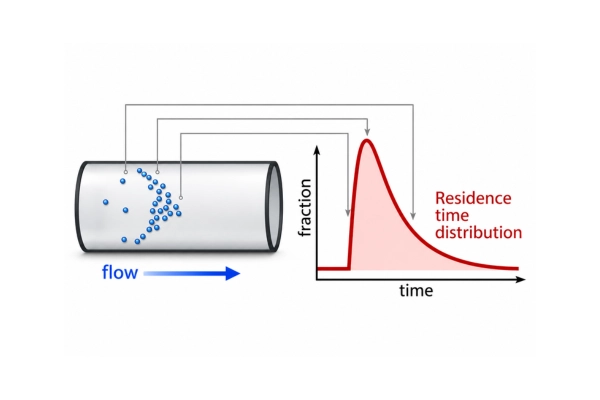
يصف توزيع زمن البقاء (RTD) التوزيع الإحصائي للوقت الذي تقضيه عناصر السائل داخل وحدة عملية مستمرة بين دخولها إلى النظام وخروجها منه.
في نموذج التدفق المثالي، قد تتبع عناصر السائل أنماط تدفق منتظمة أو يمكن التنبؤ بها. غير أن المعدات الكيميائية الفعلية تُظهر تدفقًا غير مثالي، لأن عناصر السائل الفردية تنتقل عبر مسارات مختلفة وتمر بدرجات مختلفة من الاختلاط. فبعضها يغادر المعدات في وقت أبكر مما هو متوقع، بينما يبقى البعض الآخر لفترات أطول بكثير.
يوفر نموذج RTD للمهندسين طريقة تجريبية لتحديد هذه الاختلافات كمياً، بدلاً من الاعتماد فقط على متوسط زمن البقاء.
كيف يتم قياس RTD؟
يتم تحديد توزيع زمن البقاء عادةً باستخدام تجارب التتبع. حيث يتم إدخال مادة تتبع قابلة للكشف عند مدخل الجهاز، ثم يتم قياس تركيزها بمرور الوقت عند المخرج.
هناك طريقتان شائعتان هما طريقة الإدخال بالنبضات و طريقة الإدخال المتدرجة. ويمكن تحليل منحنى استجابة المُتتبع الناتج لتحديد خصائص سلوك التدفق داخل المفاعلات ومعدات المعالجة الأخرى.
يمكن أن يكشف تحليل RTD عن انحرافات يصعب تحديدها من خلال بيانات التشغيل العادية وحدها.
الأهمية الهندسية لـ RTD
يشير متوسط زمن البقاء إلى المدة التي تبقى فيها المواد داخل المعدات بشكل عام، لكنه لا يوضح كيفية توزيع العناصر الفردية للسائل حول هذا المتوسط.
قد يشير التوزيع الواسع أو المشوه لوقت البقاء إلى:
- التوصيل المباشر أو التدفق الجانبي
- المناطق الميتة والمناطق الراكدة
- الخلط العكسي المفرط
- التجويف الناتج عن سوء توزيع التدفق
- الاختلافات بين السلوك الفعلي للمفاعل وسلوكه المثالي
يمكن أن تؤثر هذه الانحرافات على معدل التحويل، والانتقائية، وجودة المنتج، واستقرار التشغيل.
تطوير التكنولوجيا الجاهزة للاستخدام في أنظمة PFR وCSTR
تتميز مفاعلات التدفق السدادي المثالية (PFRs) بنطاق درجة الحرارة (RTD) ضيق، وذلك لأن العناصر السائلة يُفترض أنها تتحرك عبر المفاعل دون حدوث خلط محوري.
تتميز مفاعلات الخزانات ذات التقليب المستمر (CSTRs) المثالية بنطاق توزيع زمني واسع؛ ذلك لأن الخلط الكامل يسمح لبعض المواد بالخروج بعد وقت قصير من دخولها، بينما تبقى مواد أخرى لفترة أطول بكثير.
وعادةً ما تعمل المفاعلات الصناعية الفعلية ضمن هذين الحدين المثاليين. وتساعد مقارنة منحنيات RTD المقاسة بالنماذج المثالية المهندسين على تقييم السلوك الهيدروديناميكي الفعلي.
تطوير التكنولوجيا الجاهزة للتطبيق (RTD) في مجال توسيع نطاق الإنتاج والمعدات الصناعية
يكتسب توزيع زمن البقاء أهمية خاصة أثناء توسيع نطاق العملية. فالتغيرات في قطر المفاعل، وكثافة الخلط، وسرعة التدفق، والمكونات الداخلية، وهندسة المعدات يمكن أن تغير أنماط التدفق حتى لو ظل متوسط زمن البقاء دون تغيير.
على سبيل المثال، قد يؤدي حدوث تجمعات في مفاعل مكتظ إلى خروج جزء من المواد المُغذية بسرعة أكبر من اللازم، مما لا يتيح إجراء تفاعل كافٍ، في حين أن المناطق التي تتسم بالركود قد تؤدي إلى زيادة التفاعلات الجانبية أو تدهور المنتج.
وبالتالي، فإن اختبار RTD يوفر أداة عملية لتشخيص أداء المفاعل، وتقييم التعديلات التي تُجرى على المعدات، والتحقق مما إذا كان سلوك التدفق على النطاق التجريبي قد تم الحفاظ عليه بعد التوسع إلى النطاق الصناعي.
العلاقة بشركة DODGEN Technologies
يُعد تحليل RTD ذا صلة بمفاعلات التدفق المستمر، ومفاعلات البلمرة، والمفاعلات الدقيقة، والخلاطات الثابتة، وأبراج الاستخلاص، وغيرها من معدات المعالجة التي يؤثر فيها سلوك التدفق على أداء التفاعل أو الفصل.
بالنسبة لمهندسي العمليات، يربط توزيع زمن البقاء بين تصميم المفاعل، وتوسيع نطاق العملية، والهيدروديناميكا للمعدات، وتكنولوجيا التدفق المستمر.
المصطلحات ذات الصلة
- زمن البقاء
- التدفق الخطي
- المفاعل الخزاني ذو التقليب المستمر (CSTR)
- التشتت المحوري
- الخلط العكسي
- تجربة التتبع
- توسيع نطاق المفاعل