A high-efficiency polymer devolatilization system cannot be designed around temperature and vacuum alone. As residual monomers or solvents leave the polymer, viscosity rises, internal diffusion slows, and the effective mass-transfer area may decline. Deeper vacuum then provides limited improvement unless the equipment also shortens diffusion paths and renews the melt surface.
Successful design requires coordinated melt conditioning, controlled flashing, interface generation, vapor disengagement, and vacuum handling. These functions must achieve the residual volatile target without excessive shear, polymer entrainment, thermal degradation, or unstable production.

Why High Viscosity Changes the Controlling Mechanism
In a low-viscosity solution, a volatile component can move relatively quickly from the liquid interior to a free surface. In a concentrated polymer solution or melt, molecular diffusion becomes slower and may control the final removal stage.
The transport path can be summarized as:
Internal diffusion → bubble nucleation and growth → interfacial transfer → evaporation → vapor disengagement → vacuum removal
A restriction at any step limits the complete process. A larger vacuum pump cannot compensate for an excessively long diffusion path inside the polymer.
The limitation also changes during operation. Removing solvent increases polymer concentration and often raises viscosity substantially. Bulk removal may initially proceed through vigorous flashing and foaming, while deep polishing becomes diffusion-controlled as the residual concentration falls.
In condensation polymerization, volatile removal can also influence molecular-weight development. Removing water, ethylene glycol, methanol, or another reaction byproduct shifts the reaction equilibrium, linking polymer devolatilization performance directly to conversion and product quality.
Temperature and Vacuum Define a Narrow Operating Window
Lower absolute pressure increases the thermodynamic driving force by reducing the equilibrium concentration of the volatile component in the melt. However, an abrupt pressure reduction can produce uncontrolled foaming, polymer carryover, and excessive loads on the condenser and vacuum system.
Temperature produces a similar trade-off. Higher temperature can reduce viscosity, improve diffusivity, and increase volatile vapor pressure. Excessive temperature or thermal exposure may cause:
- انقسام السلسلة
- Cross-linking or gel formation
- تغير اللون
- Oxidative degradation
- Cyclic or branched byproducts
- Loss of molecular-weight control
The correct operating window therefore balances equilibrium, mass-transfer kinetics, melt rheology, and polymer stability. Uniform heat input is usually more valuable than a higher peak temperature because cold regions limit flashing while overheated regions accelerate degradation.
For heat-sensitive polymers, design decisions should be based on the complete time–temperature history rather than the nominal vessel temperature alone.
Four Functions Control Devolatilization Performance
An industrial system must perform four connected functions. Weakness in one function can limit the entire process even when the other components are correctly sized.
| Engineering function | Process objective | Typical failure |
|---|---|---|
| Melt conditioning | Establish uniform temperature and manageable viscosity | Cold zones, local overheating, inconsistent flashing |
| Interface generation | Shorten diffusion paths and create effective area | Low removal despite deep vacuum |
| Vapor disengagement | Release vapor without polymer entrainment | Foaming, carryover, fouling |
| Vacuum handling | Maintain pressure under the actual vapor load | Pressure fluctuation and reduced driving force |
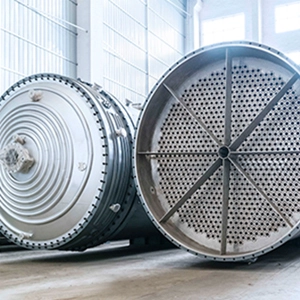
High-viscosity melts are difficult to heat uniformly in conventional jacketed vessels. Static mixing elements inside a heat exchanger can repeatedly divide and redistribute the flow, improving radial temperature uniformity without high-speed mechanical agitation.
The heater must still be evaluated for pressure drop, shear sensitivity, fouling, stagnant zones, residence-time distribution, and cleaning requirements. Excessive vaporization inside the heater can create two-phase flow and destabilize downstream distribution.
Effective Area Matters More Than Equipment Size
A large vessel or extensive internal surface does not automatically provide strong mass transfer. The relevant parameter is the surface that is wetted, exposed to the vapor phase, and renewed under useful operating conditions.
مساحة السطح المركب ≠ مساحة السطح المبلل ≠ مساحة نقل الكتلة الفعالة
Falling films, strands, strips, wiped surfaces, disks, kneading elements, packing, and extruder screws generate interfaces through different mechanisms.
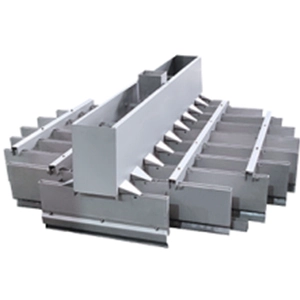
In a falling-strip devolatilizer, a distributor divides the conditioned polymer into multiple thin streams. Pressure reduction promotes bubble nucleation inside the strips, while the reduced thickness shortens the path that monomers and solvents must travel to reach an interface.
Distributor performance is critical. Unequal flow can create thick strips, dry zones, short residence times, and localized vessel loading. An orifice geometry that performs well at the feed viscosity may become unstable as solvent removal raises the melt viscosity.
Additional internals may extend residence time and redistribute the polymer, but they also increase obstruction, crust formation, and cleaning risks. Surface-area calculations must therefore be supported by flow-distribution and fouling assessments.

Foam-Dominated and Diffusion-Dominated Removal
Polymer devolatilization commonly moves through two operating regimes.
At relatively high volatile concentration, pressure reduction creates supersaturation, bubble nucleation, and foam growth. The bubbles generate internal interfacial area and can rapidly remove a large fraction of the residual monomer or solvent.
As concentration falls, nucleation weakens and the process shifts toward diffusion-controlled removal. Volatiles must travel through increasingly viscous polymer to reach an existing surface. A first stage optimized for bulk flashing may therefore perform poorly as a final polishing stage.
Foam is useful only within a controlled range. Persistent foam can increase residence time and interface generation, but excessive foam may flood the vapor space or entrain polymer into the vacuum line. Minimal foam may indicate successful bulk removal, but it can also signal insufficient supersaturation.
This transition explains why changing one variable does not produce the same effect throughout the process. A stripping additive that encourages foaming may be useful during bulk removal, while an inert stripping gas or renewed surface generation may be more effective at low residual concentrations.
Selecting Equipment for High-Viscosity Polymer Devolatilization
Equipment selection should begin with the dominant transport limitation, polymer sensitivity, and required residual concentration.
| Devolatilization Type | Process | المزايا | Disadvantages | Application Examples |
|---|---|---|---|---|
| Static devolatilization | التحويل الوميضي | Simple equipment, easy operation, and low operating cost | Only suitable for low-viscosity polymer systems, and incomplete devolatilization | Preliminary solvent removal in synthetic rubber production |
| Static devolatilization | Strand devolatilization | 1. Low equipment manufacturing and maintenance costs 2. Low energy consumption and suitable for continuous operation 3. Suitable for shear-sensitive polymer systems 4. Large surface area and high devolatilization efficiency | 1. Limited applicability to high-viscosity melts 2. The polymer must have sufficient fluidity, making the process unsuitable for elastomer devolatilization | PS, PLA, PMMA, COC |
| Static devolatilization | Falling-film devolatilization | Simple equipment, easy operation, and low operating cost | Only suitable for low-viscosity polymer systems, and incomplete devolatilization | Removal of small molecules from polyesters |
| Dynamic devolatilization | تبخر الأغشية الرقيقة | 1. A motor-driven film-forming mechanism enables processing of relatively high-viscosity polymers 2. Moderate operating cost | 1. The motor-driven film-forming mechanism requires reliable sealing 2. Equipment size limits production capacity 3. Unsuitable for highly viscous polymer systems | Preliminary solvent removal in synthetic rubber production, removal of small molecules from polyesters |
| Dynamic devolatilization | Twin-screw extruder | 1. Wide operating range, suitable for high-viscosity materials and elastomers 2. Small internal dead volume and short residence time | 1. Strong shear makes it unsuitable for shear-sensitive polymers 2. Requires a large drive motor and consumes substantial energy 3. Complex equipment structure and high maintenance costs 4. Relatively low devolatilization efficiency and limited production capacity | PPC, rubber devolatilization, elastomers |
| Dynamic devolatilization | Kneader | Similar to a twin-screw extruder | 1. Difficult and costly to manufacture 2. High energy consumption 3. High maintenance costs | Similar to a twin-screw extruder, SAP |
Static systems can be attractive for shear-sensitive polymers and processes seeking lower mechanical energy or maintenance. Rotating equipment may be more suitable when viscosity is extremely high, surface renewal is otherwise inadequate, or operating flexibility across several grades is required.
Packed-column devolatilization should not be treated as a universal solution for high-viscosity polymers. Its feasibility depends on packing wetting, melt distribution, pressure loss, fouling behavior, cleaning access, and long-duration operating stability. These factors require material-specific testing.
Why Multi-Stage Polymer Devolatilization Is Usually More Stable
One severe stage concentrates several risks. The initial vapor load can destabilize the vacuum system, while the final removal remains limited by diffusion even under deeper vacuum.
A staged process separates the duties:
- Uniform melt conditioning establishes a controlled feed state.
- Initial flashing removes the bulk volatile load.
- A distributor generates films, strands, or strips.
- A deeper-vacuum stage targets lower residual concentrations.
- Optional stripping or renewed mixing supports final polishing.
- Condensation and recovery equipment handles each vapor fraction.
Staging reduces the pressure change imposed at any single point and allows the vapor-handling system to manage different loads and compositions. It can also reduce thermal degradation because deep removal no longer depends on extending residence time in one high-temperature vessel.
For PET and other condensation polymers, multiple reaction and devolatilization zones can be integrated so that byproduct removal supports molecular-weight development without exposing the melt to an unnecessarily severe thermal history.
Stripping Media and Vacuum Systems Must Be Designed Together
Nitrogen, steam, or another process-compatible stripping medium can lower the partial pressure of the target volatile and improve removal. The selected medium must be compatible with the polymer, end groups, product specification, downstream recovery system, and hydrolysis sensitivity.
More stripping medium is not always better. Excess gas increases condenser and vacuum loads, may reduce effective contact time, and can promote polymer entrainment without providing a proportional increase in mass transfer.
Vacuum equipment should be sized for the actual combined load of:
- Monomer and solvent vapor
- Water or reaction byproducts
- Stripping medium
- Noncondensable gases
- Air leakage
- Peak flashing conditions
The vapor train may require disengagement volume, entrainment separation, staged condensation, solvent recovery, knockout vessels, vacuum generation, and off-gas treatment.
Polymer mist or foam entering the condenser can reduce heat transfer, contaminate recovered solvent, and restrict the vacuum line. Vapor disengagement is therefore part of the separation process, not an accessory added after the devolatilizer has been selected.
Process Signals That Reveal the Real Bottleneck
| إشارة المعالجة | القيود المحتملة | الرد الهندسي |
|---|---|---|
| Deeper vacuum gives little improvement | Internal diffusion or insufficient interface | Reduce melt thickness or renew the surface |
| Residual concentration varies with throughput | Residence-time or distribution instability | Redesign distribution and stage loading |
| Product darkens as removal improves | Excessive thermal history or shear heating | Improve heat uniformity and shorten exposure |
| Vacuum pressure fluctuates | Flashing, foaming, or condenser overload | Stage the pressure reduction and stabilize vapor handling |
| Polymer appears in condensate | Entrainment or inadequate disengagement | Control foam and improve carryover separation |
| Residual content stalls at low concentration | Transition to diffusion-controlled removal | Add a polishing stage, stripping medium, or surface renewal |
| Pressure drop increases over time | Fouling, crust formation, or obstruction | Review temperature, internals, and cleaning strategy |
These signals prevent a common troubleshooting error: treating every performance loss as a vacuum-pump problem.
Scale-Up Must Preserve the Removal Mechanism
Geometric enlargement does not preserve polymer devolatilization performance. Larger equipment changes film thickness, strand distribution, vapor velocity, pressure profile, residence-time distribution, heat transfer, and foam behavior.
Scale-up should preserve or validate:
- Melt temperature and viscosity at each stage
- Supersaturation and pressure-reduction rate
- Film, strand, or strip dimensions
- Effective interfacial area
- Surface-renewal behavior
- Liquid and vapor residence times
- Vapor-space loading
- Entrainment tendency
- Heat- and mass-transfer coefficients
Laboratory testing can establish equilibrium behavior and screen distributors or internal geometries. Pilot operation is needed to evaluate fouling, foam response, grade changes, vacuum stability, solvent recovery, cleaning, and long-duration reproducibility.
Model fluids can support early hydrodynamic investigation but may not reproduce industrial polymer rheology, volatile diffusivity, surface chemistry, or degradation behavior. Final design correlations should be validated with the actual polymer–volatile system whenever practical.
From Process Data to an Industrial System
A high-efficiency devolatilization system should be developed from the product specification rather than from a preferred equipment type.
| Design question | Required engineering input |
|---|---|
| What must be removed? | Volatile identity, inlet concentration, final limit, equilibrium data |
| What controls the rate? | Diffusivity, viscosity, nucleation, interfacial resistance |
| What protects the polymer? | Maximum temperature, shear limit, residence time, oxygen sensitivity |
| How should removal be staged? | Bulk flashing duty, polishing duty, stripping requirement |
| How will vapor be managed? | Peak load, condensation behavior, recovery and emission requirements |
| How will scale-up be validated? | Distribution tests, residence-time data, correlations, pilot operation |
دودجن treats devolatilization as an integrated process-engineering and industrialization problem. Depending on the material, a process package may combine static-mixing heat exchange, controlled distribution, falling-strip interface generation, staged vacuum, vapor recovery, and pilot validation.
Residual targets, including ppm-level specifications, must remain material- and process-specific. Achievable performance depends on the polymer–volatile system, feed concentration, viscosity, pressure, thermal stability, residence time, and number of stages.
الخاتمة
Deep removal of monomers and solvents from high-viscosity polymers depends on more than vacuum intensity. Internal diffusion, effective interfacial area, surface renewal, foam behavior, thermal history, and vapor handling determine whether the available driving force can be converted into reliable separation.
A high-efficiency devolatilization system coordinates uniform heating, appropriate interface generation, staged pressure reduction, controlled disengagement, and correctly sized vapor recovery. When these functions are validated from laboratory and pilot testing through commercial scale-up, manufacturers can reach demanding residual volatile targets while protecting polymer quality and long-term production stability.