البلمرة القائمة على ثاني أكسيد الكربون وغالبًا ما يتم تطويرها بناءً على نشاط المحفز، والانتقائية، ومعدل التحويل، وبنية البوليمر. لكن على المستوى الصناعي، لا تحدد الكيمياء وحدها ما إذا كانت العملية ستعمل بكفاءة أم لا. فمن الضروري أن يذوب ثاني أكسيد الكربون (CO₂) باستمرار وينتقل إلى سائل تفاعلي قد تتغير لزوجته، وتركيبته، وتوليد الحرارة فيه، وخصائصه النقلية خلال عملية البلمرة.
وهذا يؤدي إلى ظهور مشكلة هندسية مترابطة تتعلق بالتفاعلات الكيميائية. فقد تؤدي زيادة ضغط ثاني أكسيد الكربون أو التحريك إلى تحسين انتقال الكتلة بين الغاز والسائل في البداية، لكن هذه الاستراتيجية نفسها قد تصبح أقل فعالية مع ارتفاع اللزوجة، أو تدهور الدوران، أو عندما يصبح التخلص من الحرارة عاملاً مقيدًا.
وبالتالي، فإن أفضل مفاعل ليس بالضرورة هو الذي يتمتع بأعلى معامل لنقل الكتلة. بل هو التصميم القادر على الحفاظ على توفر كمية كافية وقابلة للتحكم من ثاني أكسيد الكربون، مع تحقيق التوازن بين حركيات التفاعل، والخلط، وإزالة الحرارة، ووقت البقاء، والضغط، وجودة البوليمر، بدءًا من مرحلة التحقق التجريبي وصولاً إلى الإنتاج التجاري.
لماذا أصبحت بلمرة ثاني أكسيد الكربون مشكلة هندسية تتعلق بالمفاعلات؟
لكي يشارك ثاني أكسيد الكربون (CO₂) بشكل فعال في عملية البلمرة في الطور السائل، يجب أن يصل أولاً إلى بيئة التفاعل:
الضغط الجزئي لثاني أكسيد الكربون → قابلية ذوبان ثاني أكسيد الكربون → انتقال الغاز إلى السائل → توفر ثاني أكسيد الكربون المذاب → التفاعل → تكوين البوليمر
على المستوى المختبري، قد تجعل الأحجام الصغيرة والتقليب المكثف هذه العملية تبدو بسيطة. لكن التوسع في الحجم يغير هذا التوازن.
مع زيادة تركيز البوليمر ووزنه الجزيئي، قد ترتفع اللزوجة بشكل كبير. ويصبح تفكك الفقاعات أكثر صعوبة، وتضعف الدورة الدموية، وتزداد مقاومة الانتشار، وقد يتدهور نقل الحرارة.
وبالتالي، فإن التفاعل الذي يبدو سريعًا من الناحية الحركية في مفاعل مختبري قد يصبح مقيدًا بعملية النقل عند تطبيقه على نطاق أوسع. وعندما يصبح استهلاك ثاني أكسيد الكربون الذاتي أسرع من معدل تجديده بين الأطوار، فإن أي تحسين إضافي للمحفز قد لا يحقق سوى مكاسب محدودة ما لم يتم تكثيف عملية نقل الكتلة في المفاعل.
هذا التمييز بالغ الأهمية: تتطلب القيود الحركية تحسين العمليات الكيميائية؛ بينما تتطلب القيود المتعلقة بالنقل هندسة المفاعلات.
إن انتقال الكتلة بين الغاز والسائل لا يقتصر على تعظيم قيمة kLa
يمكن تمثيل انتقال ثاني أكسيد الكربون بالصيغة التالية:
NCO₂ = kLa (C*CO₂ − CCO₂)
هنا،, kLa تمثل القدرة الحجمية على نقل الكتلة، في حين يمثل فرق التركيز القوة الدافعة بين حالة التوازن وتركيز ثاني أكسيد الكربون المذاب الفعلي.
يمكن أن يؤدي زيادة الضغط، أو تحسين تشتت الفقاعات، أو زيادة المساحة السطحية إلى زيادة عملية النقل. لكن تحقيق أقصى قدر من kLa هذا بحد ذاته لا يُعد هدفًا صناعيًّا.
قد يؤدي ارتفاع معدل تدفق الغاز في البداية إلى تحسين تجديد الفقاعات ونقل الكتلة، لكن هذه الفائدة قد تصل في النهاية إلى مرحلة الاستقرار. كما أن الإفراط في معدل تدفق الغاز قد يزيد من متطلبات الضغط، ويعقّد عملية التحكم في الضغط، ويقلل من الاستفادة الفعالة من ثاني أكسيد الكربون دون أن يؤدي ذلك إلى تحسين أداء التفاعل بشكل متناسب.
أما مبدأ التصميم الأكثر فائدة فهو:
مواءمة قدرة نقل كتلة ثاني أكسيد الكربون مع الطلب الفوري للتفاعل.
ويكتسب هذا الأمر أهمية خاصة في عملية البلمرة، لأن كلًا من متطلبات التفاعل وخصائص السائل تتغيران مع تقدم التحويل.
يمكن للفقاعات الأصغر حجمًا أن تزيد من مساحة السطح الفاصل بين الغاز والسائل، لكن توليدها يتطلب التحريك أو الدوران أو استخدام قاذفات أو أي معدات أخرى تستهلك طاقة كبيرة. ولذلك، يجب أن يحقق تصميم المفاعل التوازن بين:
تحسين نقل الكتلة ↔ استهلاك الطاقة ↔ تعقيد المعدات
تؤدي عملية البلمرة إلى تغيير بيئة انتقال الكتلة باستمرار
على عكس عملية امتصاص ثاني أكسيد الكربون البسيطة، فإن عملية البلمرة تُحدث تغييرات مستمرة في الحالة السائلة. أ kLa قد لا تعكس القياسات التي تُجرى قبل تكوّن كمية كبيرة من البوليمر الظروف السائدة في مراحل لاحقة من العملية بشكل دقيق.
مع تطور التحويل والوزن الجزيئي:
- تزداد اللزوجة؛;
- يصبح تفكك الفقاعات أكثر صعوبة؛;
- قد يتدهور توزيع الغاز ودوران السائل؛;
- يزداد وقت الخلط؛;
- تزداد أهمية مقاومة الانتشار؛;
- قد ينخفض أداء نقل الحرارة.
وهذا يؤدي إلى تكوين حلقة تغذية مرتدة ديناميكية:
تكوين البوليمر → زيادة اللزوجة → ضعف عملية الخلط ونقل ثاني أكسيد الكربون → تغير ظروف التفاعل المحلية → تغيرات في تكوين البوليمر
لذلك، ينبغي التعامل مع نقل الكتلة باعتباره متغيرًا عمليةً متغيرًا وليس بمواصفة ثابتة للمفاعل.
كما يمكن أن يشكل عدم انتظام عملية النقل مشكلة تتعلق بجودة المنتج. وبناءً على التركيب الكيميائي ونظام المحفز، قد تؤثر الاختلافات المحلية في مستويات ثاني أكسيد الكربون المذاب على معدل التفاعل، أو تطور التركيب، أو تغير الوزن الجزيئي، أو اتساق المنتج.
تختلف النتيجة المحددة باختلاف مجال الكيمياء، لكن الآثار الهندسية أوسع نطاقًا: يمكن أن يؤثر توزيع ثاني أكسيد الكربون على كل من الإنتاجية وجودة البوليمر.
يجب تصميم عملية إزالة الحرارة ونقل ثاني أكسيد الكربون معًا
يمكن أن تولد عملية البلمرة حرارة كبيرة، في حين أن زيادة سعة إزالة الحرارة في المفاعلات التقليدية تصبح أمراً يتزايد صعوبته.
يتناسب توليد الحرارة بشكل عام مع حجم التفاعل، في حين أن مساحة نقل الحرارة في الغلاف تزداد بوتيرة أبطأ. وفي الوقت نفسه، يؤدي ارتفاع اللزوجة إلى إضعاف الحمل الحراري وقد يقلل من معاملات نقل الحرارة الفعالة.
وبالتالي، تصبح العملية نظامًا مترابطًا:
معدل التفاعل ↔ توليد الحرارة ↔ اللزوجة ↔ الخلط ↔ انتقال الكتلة بين الغاز والسائل
قد يصبح المفاعل عالي الضغط الذي يتميز بتوزيع ممتاز لثاني أكسيد الكربون غير مناسب تجاريًا إذا تعذر التخلص من الحرارة بشكل موثوق به عند معدلات تحويل عالية.
ولذلك، قد يكون من الضروري استخدام التغذية شبه الدفعية، أو الدوران الخارجي، أو الملفات الداخلية، أو المبادلات الحرارية الخارجية، أو أنظمة التفاعل المرحلي، من أجل إدارة نقل الكتلة والتحكم الحراري معًا.
اختيار مفاعل لعملية البلمرة القائمة على ثاني أكسيد الكربون
لا يوجد مفاعل يُعتبر الأمثل بشكل عام. وينبغي أن يستند الاختيار إلى القيود السائدة في مجالات النقل والحرارة والتحكم والإنتاج.
| المفاعل | نقطة القوة الرئيسية | القيد الرئيسي | الحالة المثلى |
|---|---|---|---|
| خزان مع تحريك الدُفعات | المرونة التشغيلية | الخلط والتبريد المتعلقان بالحجم | التطوير والإنتاج المرن |
| مفاعل شبه دفعي | التحكم في التغذية وإطلاق الحرارة | تحكم أكثر تعقيدًا | معدل التفاعل/التركيب الخاضع للتحكم |
| CSTR | الإنتاجية المستمرة | الخلط العكسي والسلوك غير الخطي | إنتاج مستمر ومستقر |
| حلقة / حلقة نفاثة | إعادة تدوير غاز قوية | الطلب على الضخ والدوران | الأنظمة المقيدة بنقل ثاني أكسيد الكربون |
| خلاط أنبوبي / ثابت | زمن بقاء محدد، نقل مدمج | انخفاض الضغط واللزوجة | البلمرة المستمرة المكثفة |
| مفاعل ذو بنية مجهرية | أداء ممتاز في مجال النقل | معدل الإنتاج، التلوث، اللزوجة | التطوير والمعالجة المتخصصة |
المفاعلات المُحرَّكة وشبه الدُفعية
تظل الخزانات المزودة بمحركات التحريك خيارًا جذابًا عندما تكون مرونة الوصفات، أو تطوير المحفزات، أو الحملات المتغيرة، أو التغذية المتحكم فيها، أمورًا ذات أهمية.
إن معرفتهم بهذه العملية لا تجعل عملية التوسع أمراً سهلاً. فالحفاظ على نفس سرعة المروحة لا يضمن الحفاظ على نفس الخصائص الهيدروديناميكية مع زيادة قطر المفاعل. لذا، يجب تقييم كل من مدخلات الطاقة لكل وحدة حجم، وتشتت الغاز، ووقت الخلط، وقدرة نقل الحرارة، وتكوين المروحة، وتطور الخصائص الريولوجية، بشكل متكامل.
تضيف العملية شبه الدفعية متغير تحكم إضافي: معدل التغذية. فالتحديد الفوري لتوافر المواد المتفاعلة يمكن أن يخفف من توليد الحرارة ويساعد في إبقاء احتياجات التفاعل في حدود قدرة المفاعل على نقل الحرارة والتبريد.
المفاعلات الحلقيّة ومفاعلات جيت-لوب
تصبح المفاعلات الحلقية خيارًا جذابًا عندما يمثل نقل ثاني أكسيد الكربون قيدًا أكبر من حجم التفاعل.
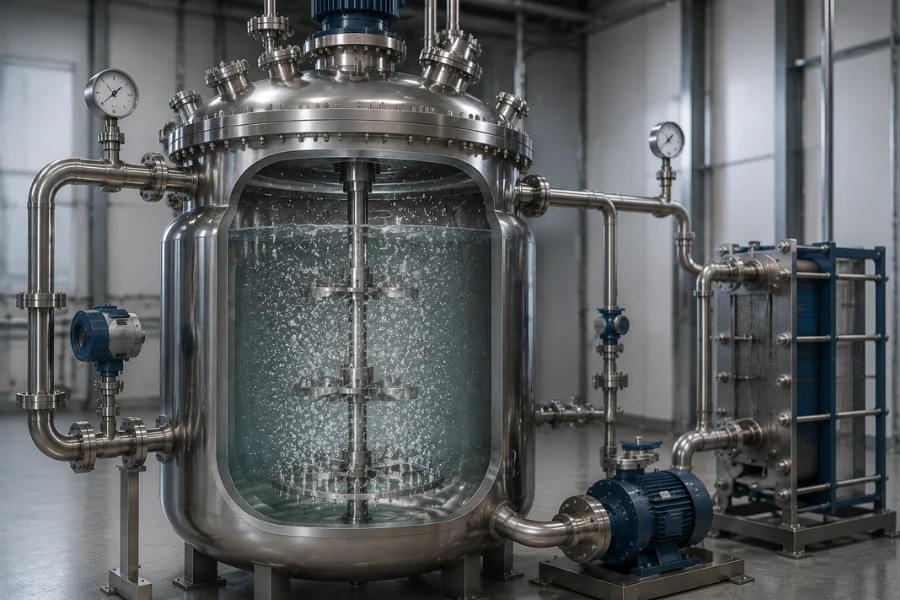
يمكن أن يجمع الدوران الخارجي بين جرف ثاني أكسيد الكربون، وتفكك الفقاعات، والخلط، والتبادل الحراري الخارجي. ويمكن للقاذفات أو أقسام الخلط الثابتة أن تعزز التلامس بين الغاز والسائل قبل عودة التيار إلى الوعاء.
ومع ذلك، فإن تكثيف العملية قد يؤدي إلى تحويل موقع عنق الزجاجة بدلاً من إزالته. فعند بلوغ اللزوجة مستوىً مرتفعاً بما فيه الكفاية، قد تزداد طاقة الدوران وانخفاض الضغط بوتيرة أسرع من الزيادة في نقل الكتلة، مما يحول حلقة الدوران نفسها إلى العائق التالي في عملية التوسع.
مفاعلات التدفق المستمر
يمكن أن توفر التصميمات الأنبوبية وغيرها من التصميمات المستمرة وقت بقاء يمكن التحكم فيه، ونسبًا مواتية بين المساحة السطحية والحجم، وإدارة حرارية فعالة.
وتكون هذه الأنظمة جذابة بشكل خاص عندما تكون الحركية الذاتية سريعة ويصبح التحكم في عملية النقل عاملاً مهمًا. غير أن تكوّن البوليمرات ينطوي على مخاطر تتمثل في انخفاض الضغط، والترسب على الجدران، والتلوث، والخلط في ظروف اللزوجة العالية.
لذلك، ينبغي اختيار المعالجة المستمرة لأن خصائصها في مجال النقل تتناسب مع الطبيعة الكيميائية للعملية — وليس لمجرد الافتراض بأن التصنيع المستمر أكثر تطوراً.
طرق عملية لتكثيف نقل الكتلة بين الغاز والسائل
بمجرد اختيار تصميم المفاعل، يمكن اتباع عدة استراتيجيات لتحسين توافر ثاني أكسيد الكربون.
ارتفاع الضغط الجزئي لثاني أكسيد الكربون يؤدي ذلك إلى زيادة ثاني أكسيد الكربون المذاب وقوة الدفع لنقل الكتلة، ولكنه يؤدي أيضًا إلى ارتفاع تكاليف الضغط، ومتطلبات معدات الضغط، ومتطلبات الإحكام، واعتبارات السلامة، ومتطلبات تخفيف الضغط في المراحل اللاحقة.
تحسين تشتت الغاز يؤدي استخدام الدوافع المناسبة أو أجهزة الرش أو أنظمة الفقاعات الدقيقة إلى زيادة المساحة السطحية بين الطبقات. وغالبًا ما يكون الحد العملي هو كفاءة الطاقة: فلا ينبغي أن تزداد سرعة التحريك بوتيرة أسرع من الفائدة الناتجة عن نقل الحرارة.
الدوران النفاث والدوران الحلقي يمكن أن يؤدي ذلك إلى تبديد طاقة محلي مرتفع، ويشجع على انفجار الفقاعات، ويعزز انجراف الغاز. ويجب تحسين الشكل الهندسي، ومعدل الدوران، وتدفق الغاز، وخصائص الريولوجيا، والطلب على الضخ كنظام واحد.
الخلاطات الثابتة تقوم بتجديد واجهات التلامس بين الغاز والسائل بشكل متكرر دون الحاجة إلى أجزاء داخلية دوارة، ويمكنها العمل بكفاءة في خطوط الإنتاج المستمرة المضغوطة أو حلقات الدوران. ويتمثل القيد الرئيسي لهذه الأنظمة في مجال معالجة البوليمرات في انخفاض الضغط الناتج عن اللزوجة.
تغذية ثاني أكسيد الكربون متعددة المراحل يمكنه توزيع الغاز عبر مراحل التفاعل المختلفة بدلاً من حصر عملية النقل بأكملها في موقع واحد. وحيثما سمحت الظروف الكيميائية بذلك، يمكن أن يؤدي ذلك إلى مواءمة توافر ثاني أكسيد الكربون المحلي بشكل أفضل مع الطلب المتغير على التفاعل.
قد يتمثل الحل الصناعي الأقوى في الجمع بين عدة نُهج بدلاً من التركيز على تعظيم فعالية آلية واحدة.
مصفوفة استكشاف الأعطال وإصلاحها الصناعية لاختيار المفاعل
بدلاً من اختيار المعدات بناءً على نوع المفاعل وحده، يمكن أن تبدأ قرارات التوسع بالاعتماد على الإشارات القابلة للملاحظة في العملية. وتساعد هذه الإشارات في تحديد القيد الفيزيائي الذي يحد فعليًّا من الإنتاجية.
| إشارة العملية | القيود المحتملة | الرد الهندسي |
|---|---|---|
| ينخفض نشاط المحفزات بينما تستقر الإنتاجية | نقل كتلة ثاني أكسيد الكربون | تكثيف التلامس بين الغاز والسائل |
| تزداد التدرجات الحرارية مع زيادة الحجم | التخلص من الحرارة | إعادة تصميم البنية الحرارية |
| kLa ينخفض مع ارتفاع معدل التحويل | اللزوجة / الخلط | إعادة النظر في عملية التحريك أو تكوين المفاعل |
| يزداد انخفاض الضغط بسرعة مع زيادة معدل الإنتاج أو التحويل | القيود الهيدروليكية | إعادة تقييم تصميم الخلاط الأنبوبي/الساكن |
| تصبح خصائص المنتج أقل اتساقًا مع زيادة الحجم | الخلط / النقل المحلي | تقييم عملية الخلط، وتوزيع ثاني أكسيد الكربون، ومستشعر درجة الحرارة المقاومي (RTD) |
| تظهر عدة قيود في آن واحد | قيود النقل المقترنة | تطوير بنية هجينة للمفاعل/العملية |
يساعد هذا النهج في استكشاف الأعطال وإصلاحها على تجنب خطأ شائع عند التوسع، وهو: معالجة عنق الزجاجة الخاطئ.
قد تؤدي زيادة نشاط المُحفِّز في عملية مقيدة بالفعل بنقل الكتلة إلى زيادة النضوب المحلي لثاني أكسيد الكربون دون تحسين الإنتاجية الإجمالية بشكل ملموس. وبالمثل، فإن زيادة التحريك في مفاعل مقيد بنقل الحرارة قد تضيف طاقة ميكانيكية دون معالجة القيد الحراري الأساسي.
وبالتالي، فإن السؤال المهم ليس مجرد “أي مفاعل لديه أعلى قيمة لـ kLa؟” ولكن “ما هو القيد الذي يتحكم في العملية في ظل ظروف التشغيل المقصودة؟”
لماذا لا يكفي معدل kLa المختبري لتوسيع نطاق عملية البلمرة
مختبر kLa يُعد القياس مفيدًا، لكنه لا يُعد في حد ذاته أحد معلمات تصميم المفاعلات التجارية.
يؤدي تزايد الحجم إلى تغييرات في انتشار الغاز، وتوزيع أحجام الفقاعات، ووقت الاختلاط، وأنماط الدوران، ومساحة نقل الحرارة لكل وحدة حجم، وتأثير اللزوجة.
نادرًا ما ينجح التوسع التجاري من خلال الحفاظ على معلمة واحدة فقط، مثل عدد الدورات في الدقيقة (rpm) أو نسبة الضغط إلى الحجم (P/V) أو ثابت kLa أو زمن البقاء. والهدف هو الحفاظ على العلاقات التشغيلية التي تتحكم في التفاعل، وعملية النقل، وإزالة الحرارة، وجودة المنتج.
ويكتسب هذا الأمر أهمية خاصة في عملية البلمرة، لأن تلك العلاقات قد تتغير باستمرار مع تقدم عملية التحويل.
لذلك، ينبغي أن يحدد التحقق التجريبي التفاعلات بين:
- تغذية ثاني أكسيد الكربون وامتصاصه؛;
- الضغط وسلوك ثاني أكسيد الكربون المذاب؛;
- اللزوجة مقابل نسبة التحويل؛;
- قوة التحريك أو الدوران؛;
- درجة الحرارة والطلب على التبريد؛;
- استخدام الغاز؛;
- التحويل والانتقائية؛;
- الوزن الجزيئي للبوليمر أو اتساق التركيب؛;
- انخفاض الضغط وخطر التلوث؛;
- الاستقرار المستمر في حالة التوازن.
الهدف لا يقتصر على تحديد نقطة واحدة للأداء الأقصى فحسب. بل ينبغي أن يحدد البرنامج التجريبي المفيد تجارياً نطاق التشغيل المستقر حيث تظل معدلات التحويل وجودة المنتج والتحكم الحراري واستخدام ثاني أكسيد الكربون واستمرارية العملية في مستويات مقبولة على الرغم من التقلبات الواقعية في التشغيل.
من تحسين نقل الكتلة إلى تصميم العمليات الصناعية
يمكن النظر إلى التصنيع باعتباره سلسلة هندسية مترابطة:
حركيات التفاعل → الطلب على ثاني أكسيد الكربون → متطلبات نقل الكتلة → اللزوجة والتطور الحراري → تصميم المفاعل → تكثيف العملية → التحقق التجريبي → النشر التجاري
قد يؤدي تحسين إحدى الخطوات إلى الكشف عن القيد التالي. فقد يكشف ارتفاع نشاط المحفز عن عدم كفاية نقل ثاني أكسيد الكربون. كما أن تحسين التلامس بين الغاز والسائل قد يزيد من الحاجة إلى إزالة الحرارة. وقد يؤدي تعزيز الدوران إلى حدوث انخفاض غير مقبول في الضغط مع ارتفاع اللزوجة.
وبالتالي، فإن نجاح توسيع نطاق عملية البلمرة باستخدام ثاني أكسيد الكربون يعتمد على تحديد أين تتحرك المقاومة المحددة مع زيادة معدل التحويل والإنتاجية وحجم المفاعل.
بالنسبة لشركة هندسة العمليات الصناعية مثل دودجن, ، وهذا يعني أن اختيار المفاعل لا يُعتبر قرارًا منفردًا يتعلق بالمعدات. بل يجب تقييم حركيات التفاعل، وسلوك الأطوار، ونقل كتلة ثاني أكسيد الكربون، وعلم الريولوجيا، وإدارة الحرارة، ووقت البقاء، والتحكم في العملية، ومتطلبات جودة المنتج، كنظام متكامل.
اعتمادًا على العملية، قد يتضمن التطوير استخدام مفاعلات مزودة بمحركات تقليب أو مفاعلات شبه دفعية، أو أنظمة مدعومة بالدوران، أو تلامس مكثف بين الغاز والسائل، أو تكوينات مفاعلات مستمرة، أو تبادل حراري خارجي، أو هياكل هجينة.
في نهاية المطاف، لا يتحدد التسويق التجاري بتحقيق أعلى معدل تحويل في المختبر أو الحد الأقصى kLa. ويعتمد ذلك على الحفاظ على توازن قابل للتكرار بين التفاعل، ونقل الكتلة، وإزالة الحرارة، والخلط، وجودة المنتج، واستقرار التشغيل على النطاق الصناعي.
دودجن تدعم الشركات المتخصصة في مجال الكيمياء والفرق الصناعية في مجالات تصميم المفاعلات، وتكثيف العمليات، والتحقق من صحة المشاريع التجريبية، وتطوير العمليات من المرحلة التجريبية إلى المرحلة التجارية في مجال التصنيع الكيميائي المتقدم.