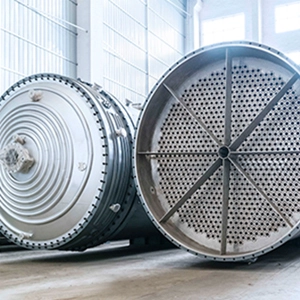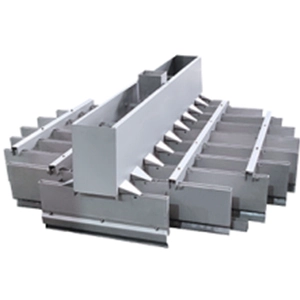
On March 5, the 2026 Guangfulin-CALM International Technology Forum on Plastics Circularity was held in Shanghai. Shanghai DODGEN Chemical Technology Co., Ltd. was invited to attend this industry event, where the Head of R&D delivered a technical presentation titled “Unit Technologies Empowering the Polymer Circular Economy”. The presentation shared DODGEN‘s latest process technology solutions in the fields of plastic recycling and green new materials with the attendees, demonstrating the company’s deep technical expertise and innovative capabilities in driving the sustainable development of polymer materials.

The Linear Dilemma of Traditional Plastics
The traditional plastics industry follows a linear model of “oil refining—monomer polymerization—product processing—use and disposal,” where a large amount of waste plastics can only be downgraded for reuse through physical recycling or handled via landfilling and incineration, leading to resource waste and environmental burden.
According to reports, from 1950 to 2021, the global cumulative production of plastic waste reached approximately 8.7 billion tons, expected to exceed 12 billion tons by 2050.
Faced with the growing volume of waste plastics, current recycling methods are primarily divided into two paths:
- Physical Recycling
Some waste plastics are recycled physically and turned back into plastic resins, but typically can only be downgraded for use in other plastic products with lower performance requirements. - Chemical Recycling
Other waste plastics are depolymerized into polymer monomers through chemical recycling, then purified, repolymerized, and processed to become high-quality plastic products, achieving true closed-loop circulation.
Physical Recycling—Solvent Dissolution and DODGEN’s Energy-Saving Technologies
Physical recycling mainly includes mechanical recycling and solvent dissolution recycling.
Among them, solvent dissolution is a unique physical recycling method that uses solvents to separate impurities such as dyes, adhesives, or metals from plastics, leaving pure polymers for reuse.
However, the core pain point of this process lies in the high energy consumption during solvent recovery (e.g., hexane, cyclohexane, etc.). To address this challenge, DODGEN has introduced efficient devolatilization technology and heat pump distillation technology.
DSXL High-Efficiency Devolatilization Technology (Solvent Recovery)
Devolatilization is a key process for removing low-molecular-weight components from polymer systems, and the volatile content directly determines the final performance of the polymer.
The energy consumption of the devolatilization process often accounts for 60% to 70% of the entire process flow. This process faces numerous challenges, including high viscosity that increases sharply during the process, small diffusion coefficients, highly non-ideal phase equilibrium relationships, and harsh operating conditions.
DODGEN‘s devolatilization technology effectively reduces polymer degradation, achieves ultra-low residual volatiles (down to ppm levels), and significantly lowers energy consumption.
Heat Pump Distillation and Waste Heat Recovery
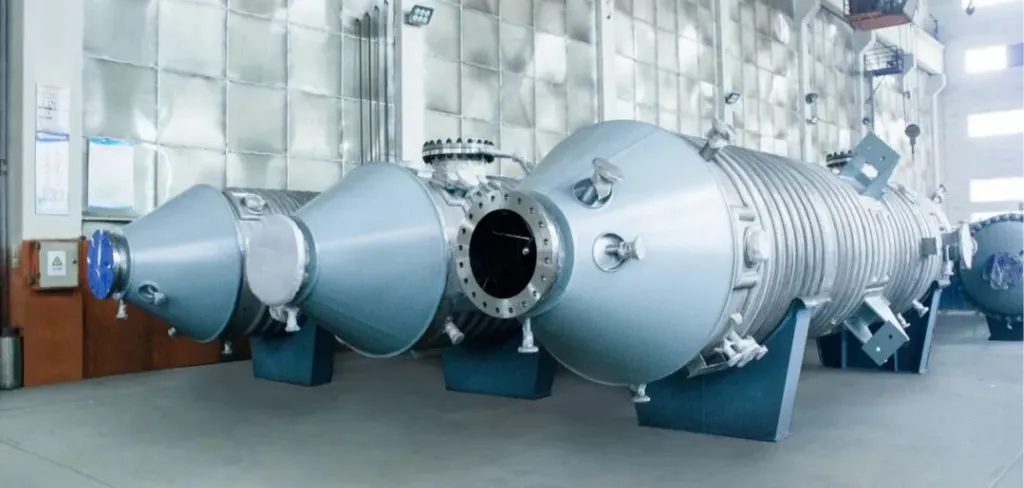
To solve the high energy consumption issue in solvent recovery, DODGEN employs waste heat recovery and heat pump distillation technology.
This technology compresses and heats the overhead vapor from the distillation column, using it as a heat source for the reboiler at the bottom, efficiently recovering the latent heat of condensation from the overhead vapor, typically saving 30% – 80% of overall energy consumption.
By applying DODGEN‘s heat pump distillation technology, this project can save enterprises approximately 12 million yuan in costs annually, with energy expenses only half of those for conventional distillation.

Chemical Recycling—Key Technologies for Monomer Purification
Chemical recycling is a key path to overcoming the performance degradation in physical recycling.
Taking rPET (recycled polyethylene terephthalate) chemical recycling as an example, current methods mainly include glycol glycolysis, hydrolysis, and methanolysis.
In methanolysis, methanol can be separated from the reactants EG (ethylene glycol) and DMT (dimethyl terephthalate) through distillation. However, since DMT and EG easily form azeotropes, separating them with high purity via conventional distillation is extremely challenging.
Melt Crystallization Coupled with Distillation for Monomer Purification
DODGEN has innovatively adopted a process route that couples melt crystallization purification with distillation technology.
This technology utilizes the solid-liquid phase equilibrium of the mixture, precisely controlling the degree of supercooling to achieve high-purity precipitation of the target product.
This breakthrough technology successfully addresses the dual pain points of low monomer purity and high energy consumption in chemical recycling processes, not only overcoming the industry challenge of unstable quality in PET chemical recycling but also strongly promoting the high-value circulation of PET materials toward high-end applications such as food-grade packaging.

Green New Materials—Substituting Petroleum-Based Plastics at the Source
While promoting the recycling of waste plastics, DODGEN is also committed to reducing reliance on traditional petroleum-based plastics at the source.
For short-cycle, single-use plastic products, green biodegradable materials are the optimal solution for the future.
DODGEN possesses a complete technology portfolio in the synthesis and process design of green new materials, having developed mature process technology solutions for the following cutting-edge materials:
- Process Solutions for Degradable Materials such as Polyhydroxyalkanoates (PHA/PGA/PLA, etc.)
- Process Solutions for Multi-Component High-Elasticity Copolyester Series Materials
- Process Solutions for Isosorbide-Based (IST) Functional Polyester Series Materials

Driving the Future of the Polymer Circular Economy
From energy efficiency enhancements in physical recycling, to purity breakthroughs in chemical recycling, and the development and substitution of green new materials, DODGEN relies on its exceptional technical capabilities, rich engineering experience, and research platforms to provide numerous high-quality unit technology complete equipment and process system solutions to clients.
In the future, DODGEN will continue to empower the polymer circular economy through unit technologies, driving the plastics industry to steadily advance toward green, low-carbon, and circular development.