Melt Crystallization Technology Introduction
As a green separation technology, melt crystallization technology has become an important technology for producing high-purity chemical products due to its high efficiency, low consumption and environmentally friendly characteristics. Melt crystallization is not only widely used in pharmaceutical and food separation and purification, but also in large-scale chemical production.
Technical Principle Of Melt Crystallization
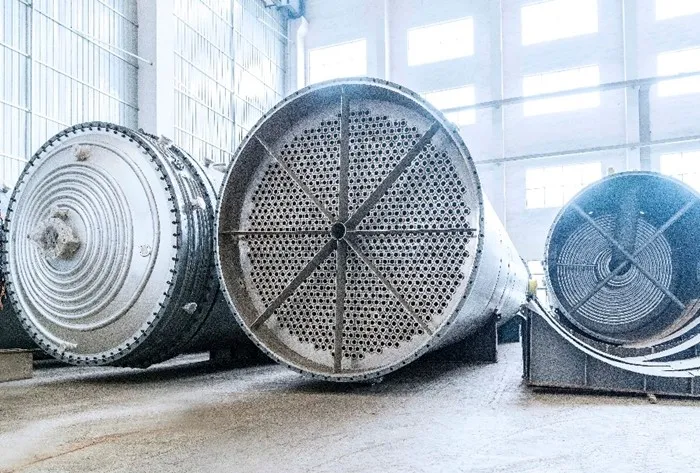
The driving force of the melt crystallization process is the supersaturation or undercooling of a component in the molten liquid, the process is divided into three stages: crystallization, sweating and melting.
Crystallization: Crystallization is the process in which, as the temperature of the molten liquid is gradually decreased, a component in the melt becomes supersaturated and begins to nucleate and grow into crystals.
Sweating: During the growing process of crystal, impurities of mother liquor will inevitably be trapped in the coarse crystal, so the coarse crystal needs to undergo the sweating process for purification.
Melting: The purified crystals are melted completely by heating.
Characteristics of Melt Crystallization Technology
1. High product purity
The product purity can be above 99.99% chromatographically pure according to customer requirements.
2. Low operating temperature
Generally, it is operated at atmospheric pressure and low temperature, with simple and safe operation.
3. Wide applicability
It is very difficult to separate isomers and chiral substances by distillation, while separation can be easily achieved by melt crystallization.
4. No solvents required
The crystallization process does not require the addition of other solvents, which can effectively avoid the increase of impurities caused by the introduction of solvents and environmental pollution.
5. Investment saving
There are no excessive requirements for equipment, which can reduce costs and equipment investment.
6. Energy conservation and environmentally friendly
The energy consumption of melt crystallization is generally only 10%-30% of that of distillation.
Video of Melt Crystallization Technology (VPN Needed)
Applications of Melt Crystallization Technology
Petrochemical industry: 1,2,4,5-Tetramethylbenzene, Maleic anhydride, P-xylene, M-xylene
Biosynthetic materials: Dimethyl succinate, lactide, pentanediamine, long-chain dicarboxylic acid
Polymer monomer: Bisphenol A, acrylic acid, caprolactam, dimethyl terephthalate, hexanediamine
Coal chemical industry: Refined naphthalene, Fischer-Tropsch wax, cresol, naphthol
Electronic Chemicals: Ethylene carbonate, Dimethyl carbonate, Vinylene carbonate, Hydrogen peroxide, Phosphoric acid
Fine Chemicals: Benzoic acid, Phenylenediamine, Dichlorobenzene, Chloroacetic acid, Nitro chlorobenzene