Definition
Cyanide refers to a class of chemical compounds containing the cyano group (–C≡N), in which a carbon atom is triple-bonded to nitrogen. The most common forms include hydrogen cyanide (HCN), inorganic metal cyanides such as sodium cyanide (NaCN) and potassium cyanide (KCN), as well as complex coordination compounds like ferrocyanides and ferricyanides.
In organic chemistry, the cyano group appears in nitriles such as acetonitrile (CH₃CN), where it is bonded to organic carbon frameworks.
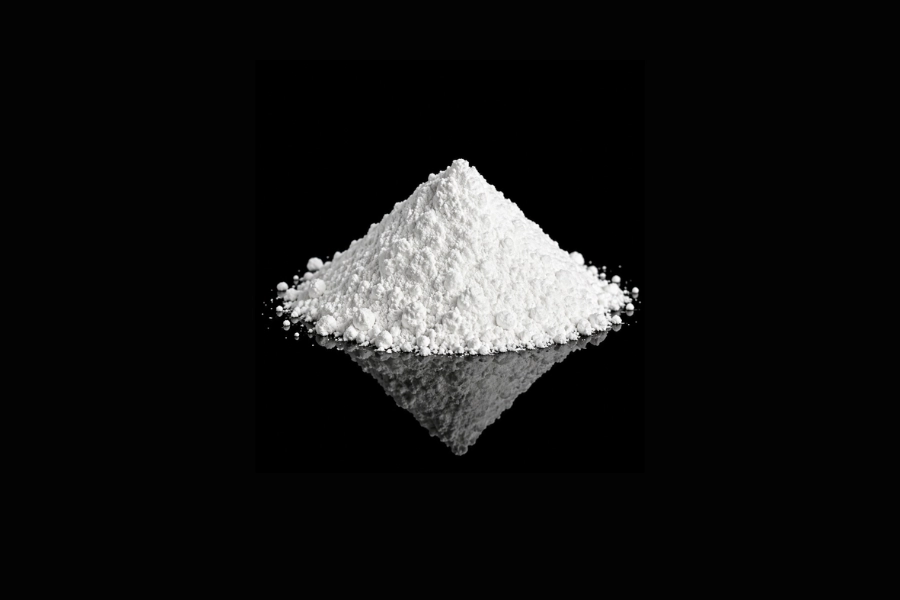
Types of Cyanide Compounds
Cyanides are generally classified into three categories:
1. Simple (Inorganic) Cyanides
- Hydrogen cyanide (HCN)
- Sodium cyanide (NaCN)
- Potassium cyanide (KCN)
These are highly reactive and widely used in industrial extraction and synthesis processes.
2. Complex Cyanides (Coordination Compounds)
- K₄[Fe(CN)₆]·3H₂O (ferrocyanide)
- K₃[Fe(CN)₆] (ferricyanide)
These exhibit higher stability due to metal-ligand coordination structures.
3. Organic Cyanides (Nitriles)
- Acetonitrile (CH₃CN) and related nitriles
Used as solvents and intermediates in fine chemical synthesis.
Industrial Applications
Cyanide chemistry is most significant in metal extraction and fine chemical manufacturing.
Gold and Precious Metal Extraction
One of the most important industrial uses of cyanide is in gold leaching, where NaCN is used in alkaline solution to form soluble gold-cyanide complexes.
Key process conditions include:
- Mild alkaline environment (to stabilize CN⁻)
- Controlled oxygen supply for oxidation
- Formation of stable [Au(CN)₂]⁻ complexes
- Subsequent recovery via adsorption or zinc displacement
This process remains the dominant industrial route for low-grade gold ore processing.
Electroplating and Surface Treatment
Cyanide-based electrolytes are used in metal plating systems due to their ability to form stable metal complexes, improving coating uniformity and adhesion.
Chemical Intermediates
HCN is a key intermediate for producing:
- Adiponitrile (nylon precursor)
- Methyl methacrylate intermediates
- Specialty nitrile compounds
This makes HCN a critical upstream chemical in polymer and synthetic fiber industries.
Engineering Considerations
Cyanide systems require strict process control due to their strong coordination ability and toxicity profile.
Key engineering factors include:
pH Control
Free cyanide stability is highly dependent on alkaline conditions. Acidic environments can release HCN gas, significantly increasing process risk.
Oxidation Potential
Oxidation state influences cyanide speciation and metal complex formation, especially in hydrometallurgical processes.
Metal Ion Selectivity
Cyanide preferentially complexes with transition metals, enabling selective extraction in ore processing systems.
Plant Operations and Handling
Industrial cyanide systems are typically designed with multiple containment and control layers.
Operational considerations include:
- Closed-loop transfer systems for NaCN and HCN handling
- Strict pH control to prevent HCN volatilization
- Continuous monitoring of free cyanide concentration
- Segregated storage for different cyanide forms
- Gas detection systems in HCN-related units
In gold leaching plants, process stability directly depends on maintaining consistent cyanide concentration and oxygen availability.
Related Chemicals
- Hydrogen Cyanide (HCN)
- Sodium Cyanide (NaCN)
- Potassium Cyanide (KCN)
- Gold Cyanide Complexes
- Ferrocyanide / Ferricyanide Systems
- Acetonitrile (CH₃CN)