Definition
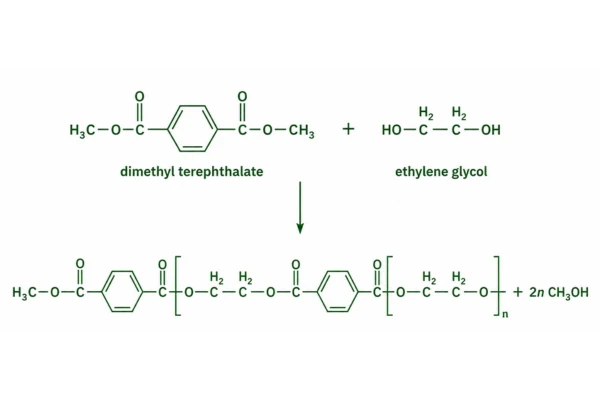
Condensation polymerization, also known as polycondensation, is a polymerization process in which two or more monomers containing two or more reactive functional groups combine to form polymer chains while simultaneously releasing small molecules such as water, hydrogen chloride, methanol, or ammonia as by-products.
Unlike addition polymerization, condensation polymerization proceeds through step-growth reactions, where polymer chains grow progressively as functional groups react with one another. Molecular weight increases gradually throughout the reaction until high polymer conversion is achieved.
Types of Condensation Polymerization
Condensation polymerization can be classified according to reaction conditions, raw materials, or product structure.
Common industrial processes include:
- Melt Condensation Polymerization
- Solution Condensation Polymerization
- Interfacial Condensation Polymerization
- Solid-State Polymerization
Depending on the monomer system, condensation polymerization may also produce linear polymers or crosslinked polymers, each offering different mechanical, thermal, and chemical properties.
Industrial Significance
Condensation polymerization is one of the fundamental process technologies used to manufacture engineering polymers and specialty materials.
It is widely applied in the production of:
- Polyesters
- Polyamides
- Polycarbonates
- Polyurethanes
- Epoxy resins
- High-performance engineering plastics
Many of these materials are used in automotive components, electronics, packaging, textiles, coatings, construction materials, and advanced industrial applications.
Because polymer properties depend heavily on molecular weight and reaction conversion, precise process control is essential for achieving consistent product quality.
Engineering Considerations
Successful condensation polymerization requires careful control of both reaction kinetics and by-product removal.
Engineers typically evaluate:
- Monomer purity
- Functional group stoichiometry
- Reaction temperature
- Residence time
- Pressure conditions
- Heat transfer efficiency
- By-product removal efficiency
Unlike addition polymerization, condensation polymerization continuously generates low-molecular-weight by-products. Efficient removal of these compounds is often necessary to drive the reaction toward higher molecular weight and improve overall conversion.
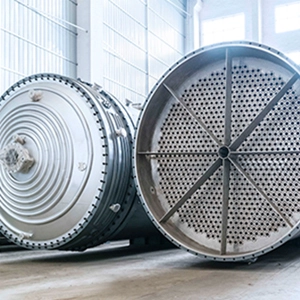
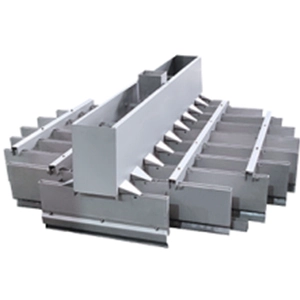
For large-scale production, equipment such as polymerization reactors, heat exchangers, devolatilizers, and vacuum systems are frequently integrated to enhance heat transfer, remove volatile by-products, and maintain stable reaction conditions.
Related Technologies
Condensation polymerization is closely associated with several process technologies, including:
- Polymerization
- Ring-Opening Polymerization
- Polymerization Reactor
- Devolatilizer
- Heat Exchanger
- Residence Time