Definition
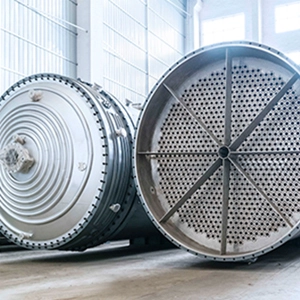
A tubular reactor, also known as a tube reactor, is a continuous-flow reactor characterized by its tubular shape and high length-to-diameter ratio. Depending on process requirements, a tubular reactor may consist of a single tube or multiple tubes arranged in parallel.
Tubular reactors are widely used in chemical processing because they enable continuous operation and provide flow characteristics that closely approach plug flow under appropriate conditions.
Structure and Operating Principle
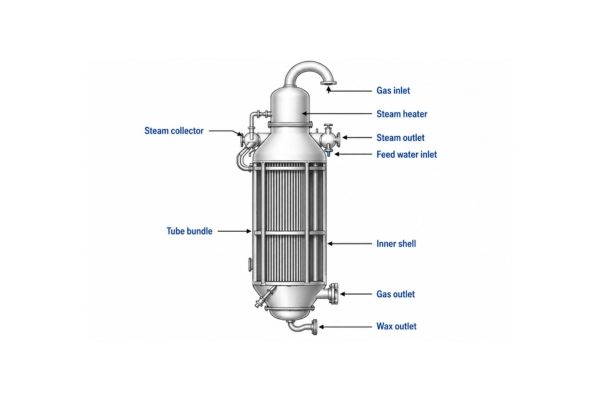
Tubular reactors can be configured in several ways.
The simplest design consists of an empty tube through which reactants flow continuously. Examples include thermal cracking furnaces and other high-temperature reaction systems.
In many industrial applications, the reactor tube is filled with granular catalyst particles to create a fixed-bed reactor. This configuration allows gas-phase, liquid-phase, or multiphase catalytic reactions to occur as reactants pass through the catalyst bed.
As reactants move through the reactor, concentration and temperature may change continuously along the reactor length.
Flow Characteristics
One of the most important features of a tubular reactor is its ability to approximate plug flow behavior.
When the reactor has a sufficiently large length-to-diameter ratio, back-mixing becomes minimal and fluid elements move through the reactor in sequence.
Under these conditions, reaction performance can often be predicted using plug flow reactor (PFR) models.
Compared with stirred-tank reactors, tubular reactors generally provide narrower residence-time distributions and higher conversion efficiency for many continuous processes.
Industrial Applications
Tubular reactors are widely used in chemical and petrochemical industries.
Typical applications include:
- Catalytic reactions
- Polymerization processes
- Hydrocarbon cracking
- Oxidation reactions
- Hydrogenation processes
- Continuous flow chemical production
Because reactants continuously move through the reactor, tubular reactors are particularly suitable for large-scale production requiring stable operating conditions and consistent product quality.
Advantages and Limitations
Advantages
- Continuous operation
- High production capacity
- Good plug flow characteristics
- Suitable for catalytic processes
- Flexible temperature control through reactor sections
- Easier integration into continuous manufacturing systems
Limitations
The main limitation of a tubular reactor is that slow reactions may require extremely long reactor lengths to achieve the desired conversion.
As reaction rates decrease, reactor size and capital cost can increase significantly, making industrial implementation more challenging.
In addition, pressure drop, heat transfer, and catalyst distribution must be carefully managed during reactor design and operation.
Engineering Considerations
When designing a tubular reactor, engineers typically evaluate:
- Length-to-diameter ratio
- Residence time
- Pressure drop
- Heat transfer requirements
- Catalyst loading
- Temperature control strategy
For highly exothermic or endothermic reactions, temperature management is often one of the most critical design considerations.
Many industrial systems use segmented temperature control to maintain reaction stability and improve product selectivity.
Industrial Significance
Tubular reactors represent one of the most important reactor types used in continuous processing.
Their ability to achieve near plug-flow behavior makes them attractive for large-scale chemical production where conversion efficiency, selectivity, and process consistency are critical.
As continuous manufacturing and process intensification technologies continue to develop, tubular reactors remain a fundamental component of modern chemical engineering systems.
Related Terms
- Plug Flow Reactor (PFR)
- Fixed-Bed Reactor
- Continuous Flow Reactor
- Residence Time
- Catalyst Bed