Eliminating Thermal Runaway and Scale-Up Challenges
How Tubular Reactors Are Reshaping Continuous Chemical Manufacturing
In the fine chemical and specialty chemical industries, process engineers face two persistent challenges: thermal runaway and scale-up failure. The former threatens plant safety, while the latter directly impacts project investment, commercialization timelines, and production efficiency.
For nearly a century, both challenges have been closely associated with conventional stirred tank reactors. Today, with the widespread adoption of Process Intensification (PI), tubular reactors—particularly microreactor technology—are redefining the boundaries of continuous processing through a fundamentally different design philosophy characterized by small flow channels, high throughput, exceptional heat transfer, and precise temperature control.
Industry Status
Why Have Stirred Tank Reactors Reached Their Engineering Limits?
The Stirred Tank Reactor (STR) has long been one of the most widely used unit operations in the chemical industry, serving applications ranging from fine chemicals and pharmaceutical intermediates to dyes and agrochemicals.
However, after decades of industrial use, its engineering limitations have become increasingly apparent. Three fundamental bottlenecks are now restricting further process improvement.
1. Heat Transfer Limitations
The heat transfer surface area-to-volume ratio (A/V) of a stirred tank reactor decreases as reactor volume increases.
A typical 500 L reactor provides an A/V ratio of approximately 8–12 m²/m³, while a 10 m³ reactor generally falls to 3–5 m²/m³.
For highly exothermic reactions such as nitration, sulfonation, diazotization, and polymerization, the rate of heat removal often cannot keep pace with heat generation. As a result, localized hot spots develop inside the reactor, creating temperature gradients that promote undesired side reactions.
2. Micromixing Limitations
Mechanical agitation provides adequate macroscopic mixing, but it cannot eliminate concentration gradients at the microscopic level.
During reagent addition, the concentration near the feed point can be significantly higher than that of the bulk solution. These transient high-concentration zones often initiate unwanted side reactions.
This is one of the primary reasons why many reactions achieve excellent yields at laboratory scale but experience substantial yield losses during scale-up.
3. The Scale-Up Challenge
Scaling a process from a 1 L laboratory reactor to a 1,000 L production vessel changes critical parameters such as Reynolds number, mixing time, and heat transfer coefficient.
Even with computational fluid dynamics (CFD) simulations and empirical correlations, scale-up typically requires multiple pilot-scale validation stages, often extending development cycles by one to three years, while maintaining a relatively high risk of scale-up failure.
Meanwhile, external pressures continue to intensify.
Carbon reduction initiatives demand higher energy efficiency and improved atom economy. Regulations governing hazardous chemicals impose increasingly stringent limits on inventory and reactor hold-up volume. Inherent safety has evolved from a competitive advantage into a fundamental design requirement.
Against this backdrop, Process Intensification (PI) has become an industry-wide consensus, with tubular reactors emerging as one of its most representative enabling technologies.
Core Principles
Tubular Reactors: Transforming Batch Processing into Precision Continuous Flow
The design philosophy of a tubular reactor can be summarized in one sentence:
Materials continuously flow through specially engineered channels where mixing, heat transfer, and chemical reaction occur simultaneously.
Instead of the traditional charge–stir–wait–discharge batch cycle, tubular reactors operate under continuous, highly controllable conditions that closely approach plug flow behavior.
Three Core Mechanisms
1. Extremely High Surface Area-to-Volume Ratio
The small channel dimensions provide a wall surface area per unit volume that is one to two orders of magnitude greater than that of conventional stirred reactors.
Result:
Heat transfer coefficients can be 10–100 times higher than those of stirred tank reactors.
2. Enhanced Micromixing
Conventional tubular reactors employ static mixing elements to generate turbulence, while microreactors induce strong secondary flows—including Dean vortices, chaotic advection, and other mixing mechanisms—to enhance molecular-scale mixing.
Result:
Concentration dead zones are virtually eliminated, significantly improving reaction uniformity.
3. Narrow Residence Time Distribution (RTD)
Reactants move through the reactor under near plug-flow conditions, ensuring nearly identical residence times for every fluid element.
Result:
Side reactions are effectively suppressed, leading to substantially improved reaction selectivity.
Engineering Note
Conventional tubular reactors, typically with channel diameters ranging from several millimeters to centimeters, generally operate in the turbulent flow regime (Re > 4000), where radial mixing is enhanced using static mixing elements.
Microreactors, by contrast, feature channel dimensions from several hundred micrometers to a few millimeters and commonly operate under laminar flow conditions (Re < 2000). Mixing is achieved through precisely engineered channel geometries that generate secondary flow phenomena such as Dean vortices, chaotic advection, and stretch-and-fold mechanisms.
Although the mixing mechanisms differ, both approaches ultimately pursue the same objective—maximizing heat and mass transfer efficiency.
Common Types of Tubular Reactors
Based on channel dimensions and process intensification levels, tubular reactors can generally be classified into conventional tubular reactors and microreactors, with the latter representing a more advanced implementation of process intensification.
Coil-Type Reactor
A compact variation of the conventional tubular reactor with mature industrial applications, suitable for moderately exothermic reactions and liquid-liquid or liquid-solid systems.
Plate-Type Microreactor
Featuring precision-engineered microchannels, typically at the millimeter scale, this design maximizes heat transfer area and is ideal for fast, highly exothermic reactions.
Shell-and-Tube Reactor
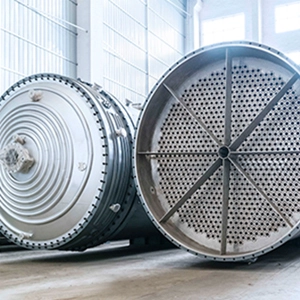
Reaction occurs within the tubes while heat exchange takes place on the shell side, making this configuration well suited for continuous processes requiring precise temperature control. It can accommodate both conventional and micro-scale flow channels.
Selecting the appropriate reactor configuration is often the first critical step toward successful process implementation.
Industrial Case Studies
Two Real-World Examples That Demonstrate the Advantages of Tubular Reactors
Before discussing equipment selection, let’s examine two industrial applications that clearly demonstrate the engineering value of tubular reactors.
Case Study 1
Aromatic Nitration: From High-Risk Batch Processing to Inherently Safe Continuous Production
Aromatic nitration is a classic example of a rapid, highly exothermic reaction.
When mixed acid (HNO₃/H₂SO₄) contacts aromatic compounds, large quantities of heat are released almost instantaneously, with adiabatic temperature rises exceeding 200°C.
In conventional batch reactors, reagent addition must be carefully controlled over several hours to prevent excessive temperature increases, resulting in reaction times of 4–6 hours.
Because reactor inventories typically range from hundreds of liters to several cubic meters, any failure of agitation or cooling can rapidly escalate into thermal runaway. Numerous historical chemical accidents have been associated with this type of process.
After replacing the batch reactor with a plate-type microreactor, the process performance changes dramatically.
| Performance Indicator | Batch Reactor | Microreactor |
|---|---|---|
| Reaction Time | 4–6 hours | 10–30 seconds |
| Reactor Hold-Up Volume | Hundreds of liters to several cubic meters | Hundreds of milliliters to several liters |
| Target Product Yield | Baseline | +5–10% |
| Dinitrated By-products | Significant | Greatly Reduced |
The reaction is completed rapidly within the highly efficient heat-transfer channels before the products immediately leave the reaction zone.
Accurate temperature control minimizes over-nitration and oxidation side reactions, demonstrating how a small reactor can deliver large-scale process improvements.
Smaller channels, faster heat transfer, and lower hold-up volumes result in significantly higher process safety.
Case Study 2
Diazotization: Making Previously Unscalable Chemistry Commercially Viable
Diazonium salt intermediates are widely used in the production of dyes, pharmaceuticals, and agrochemicals.
However, their thermal instability makes scale-up in conventional stirred reactors particularly challenging.
A reaction that proceeds safely on the gram scale in the laboratory can become hazardous at production scale, where temperature and concentration gradients promote local accumulation of unstable intermediates.
Within a shell-and-tube tubular reactor, materials flow under near plug-flow conditions through narrow channels with precisely controlled residence times ranging from several seconds to several tens of seconds.
Diazonium intermediates are generated and consumed continuously, preventing hazardous accumulation inside the system.
A fine chemical manufacturer successfully scaled a diazo coupling process directly from laboratory development to a continuous production capacity of 100 metric tons per year.
Product purity variation was reduced from ±3% to within ±0.5%, representing an 83% improvement in batch-to-batch consistency.
The faster the reaction, the greater the heat release, and the more unstable the intermediate, the more significant the advantages of tubular reactor technology become.
Complete Engineering Solutions
More Than Equipment: From Process Validation to Turnkey System Delivery
The true value of a tubular reactor can only be realized when it is integrated into a complete process system.
Rather than supplying standalone equipment, DODGEN provides comprehensive solutions covering process development, reactor engineering, and complete system integration.
Process Validation
DODGEN’s in-house laboratory and pilot-scale facilities enable customers to evaluate their own materials under real operating conditions, replacing assumptions with experimental data.
Reactor Selection & Custom Engineering
Based on validation results, DODGEN customizes reactor channel geometry, material selection, and temperature control strategies to ensure optimal compatibility between equipment and reaction characteristics.
System Integration
Complete systems include precision metering pumps, preheating modules, back-pressure regulators, online monitoring of temperature, pressure, and flow rate, as well as fully integrated automation and control systems.
Commissioning & Process Optimization
DODGEN’s engineering team provides on-site commissioning and process optimization services, ensuring a smooth transition from startup to stable commercial production.
Conclusion
Why Every Process Engineer Should Understand Tubular Reactor Technology
The core value of tubular reactors can be summarized in three words.
Safer
Small reactor hold-up volumes combined with precise temperature control significantly enhance inherent process safety by shifting from risk management to risk elimination.
More Efficient
Enhanced heat and mass transfer dramatically shorten reaction times while simultaneously reducing energy consumption, raw material usage, and plant footprint.
Higher Product Quality
A narrow residence time distribution improves reaction selectivity and batch-to-batch consistency, transforming process variability into a controllable operating parameter.
If your production process is challenged by poor selectivity, uncontrolled exothermic reactions, or inconsistent product quality, a tubular reactor—particularly a microreactor—may offer one of the most cost-effective pathways toward process intensification and continuous manufacturing.