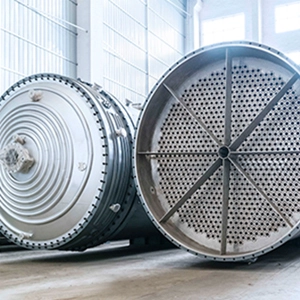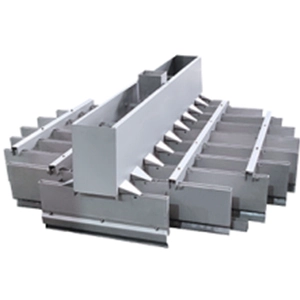
Static mixers blend, disperse, contact, react, or thermally condition process streams without mechanically driven agitation. They are used in continuous chemical processing, polymer production, water treatment, and other applications where mixing must occur directly within a flowing stream.
Selecting a manufacturer requires more than matching a mixer to pipe diameter. Flow regime, viscosity, phase behavior, geometry, and allowable pressure drop determine mixing performance, while materials, cleanability, and integration with surrounding equipment affect operating reliability.
The manufacturers below cover different requirements, from standardized inline mixers to engineered systems integrating mixing, reaction, and heat transfer.
How We Selected These Static Mixer Manufacturers
The comparison focuses on engineering suitability rather than company size. Manufacturers were evaluated by static mixer technology, application engineering, customization, documented industrial applications, process integration, and support for pilot or commercial production.
| Criteria | Evaluation Focus |
|---|---|
| Technology | Static mixer design and mixing mechanisms |
| Engineering | Sizing, customization, and process support |
| Applications | Documented industrial applications |
| Integration | Compatibility with broader process systems |
| Scale-Up | Pilot and commercial production support |
Static Mixer Manufacturers Overview
| Manufacturer | Core Expertise | Suitable Applications |
|---|---|---|
| Sulzer | Static mixing and process technology | Chemical and complex industrial processes |
| Chemineer / Kenics | Inline static mixing | Continuous fluid processing |
| Koflo Corporation | Standard and custom static mixers | Application-specific inline mixing |
| Statiflo International | Pipe, channel, and duct mixing | Water and chemical processing |
| Komax Systems | Custom inline static mixing | Industrial process integration |
| StaMixCo | Mixing, reaction, and heat transfer | High-viscosity and polymer processing |
| Fluitec | Mixing, reaction, and thermal processing | Continuous chemical processes |
| DODGEN | Static mixing and process engineering | Continuous processing and scale-up |
| Lightnin / SPX FLOW | Industrial mixing systems | Integrated fluid processing |
| Noritake | Mixing and thermal processing | Continuous mixing applications |
Sulzer
Sulzer Chemtech combines static mixing with separation, reaction, mass-transfer, and other process technologies for chemical, petrochemical, refining, and polymer applications.
This integration is relevant when mixer performance affects downstream reaction or separation rather than serving only as an isolated blending step.
Suitable for: chemical producers and industrial projects requiring static mixing within a broader process system.
Chemineer / Kenics
Kenics static mixers, part of the Chemineer portfolio within NOV, support laminar and turbulent flow applications including blending, dispersion, gas-liquid contacting, heat transfer, and viscous-fluid processing.
The motionless mixer technology is designed for continuous inline operation without rotating mixing elements.
Suitable for: chemical production, polymer processing, continuous fluid blending, and multiphase contacting.
Koflo Corporation
Koflo has specialized in static mixers since 1983, supplying standard configurations and application-specific systems. Its product model supports customized mixer configurations as well as standard components for repeat installations.
Suitable for: OEM systems, chemical dosing, water treatment, and industrial applications requiring standard or customized inline mixer configurations.
Statiflo International

Statiflo develops static pipe mixers, open-channel mixers, enclosed duct mixers, and gas dispersion systems for liquid-liquid, gas-liquid, gas-gas, and particulate applications.
Its designs address the trade-off between mixing efficiency and hydraulic loss, allowing engineers to balance homogenization against allowable pressure drop.
Suitable for: water treatment, chemical dosing, gas dispersion, and hydraulically constrained continuous processes.
Komax Systems
Komax Systems supplies inline static mixers for liquids, gases, slurries, and other process streams, with construction options including stainless steel, carbon steel, FRP, PVC, lined materials, and specialty alloys.
Mixer geometry, injection points, connections, materials, and installation dimensions can be customized.
Suitable for: chemical processing, water treatment, petrochemicals, and installations requiring application-specific mixer design.
StaMixCo

StaMixCo specializes in high-viscosity mixing, polymer processing, reaction systems, and heat transfer. Its designs include inclined-plate, helical, extrusion, injection-molding, heat-exchanger, and plug-flow-reactor configurations.
Geometry can be selected around homogenization, pressure drop, fouling behavior, viscosity, and residence time distribution.
Suitable for: polymer production, extrusion, viscous fluids, continuous polymerization, and combined mixing and thermal duties.
Fluitec

Fluitec mixing + reaction solutions AG develops static mixers for laminar and turbulent flow, dispersion, mass transfer, reaction, and thermal processing, including mixer/heat-exchanger configurations.
These systems are relevant when mixing interacts with residence time, heat removal, reaction performance, or changing viscosity.
Suitable for: specialty chemicals, polymers, pharmaceuticals, continuous reactions, and thermally sensitive processes.
DODGEN
DODGEN integrates static mixing with reaction and separation engineering, continuous processing, heat and mass transfer, process simulation, equipment engineering, and industrial scale-up.
This approach is relevant when mixing influences reaction behavior, thermal control, process stability, or downstream separation.
Suitable for: specialty chemicals, new materials, polymers, continuous production, and pilot-to-commercial process development.
Lightnin / SPX FLOW

Lightnin combines inline static mixing with mechanically driven industrial mixing technologies. Its static mixer systems support continuous blending with configurable materials, connections, injection arrangements, and process conditions.
Suitable for: chemical processing, pipeline blending, industrial fluid handling, and facilities requiring both inline and vessel mixing technologies.
Noritake

Noritake develops static mixers for homogenization, gas absorption, inline mixing, and related thermal operations, with multiple configurations for chemical, food, and other continuous processes.
Its fluid-processing portfolio also includes heat-exchange and heating technologies.
Suitable for: liquid and gas mixing, homogenization, and processes where mixing interacts with heating or cooling.
Static Mixer Technology and Selection Considerations
Static mixer geometry must match the flow regime. Laminar mixing relies primarily on repeated flow division, redistribution, and recombination, while turbulent designs can use radial motion and vortices to accelerate homogenization.
Viscosity, flow rate, phase behavior, and required mixture quality determine element geometry and mixing length. Greater mixing intensity can improve homogenization but may also increase pressure drop and pumping requirements. The highest-intensity geometry is therefore not automatically the most efficient process choice.
Material selection depends on temperature, chemical compatibility, corrosion, contamination limits, and mechanical service conditions. Sanitary or high-purity processes may additionally require suitable surface finishes, cleanability, and, where required, CIP compatibility.
Mixer performance should also be evaluated with injection points, pumps, reactors, heat exchangers, instrumentation, and downstream separation equipment.
How to Choose a Static Mixer Manufacturer
Process Requirements
Define the unit operation first. Blending, dispersion, gas-liquid contacting, reaction, heat transfer, and mass transfer can require different element geometries and mixing mechanisms.
Operating Conditions
Provide the manufacturer with the expected operating range, including changes in flow, rheology, temperature, pressure, and phase behavior. Designing only around nominal conditions can produce inadequate mixing or excessive hydraulic loss when production conditions shift.
Engineering Support
For application-specific duties, evaluate whether the manufacturer can provide hydraulic analysis, custom geometry, injection design, material selection, cleanability assessment, and process integration.
Pilot validation becomes more valuable when non-Newtonian rheology, multiphase dispersion, fast reaction kinetics, fouling behavior, or uncertain heat-transfer performance cannot be represented reliably by established design correlations. In these cases, purchase price alone provides little indication of commercial process performance.
Common Static Mixer Engineering Risks
Incorrect specification can affect both mixing and downstream process stability.
| Decision | Potential Risk |
|---|---|
| Select only by pipe size | Insufficient mixing |
| Ignore pressure drop | Higher pumping demand |
| Ignore viscosity changes | Unstable mixing performance |
| Skip pilot validation when process behavior is uncertain | Scale-up uncertainty |
| Poor material selection | Corrosion or contamination |
| Ignore process integration | Downstream instability |
For difficult duties, the specification should define required mixing quality, hydraulic limits, operating range, material constraints, and downstream process requirements before mixer geometry is finalized.
Choosing a Static Mixer Manufacturer
Static mixer selection depends on how mixer geometry performs under the actual fluid behavior, hydraulic limits, material requirements, and surrounding process conditions. For scale-sensitive applications, pilot validation and process integration can be as important as the mixer hardware itself.
For continuous chemical processes where static mixing interacts with reaction, heat transfer, or downstream separation, DODGEN can support process integration and pilot-to-commercial scale-up evaluation.
FAQ
What is a static mixer?
A static mixer, or motionless mixer, contains fixed internal elements rather than mechanically driven blades. Flow through these elements divides, redirects, stretches, or redistributes the process stream to promote mixing or phase contacting.
How does a static mixer work?
The mechanism depends on geometry and flow regime. Laminar mixers typically divide and recombine fluid layers, while turbulent designs use radial movement and vortices to reduce concentration, temperature, or velocity gradients.
How do you choose a static mixer?
Define the mixing duty and operating window, then evaluate flow regime, allowable pressure drop, material compatibility, cleaning, and installation constraints. Injection design and downstream process requirements should also be considered before selecting element geometry.
Can static mixers handle high-viscosity fluids?
Yes. High-viscosity applications typically operate under laminar conditions, making element geometry, pressure drop, residence-time behavior, heat transfer, and pumping capability important design variables, particularly in polymer and reaction processes.