Introduction
Solid paraffin (also paraffin wax, hard wax, crystalline wax) is a petroleum-derived wax comprising predominantly straight-chain alkanes (C20–C40), produced as fully refined, semi-refined, and microcrystalline grades.
It is thermoplastic, hydrophobic, and chemically inert, with adjustable melting points (typically 48–70°C), oil content, and viscosity.
Aliases and end-uses:
- Names: solid paraffin, paraffin wax, hard wax, crystalline wax, fully refined wax, semi-refined wax
- Uses: packaging and board sizing, candles, cosmetics and personal care, rubber and tires, adhesives and hot melts, coatings and inks
Global Market
Solid paraffin global market overview points to a mid-single-digit growth trajectory through the next decade, underpinned by packaging resilience, personal care demand, and steady candle consumption.
Market size and growth snapshots:
- Future Market Insights estimates the broader paraffins market at USD 6.7B in 2025, reaching USD 10.3B by 2035.
- IndustryARC projects USD 7.21B by 2026 at a 3.7% CAGR.
- A 2025 industry note pegs paraffin at USD 4.5B in 2025, heading to USD 6.8B by 2033.
Methodologies differ, but consensus indicates stable demand with regional and grade mix shifts.
Key consuming regions (indicative share):
- Asia-Pacific: ~45–50%
- Americas: ~20–25%
- Europe: ~18–22%
- Middle East & Africa: ~5–8%
Core application segments (indicative share):
- Candles: ~35–40%
- Packaging/board: ~20–25%
- Cosmetics/personal care: ~10–15%
- Rubber/tires: ~10–15%
- Adhesives/coatings/inks: ~10–15%
Drivers and shifts:
- Industrialization and retail packaging growth in APAC.
- Premiumization in cosmetics/personal care demanding higher-purity fully refined wax.
- Structural supply change as Group I base oil capacity declines, tightening slack wax availability.
- Sustainability scrutiny steering interest to higher-purity, lower-footprint technologies and to complementary waxes (Fischer–Tropsch, vegetable-based).
Value Chain
This solid paraffin industrial value chain analysis maps materials, processing, and market channels end to end.
Upstream:
- Feedstocks: crude oil, vacuum gas oil, lube distillates; slack wax (by-product of base oil production).
- Primary separation: atmospheric/vacuum distillation; solvent refining and dewaxing generate slack wax streams.
Midstream (wax production and upgrading):
- Deoiling: solvent deoiling (MEK/toluene or ketone–aromatic systems), propane deoiling, or melt crystallization to reduce oil content.
- Refining: hydrotreating/hydrorefining to remove sulfur, nitrogen, aromatics; filtration and bleaching for color/odor.
- Grading: fully refined wax (low oil, high purity), semi-refined wax (moderate oil), microcrystalline wax (higher isoparaffins/cycloalkanes, tackier).
Downstream:
- Formulation and compounding: blends with microcrystalline, FT wax, or additives (polymers, oils, antioxidants) tailored to use.
- Distribution: bulk molten supply, slab/pastille packaging, specialty packs for cosmetics and adhesives.
- End-use: candles, packaging/board sizing, cosmetics and personal care, rubber/tires, hot-melt adhesives, coatings/inks.
Process flow (simplified):
- Crude/lube distillates → dewaxing → slack wax
- Slack wax → deoiling (solvent or melt crystallization) → refined wax
- Refined wax → hydrotreating/bleaching → fully/semi-refined grades
- Grades → compounding → distribution → applications
Strategic implications:
- Slack wax availability hinges on base oil slate (Group I vs II/III).
- Upgrading capability (hydrotreating, advanced crystallization) defines margin capture and access to premium markets.
Production Technology
Solid paraffin major production technologies with focus on melt crystallization are central to cost, purity, and ESG outcomes.
Main methods:
- Solvent dewaxing/deoiling: MEK/toluene systems widely used; proven at scale with strong control over oil content.
- Hydrorefining/hydrotreating: not a deoiling method per se; improves color, odor, stability; often combined with dewaxing.
- Catalytic processes: hydroisomerization for base oils; ancillary role in wax properties; FT synthesis produces synthetic paraffins.
- Melt crystallization (highlight): physical separation via controlled cooling without organic solvents.
Melt crystallization principles:
- Steps: melt → controlled cooling to nucleate/ grow crystals → drain mother liquor (oil-rich) → sweating or remelting to wash crystals → separation and finishing.
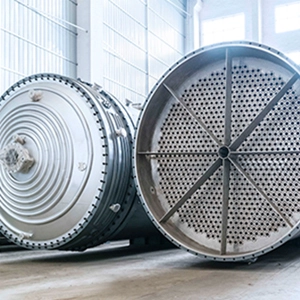
- Equipment: static-melting or scraped-surface crystallizers, plate-coil stacks, progressive freeze/sweat columns.
- Advantages: no solvent inventory, lower emissions, simplified recovery; high purity potential with optimized thermal profiles.
- Typical outcomes: oil content <0.5–1.0% feasible for fully refined grades; competitive yields with reduced utility in optimized systems.
Comparison of technologies (indicative):
| Attribute | Solvent deoiling | Melt crystallization | Hydrorefining (add-on) |
|---|---|---|---|
| Yield | High; optimized by solvent ratio | High; sensitive to cooling profile | Not applicable |
| Purity (oil, color) | Excellent; post-hydrotreating improves color | Excellent; low oil achievable; good color with polishing | Color/odor upgrade |
| Opex/Capex | Solvent handling, recovery energy; mature scale economics | Lower solvent/utility; thermal management key; scalable modularly | Moderate; hydrogen and catalyst costs |
| Environmental | Solvent VOCs, energy for recovery | Minimal solvents, lower VOCs | Hydrogen/CO2 considerations |
Recent innovations:
- Advanced crystallization control (model predictive control, inline turbidity/DSC proxies) to tighten oil specs with lower energy.
- Static-melt crystallizers with enhanced heat-exchange surfaces reducing cycle time 15–25%.
- Hybrid schemes: rough cut by melt crystallization, polish by mild solvent wash to balance yield and purity.
Illustrative example:
A mid-scale refiner retrofit replaced a ketone–aromatic deoiling train for selected grades with plate-coil static melt crystallizers, eliminating solvent use on those lines, reducing specific energy 15–25% and reaching oil content <0.5% for 58/60 grades. Payback driven by solvent savings, simplified EHS compliance, and premium access.
Trends and Challenges
Solid paraffin industry trends and challenges inform strategy and risk.
Trends:
- Sustainability push: solvent-free crystallization, energy-efficient heat integration, and growing interest in FT and bio-based complements.
- Technology upgrades: deeper hydrotreating for low-odor/cosmetic grades; digitized crystallization control for tighter specs.
- Regulatory tightening: VOC limits, REACH compliance, food-contact and cosmetic safety standards.
Challenges:
- Feedstock volatility: slack wax supply constrained by global shift from Group I to Group II/III base oils.
- ESG pressure: decarbonization expectations across scope 1–3; solvent management costs.
- Competitive materials: FT, PE, and bio-waxes displacing volumes in select niches; price–performance positioning required.