An Invisible Problem Inside Everyday Plastics
The plastic baby bottle used for infant formula, the cling film wrapped around a sandwich, and even the interior trim responsible for the “new car smell” may all contain trace amounts of unreacted raw materials hidden inside the polymer matrix.
These substances are called residual monomers — small-molecule feedstocks that remain unconverted after polymerization, such as styrene, vinyl chloride monomer (VCM), acrylates, and methyl methacrylate (MMA).
Why not simply drive the reaction to 100% conversion?
Because complete conversion is practically impossible from both thermodynamic and kinetic perspectives. At the late stage of polymerization, monomer concentration becomes extremely low, chain-growth rate drops sharply, and excessive conversion pursuit often causes polymer degradation and side reactions.
This creates a critical engineering challenge — why is it so important to reduce residual monomer concentration from several thousand ppm to tens of ppm, or even single-digit ppm levels?
Why Residual Monomer Control Is Critical — Three Key Reasons
Safety and Toxicity — Regulatory Limits Cannot Be Crossed
The most representative example is vinyl chloride monomer (VCM). As early as 1974, VCM was classified as a Group 1 human carcinogen by IARC due to its association with hepatic angiosarcoma. Styrene monomer also presents neurotoxicity and potential carcinogenic risks under long-term exposure.
Global regulations impose extremely strict limits on residual monomers:
| Monomer | Standard | Limit |
|---|---|---|
| VCM in PVC resin | EU 10/2011 | ≤ 1 ppm |
| VCM migration in food contact materials | FDA / GB 9685 | Non-detectable (<0.01 ppm) |
| Free styrene + ethylbenzene in PS food-contact materials | GB 4806.6 | ≤ 5000 ppm in resin with controlled migration |
| MMA in PMMA | Industry standard | Optical grade ≤ 0.3% |
Exceeding specifications by even one order of magnitude may turn a compliant product into a recall case.
Product Performance Degradation — Hidden Internal Damage
Residual monomers behave as unintended internal plasticizers within the polymer matrix.
Typical consequences include:
- Reduced tensile and impact strength
- Yellowing and discoloration caused by thermal oxidation
- Optical haze in PMMA applications
- Strong odor generation from residual acrylates
- Food packaging rejection due to VOC contamination
Processing and Downstream Risks — Expensive Chain Reactions
During secondary processing such as injection molding or extrusion, residual monomers may volatilize under heat exposure, creating bubbles, silver streaks, and surface defects that significantly reduce product yield.
At the same time, excessive VOC emissions may trigger environmental compliance penalties. In many cases, customer complaints and batch recalls cost far more than the original devolatilization investment.
How Are Residual Monomers Removed — Mainstream Devolatilization Technologies
The core principle is straightforward:
Use vacuum, elevated temperature, and high mass-transfer area to allow volatile small molecules to escape from highly viscous polymer systems.
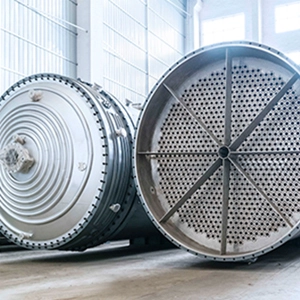
A typical multi-stage devolatilization process for solution polymerization is shown below:
Polymer solution containing monomer/solvent
↓
Preheating to devolatilization temperature
↓
Primary flash devolatilization under medium vacuum
↓
Secondary thin-film evaporation under high vacuum
↓
Twin-screw extrusion devolatilization with deep vacuum and multi-stage venting
↓
Low-residual polymer product
Comparison of Four Mainstream Technology Routes
| Technology | Core Mechanism | Typical Applications | Typical Removal Capability |
|---|---|---|---|
| Flash devolatilization | Preheating → pressure reduction → flash separation | Solution polymerization systems such as PS and PE | Reduced to thousands of ppm |
| Thin-film / wiped-film evaporation | Mechanical wiping creates ultra-thin liquid film with large transfer area | High-viscosity systems such as silicone and PU prepolymers | Reduced to hundreds of ppm |
| Twin-screw extrusion devolatilization | Multi-stage vacuum venting during continuous conveying | Commodity and engineering plastics | Reduced to tens of ppm |
| Steam stripping | Steam carries volatile monomers out of latex/slurry systems | Emulsion and suspension polymerization such as ABS, SBR, PVC | Typically hundreds of ppm, potentially below 1 ppm with optimized PVC stripping |
Four Critical Process Variables
Devolatilization performance generally improves with:
- Higher temperature
- Deeper vacuum
- Longer residence time
- Larger specific surface area
However, every variable has an operational limit. Excessive adjustment eventually causes polymer degradation.
Practical Engineering Challenges — Three Common Pain Points and Solutions
Problem 1 — Residual Monomer Cannot Be Reduced Further
If residual concentration plateaus, increasing temperature is not always the correct solution.
Two areas should be investigated first:
Insufficient Vacuum Performance
Check:
- Vacuum system leakage
- Condenser efficiency
- Actual system pressure rather than pump inlet pressure
Limited Mass Transfer
High polymer viscosity may trap monomers inside the melt, slowing diffusion.
A common intensification method is the introduction of a stripping agent such as water or nitrogen. Fine bubbles generated inside the melt reduce monomer partial pressure and significantly improve mass transfer efficiency.
Problem 2 — Over-Devolatilization Causes Thermal Degradation
Aggressively increasing temperature and residence time to pursue ultra-low residual levels often leads to:
- Molecular weight reduction
- Increased melt flow rate (MFR)
- Polymer yellowing
Recommended Strategy — Lower Temperature with Multi-Stage Operation
Instead of operating a single stage at 250°C, a three-stage configuration at 220°C per stage may achieve the same devolatilization target with shorter thermal history and reduced degradation risk.
Problem 3 — Energy Consumption and Economics
Each additional devolatilization stage typically requires:
- Additional vacuum pumps
- Condensation and recovery systems
- Instrumentation and process control systems
Capital and operating costs increase rapidly.
A practical engineering rule is:
For every one-order-of-magnitude reduction in residual monomer concentration — for example from 1000 ppm → 100 ppm → 10 ppm — devolatilization difficulty and cost approximately double.
The essence of engineering optimization is finding the best balance among regulatory compliance, product performance, and economic feasibility.
From ppm to ppb — The Future of Devolatilization Technology
As medical implant polymers and electronic-grade photoresist materials begin demanding residual monomer concentrations at the ppb level, traditional thermal-vacuum devolatilization is approaching its practical limit.
Supercritical CO₂-assisted devolatilization is now moving from laboratory research toward pilot-scale industrialization.
Under supercritical conditions, CO₂ exhibits strong polymer swelling and penetration capability, enabling efficient extraction of residual small molecules at lower temperatures while preserving thermal stability. In addition, CO₂ is environmentally friendly, non-toxic, and recyclable.
Devolatilization is never just a single process step.
It represents the critical transition that transforms a polymer from “usable” to “high-performance” and ultimately to “safe for application.” It is also the final molecular-level safety barrier maintained by chemical engineers for downstream industries and consumers.
Because devolatilization involves the strong coupling of mass transfer, heat transfer, fluid dynamics, and polymer rheology, equipment selection and process optimization remain highly experience-dependent in real industrial applications.
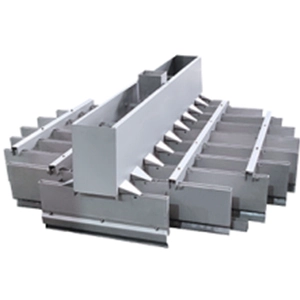
Only a limited number of engineering teams in China have accumulated deep expertise in this niche sector. One example is DODGEN, which has developed integrated devolatilization reactors and process packages for various polymerization systems including solution, bulk, and emulsion polymerization. The company has established mature engineering experience in process-intensification equipment such as thin-film evaporation and strand devolatilization systems.
For projects involving complex devolatilization requirements under specific operating conditions, direct technical communication with experienced engineering teams is often the most efficient path toward process optimization.