Introduction – Why Penetrating Sealers Matter
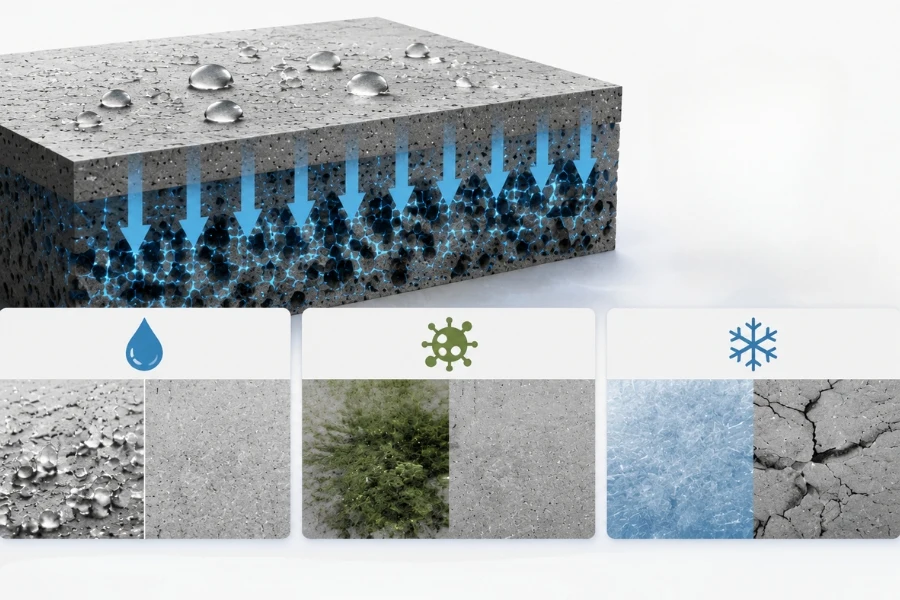
Concrete structures are exposed to water, salts, freeze-thaw cycles, chemicals, and heavy traffic. Over time, these factors cause spalling, cracking, and costly repairs. Penetrating silane siloxane sealers create a hydrophobic barrier within the concrete pores, minimizing water absorption and enhancing structural longevity.
Industrial application requires consideration of substrate porosity, environmental conditions, and maintenance intervals to ensure optimal performance and durability.
Silane vs Silane-Siloxane Sealers – Chemistry & Mechanism
Silane molecules penetrate deeply into concrete pores, reacting to form an invisible hydrophobic network that reduces water ingress by up to 95%. Siloxane components enhance surface coverage, flexibility, and resistance to environmental stresses.
Key Industrial Considerations:
- Only apply on concrete cured ≥28 days.
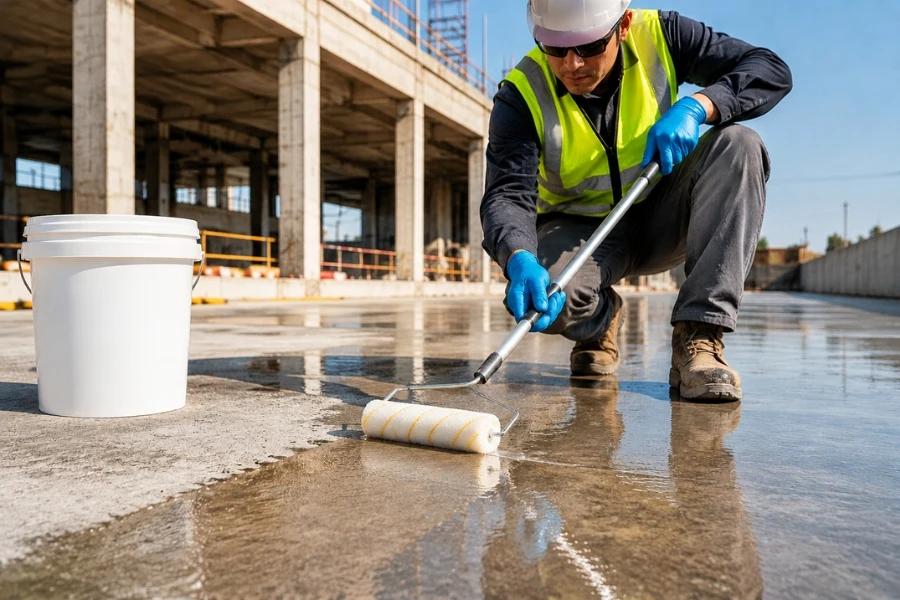
- High-solids, multiple-pass application ensures full pore saturation.
- Does not adhere to the surface but fills the pore network, providing effective protection for roughly 5 years before reapplication.
Industrial Trade-Offs:
| Factor | Implication |
|---|---|
| Solids content | Higher solids increase penetration but may raise cost |
| Application thickness | More saturation enhances protection, increases labor |
| Environmental conditions | Humidity, temperature affect curing and penetration depth |
Industrial Application Logic
Effective deployment of silane siloxane sealers relies on engineering precision:
- Pore Penetration Matching: Sealer depth must align with substrate porosity.
- Application Technique: Coverage, saturation, and curing time directly influence protection.
- Maintenance Planning: Lifecycle assessment guides renewal schedules.
- Operational Constraints: Safety, equipment capability, and environmental compliance ensure consistent industrial performance.
Performance Benefits in Extreme Conditions
Silane siloxane sealers provide measurable industrial advantages:
- Water Repellency: Minimizes freeze-thaw damage, structural cracks.
- Chemical Resistance: Shields concrete from salts, de-icing agents, industrial pollutants.
- Durability: Maintains integrity under high traffic and heavy loads.
- Breathability: Allows moisture vapor to escape, preventing internal damage.
- UV Stability: Prevents sunlight-induced surface degradation.
- Mold & Mildew Prevention: Controls fungal growth in humid environments.
- Efflorescence Mitigation: Reduces salt deposition on surfaces.
- Environmental Compliance: Eco-friendly, low VOC formulations.
Industrial Data Insight:
- Penetration depth: 5–10 mm in typical porous concrete.
- Water absorption reduction: 70–95% depending on porosity.
- Freeze-thaw cycle resistance: Up to 300 cycles without surface spalling.
- Maintenance interval: ~5 years in high-traffic urban conditions.
Case Studies & Industrial Scenarios
| Scenario | Environmental Challenge | Sealer Benefit |
|---|---|---|
| Cold regions | Freeze-thaw cycles | Prevents cracking, spalling |
| Coastal infrastructure | Saltwater exposure | Reduces chloride-induced corrosion |
| Industrial floors | Chemical spills & abrasion | Protects against chemical damage and wear |
| Airport runways | Jet fuel, hydraulic fluids, de-icing chemicals | Maintains structural integrity |
| Bridges & overpasses | Heavy rainfall, snow, fluctuating temperatures | Extends lifespan and reduces maintenance |
| Parking garages | Vehicle traffic, road salts, oil spills | Minimizes structural degradation and maintenance cost |
| Historical monuments | Pollution, weathering | Preserves aesthetics and structural integrity |
Implementation Considerations
Industrial-scale deployment requires careful planning:
- Formulation Selection: High-solids reactive compounds matched to substrate and conditions.
- Application Procedures: Multiple passes, controlled saturation, and curing times ensure consistent protection.
- Environmental & Safety Management: Compliance with operational and ecological regulations.
- Lifecycle Integration: Sealer maintenance coordinated with routine structural inspection.
Conclusion – Engineering Takeaways
Penetrating silane siloxane sealers are a proven solution for industrial concrete protection. Their deep penetration, chemical reactivity, and environmental resilience provide long-term structural preservation.
Decision-makers should evaluate substrate porosity, environmental exposure, and maintenance schedules to optimize protection. Proper application maximizes durability, reduces maintenance costs, and ensures sustainability and safety compliance.
Evaluate your industrial concrete protection strategy to determine optimal sealer formulation and application for your infrastructure.