Definition
A non-Newtonian fluid is any fluid whose viscosity varies with applied shear stress or shear rate, rather than remaining constant as described by Newton’s law of viscosity. Unlike Newtonian fluids such as water or air, non-Newtonian fluids exhibit changes in flow behavior depending on the forces acting upon them.
Because their apparent viscosity changes during processing, non-Newtonian fluids require special consideration in chemical engineering, particularly in pumping, mixing, heat transfer, and reactor design.

Key Characteristics
The defining feature of a non-Newtonian fluid is its variable rheological behavior.
Common characteristics include:
- Viscosity changes with shear stress or shear rate
- Flow behavior differs from Newtonian fluids
- Apparent viscosity varies during processing
- Rheological properties directly influence fluid handling and equipment performance
Typical industrial examples include polymer solutions, slurries, adhesives, paints, coatings, cosmetic products, food pastes, and many high-viscosity chemical products.
Common Types
Non-Newtonian fluids are commonly classified into shear-thinning, shear-thickening, Bingham plastic, and thixotropic fluids, each exhibiting different rheological responses under applied stress.
- Shear-thinning fluids decrease in viscosity as shear rate increases.
- Shear-thickening fluids become more viscous under increasing shear.
- Bingham plastics require a minimum yield stress before they begin to flow.
- Thixotropic fluids gradually lose viscosity during continuous shear and recover when left at rest.
Each behavior affects process design, equipment selection, and operating conditions differently.
Industrial Significance
Understanding rheology is essential in chemical process engineering because fluid behavior directly affects production efficiency and product consistency.
For process engineers, non-Newtonian fluids influence:
- Mixing efficiency
- Pump performance
- Pressure drop
- Heat transfer characteristics
- Residence time distribution
- Reactor performance
Ignoring non-Newtonian behavior may result in poor mixing, unstable flow, excessive energy consumption, or inconsistent product quality.
Engineering Considerations
Designing equipment for non-Newtonian fluids requires more than simply knowing the fluid viscosity. Engineers must evaluate how viscosity changes across the expected operating range.
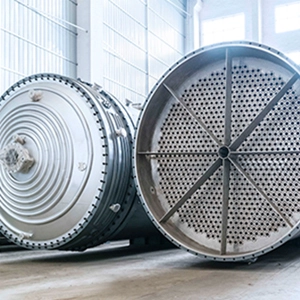
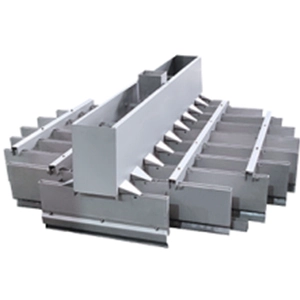
High-viscosity non-Newtonian fluids often require specially designed static mixers to improve mixing efficiency while minimizing excessive pressure loss. Likewise, viscosity variations can significantly influence heat transfer coefficients, equipment sizing, and overall thermal performance in heat exchangers.
Many polymerization systems and high-viscosity continuous flow processes involve non-Newtonian fluids, making rheological analysis an important consideration during equipment selection and process optimization.
Related Terms
- Newtonian Fluid
- Rheology
- Apparent Viscosity
- Shear Stress
- Shear Rate
- Static Mixer
- Heat Exchanger
- Pressure Drop