On September 12, Xingchuan New Materials announced that the world’s first 10,000-tonne-per-year industrial plant for hyperbranched polyolefin elastomer (H-POE) had been commissioned successfully on the first attempt, with the first batch of on-specification product rolling off the line. The milestone has once again drawn industry attention to a critical question: how does an original process move from the laboratory to continuous, stable, and replicable large-scale production?
도겐 extends its warmest congratulations to Xingchuan New Materials. 도겐 had the privilege of supplying the complete process solution for the plant’s polymer devolatilization unit — and we would like to take this opportunity to share some practical experience around this critical step in new-materials industrialization.
Tackling the Core Challenges of Devolatilization
Building the Foundation for Continuous, Stable Operation
For solution-polymerized polyolefins, the end of the polymerization reaction is not the end of the process. The polymer solution or melt still contains solvents, unreacted monomers, and other low-molecular-weight species. The devolatilization unit must deliver thorough volatile removal, stable separation, and a controlled thermal history — all at once, and under demanding constraints: high viscosity, heat-transfer limitations, a narrow temperature window, and continuous operation. Devolatilization performance directly determines residual levels, preservation of the polymer’s molecular structure, downstream palletization, and batch-to-batch consistency. It also has a lasting impact on the plant’s energy consumption and operating economics.
The real challenge in POE, EPOE, and H-POE projects is not the selection of any single piece of equipment. It is the ability to engineer material properties, polymerization solvent, volatile composition, melt rheology, vacuum load, solvent recovery, and the pelletizing interface as one coherent process chain. Any ill-defined boundary can escalate during scale-up into systemic problems: fluctuating residuals, localized overheating, fouling and blockages, vacuum instability, or a mismatch with downstream pelletizing.
A Systematic Devolatilization Approach
The DSXL Core Equipment Platform
DODGEN has focused for many years on mixing, heat transfer, separation, and process intensification for high-viscosity polymers, building the DSXL polymer devolatilization technology platform together with the engineering capabilities around it. The DSXL devolatilization system has been recognized as a Shanghai High-Tech Achievement Transformation Project.
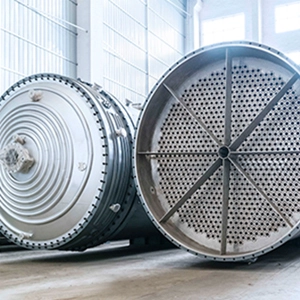
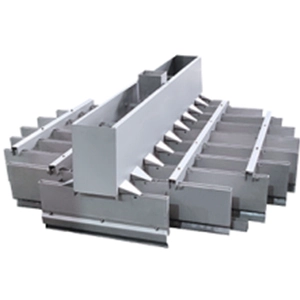
Tailored to the material system and the target specifications, a DSXL configuration flexibly combines high-efficiency heat transfer for viscous fluids, static mixing, uniform melt distribution, and single- or multi-stage flash and vacuum devolatilization. Volatiles are removed efficiently along short diffusion paths and under a controlled thermal history. Static mixing and well-engineered distribution continuously renew the mass-transfer interface and eliminate dead zones, while high-efficiency heat transfer and a low-shear design minimize the risk of localized overheating and unwanted degradation.
A Track Record That Speaks for Itself
Proven in Industrial Practice
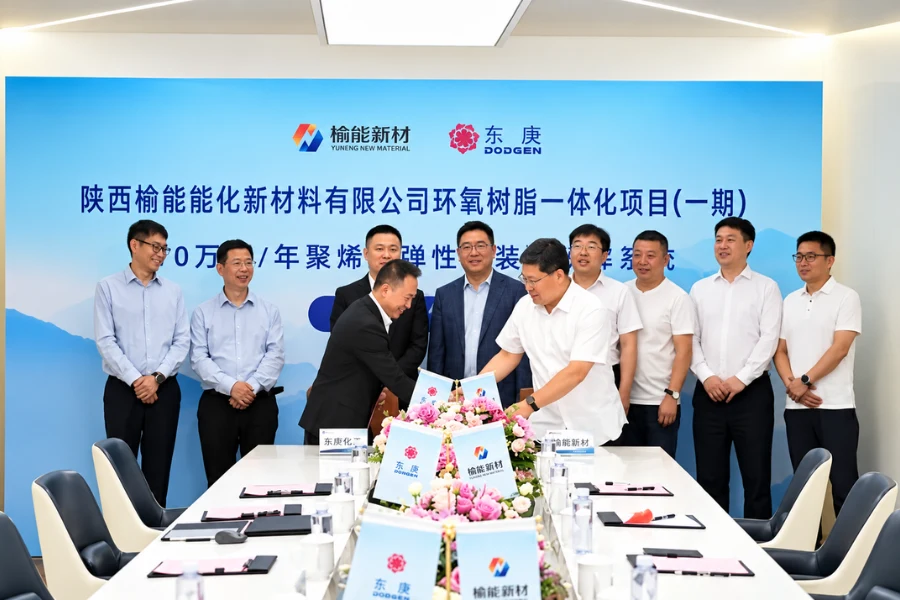
Drawing on this technical foundation, DODGEN has delivered devolatilization system solutions for multiple POE projects, with capacities ranging from pilot plants of several hundred tonnes per year to 10,000-tonne-class industrial facilities. The company was also awarded the contract for a critical devolatilization heat-exchange system for PetroChina. On May 21, 2026, DODGEN formally signed a contract with Shaanxi Yuneng Energy & Chemical New Materials Co., Ltd. to supply the devolatilization system for the 100,000 tonnes-per-year POE unit in Phase I of the customer’s integrated project — a system designed to remove heptane solvent, ethylene, and other volatile impurities.
From Pilot to Industrial Scale
A Full-Chain Service System
1. Material system evaluation — characterizing the polymer, solvents and monomers, volatile composition, viscosity and rheology, and the thermal stability window.
2. Process simulation — verifying the number of flash and vacuum devolatilization stages, residence time, heat and vacuum duties, and the routing of the volatile stream.
3. Core equipment design — an integrated combination of DSXL high-efficiency heat exchange, static mixing, uniform distribution, the devolatilization chamber, and condensation recovery.
4. System integration — engineering devolatilization, solvent recovery, waste-heat utilization, the vacuum system, melt conveying, and the pelletizing interface within a single process boundary.
5. Project delivery — full-cycle support matched to the project phase — process design packages, core equipment manufacturing, plant integration, startup support, and operational optimization. The exact scope is defined by the contract and project documentation.
Partnering on Your Next Project
Advancing High-End Polyolefins Together
If you are planning a POE, H-POE, EPOE, or other high-viscosity polymer project, we warmly invite you to speak with the DODGEN technical team. To make the first technical exchange as productive as possible, it helps to prepare the following in advance: feed, solvent, and monomer composition; capacity and operating mode; viscosity or rheological range; target residual specifications; temperature and pressure windows; existing equipment interfaces; and any lab or pilot-plant data. From there, DODGEN will prepare a preliminary assessment covering the devolatilization route, stage configuration, heat-transfer and distribution design, and the vacuum and solvent-recovery systems.
Polymer devolatilization is never just “the last equipment decision” — it is systems engineering that determines both product quality and plant economics. 도겐 looks forward to working with partners across the industry on POE and H-POE devolatilization, solvent recovery, and process intensification for high-viscosity fluids — and to supporting the steady, long-term growth of the high-end polyolefin industry.