Why Industrial Methionine Production Relies on the Hydantoin Route
DL-methionine is a sulfur-containing amino acid widely used in animal nutrition. Natural feed sources do not provide sufficient levels, which has led to large-scale industrial synthesis. The carbonate-hydantoin route is the dominant method due to its compatibility with continuous operation and stable raw material supply.
In industrial applications, production performance is determined by process stability, energy efficiency, and product consistency. These outcomes are influenced more by equipment configuration and process integration than by reaction chemistry alone.
Process Structure – From Reaction Pathway to Equipment Requirements
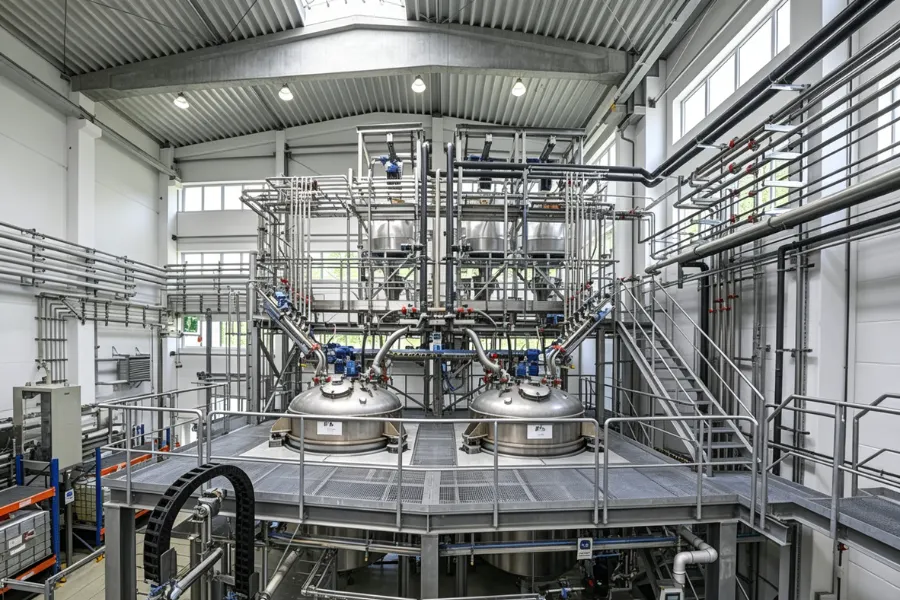
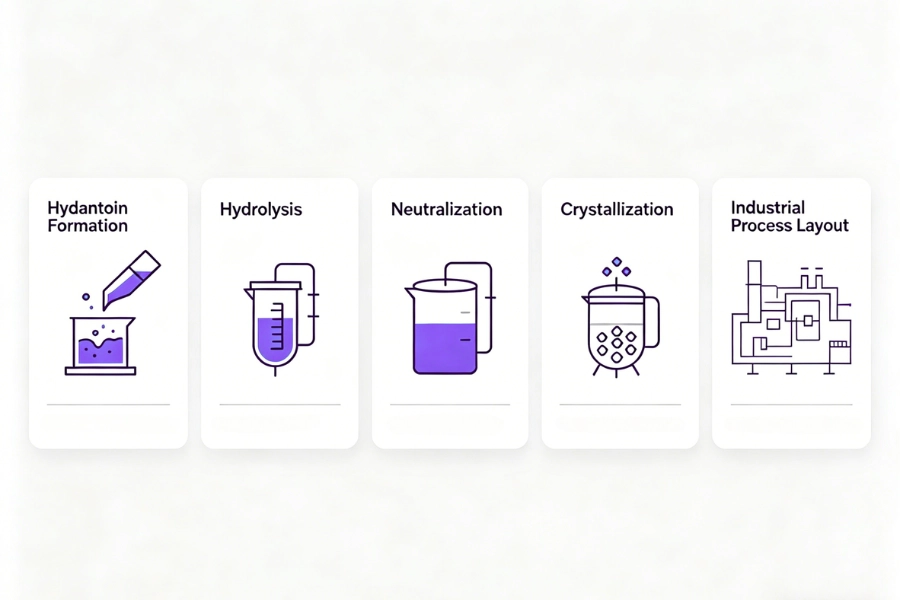
The hydantoin route consists of four main stages. Each stage introduces specific engineering requirements that affect overall plant performance.
Hydantoin Formation
The initial reaction combines 3-methylthiopropionaldehyde, ammonia, carbon dioxide, and hydrogen cyanide to form a hydantoin intermediate. This step involves gas-liquid interaction and releases heat.
- Equipment requirement
High-pressure stirred reactor with effective mixing and heat removal - Engineering constraint
Temperature uniformity must be maintained to avoid localized overheating
Hydantoin Hydrolysis
The intermediate is hydrolyzed under alkaline conditions to produce methionine salt.
- Equipment requirement
Jacketed reactor with controlled temperature and pH - Engineering constraint
Process stability depends on maintaining a consistent alkaline environment
Neutralization and Crystallization
The methionine salt is converted into DL-methionine through neutralization.
- Equipment requirement
Neutralization system, typically based on carbon dioxide absorption, integrated with crystallization - Engineering constraint
pH gradients influence nucleation behavior and downstream separation
Separation and Drying
Final processing includes impurity removal, concentration, crystallization, and drying.
- Equipment requirement
Filtration systems, evaporators, crystallizers, centrifuges, and drying units - Engineering constraint
Product purity and particle characteristics depend on stable phase separation and moisture control
Hydantoin Reactor – Process Role and Design Requirements
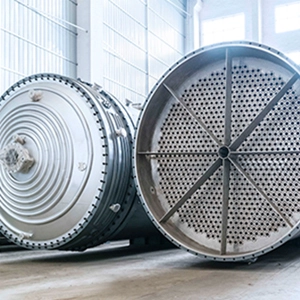
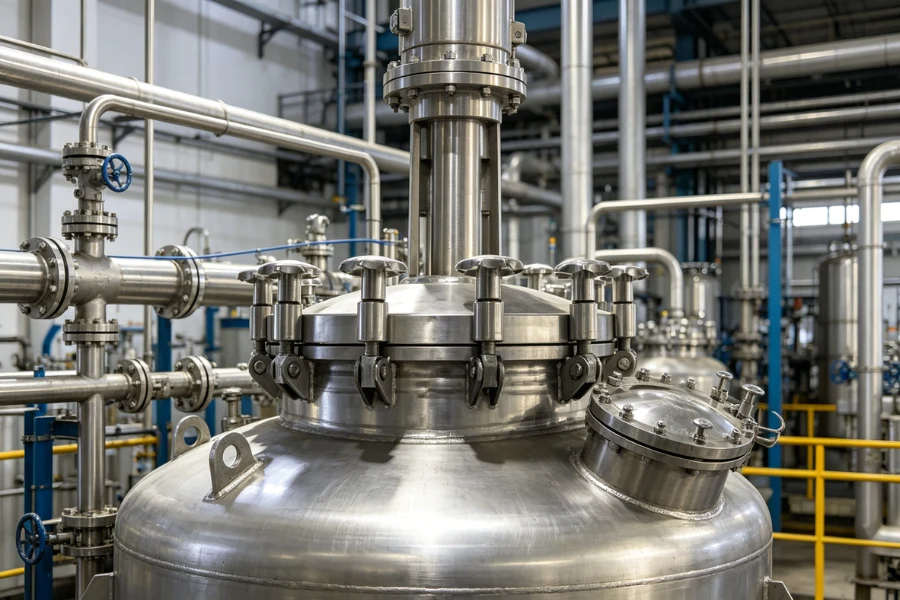
The hydantoin reactor is a central unit in the production sequence. It operates under pressure and involves hazardous materials.
Industrial Requirements
- Pressure resistance typically above 3 bar
- Corrosion resistance in ammonia, carbon dioxide, and cyanide environments
- Effective mixing for multiphase reaction systems
Materials such as zirconium or zirconium-lined alloys are often applied in systems exposed to corrosive conditions.
Design Considerations
- Typical reactor volume ranges from 2,500 to 10,000 liters
- Heat transfer is managed through jacketed or coil-based systems
- Mechanical sealing systems are required to limit gas leakage
Observed Operational Issues
- Insufficient mixing is associated with reduced conversion efficiency
- Localized temperature gradients can lead to by-product formation
- Seal degradation increases the risk of hazardous gas release
Industrial installations often use multiple reactors in series to maintain continuous flow conditions.
CO₂ Absorption Tower – Neutralization System Design
Neutralization is a key stage that influences both product quality and downstream processing.
Function
Carbon dioxide is introduced into the methionine salt solution to adjust pH and promote DL-methionine formation.
Equipment Configuration
- Packed or tray column designs
- Corrosion-resistant construction materials, including alloy systems or PTFE-lined structures
- Integration with foam control systems where required
Operating Conditions
- Temperature typically maintained between 30 and 60 °C
- Gas flow rate and pressure require controlled distribution to ensure uniform mass transfer
Process Comparison
- Carbon dioxide neutralization reduces the formation of inorganic salt by-products
- Acid-based neutralization simplifies equipment design but increases downstream separation load
Observed Operational Issues
- Packing blockage may occur due to premature crystallization
- Foam formation can reduce gas-liquid contact efficiency
Fluidized Bed Dryer – Drying Performance Considerations
Drying determines final product stability and handling properties.
Function
Moisture is removed from methionine crystals to achieve a target water content below 0.3 percent.
System Characteristics
- Uniform heat distribution through fluidization
- Short residence time compared with conventional drying systems
- Reduced risk of particle agglomeration
Operating Parameters
- Inlet air temperature typically between 90 and 120 °C
- Pressure drop across the bed is monitored to maintain stable fluidization
- Contact surfaces are typically constructed from stainless steel
Performance Trade-Off
Higher temperatures increase drying rate but may affect product stability. Lower temperatures reduce thermal stress but extend drying time. Operational settings are selected based on throughput and quality requirements.
Supporting Systems
- Hot air generation units
- Cyclone separators and dust collection systems
Common Problems in Industrial Methionine Facilities
Industrial implementation of the hydantoin route presents recurring operational challenges.
- Fouling in reactors and heat exchangers reduces heat transfer efficiency
- Variability in crystallization affects particle size distribution
- Handling of hazardous materials requires strict safety control
- Energy consumption is influenced by heat integration efficiency
These factors are typically associated with equipment configuration and process control rather than reaction limitations.
Automation and Control in Continuous Operation
Methionine production is typically conducted under continuous or semi-continuous conditions. Instrumentation and control systems are required to maintain stable operation.
Key Instrumentation
- Coriolis mass flowmeters for accurate dosing of liquid feedstocks
- Differential pressure transmitters for level and density monitoring
- Temperature transmitters for reaction and heat exchange control
Safety Systems
- Hydrogen cyanide detection and isolation systems
- Pressure relief systems for high-pressure reactors
- Interlock systems for process deviation management
Digital Systems
Supervisory control and data acquisition systems are applied to enable real-time monitoring and process traceability.
Operational experience indicates that process risk is concentrated in feed control and pressure management rather than in the reaction stage itself.
Process Integration Considerations
Individual equipment units can be specified independently. However, overall plant performance depends on the compatibility of process conditions across all stages.
- Separate equipment selection may lead to mismatched operating conditions
- Integrated process design aligns reaction, separation, and thermal systems
Industrial process engineering typically includes:
- Process simulation and performance evaluation
- Equipment specification based on operating conditions
- Commissioning and operational validation
Companies involved in process engineering, including DODGEN, operate in this area by providing system-level design and crystallization integration for industrial chemical production.