Falling Film Evaporation Technology Introduction
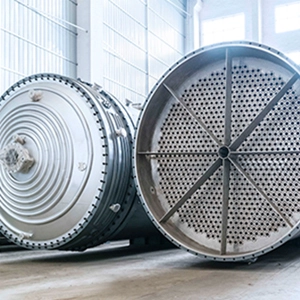
Falling film evaporation feeds the process liquid into the upper tube box of the heating chamber of a falling film evaporator.
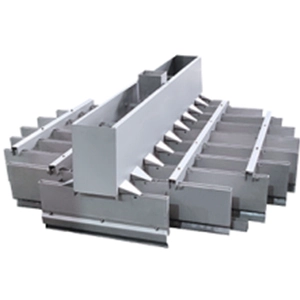
After passing through the liquid distribution and film-forming device, the liquid is uniformly distributed into each heat-transfer tube.
Under the combined effects of gravity, vacuum induction, and gas flow, it flows downward as a uniform film along the tube walls.
In distillation unit operations, the vapor phase enters the column directly for distillation.
The liquid phase is discharged from the separation chamber or circulated back to the evaporator by a pump.
Falling Film Evaporation Operating Principle

Built on DODGEN’s extensive expertise in static mixing and high-efficiency heat transfer, devolatilization Technology provides a critical purification solution for core polymer production processes.
By means of a multi-stage, staged devolatilization design, the material is uniformly heated and fully extended within the system to generate a very large specific surface area. This enables the efficient removal of unreacted monomers, solvents, and other volatile components.
Residual solvent content can be accurately controlled to below 500 ppm, significantly improving product purity and quality. At the same time, the polymer molecular structure remains intact under mild processing conditions.
The technology is widely applicable to the purification of various high-end polymer materials.
Extensive experience and leading technology; suitable for evaporating materials with higher concentration, higher viscosity, and heat sensitivity.

Technical Advantages
I. Outstanding Process Performance
Efficient heat transfer
High heat-transfer coefficient; up to 2.0–2.5 kW/m²·°C for aqueous systems, and 0.5–1.0 kW/m²·°C for organic systems.
Fast processing
Extremely short residence time (5–10 s), particularly suitable for heat-sensitive materials.
Energy saving and consumption reduction
Low pressure-drop characteristics (2–5 mbar); combined with low-temperature evaporation technology, significantly reducing energy consumption.
High evaporation efficiency
Evaporation rate up to 70–95%; operating flexibility up to 4:1, adaptable to different production loads.
II. Reliable Operating Characteristics
- Stable operation
Low liquid holdup; less prone to fouling/scaling, ensuring long-term continuous and stable production.
- Vacuum compatibility
Suitable for vacuum operation and capable of handling materials with various boiling points.
- Economical and practical
Low overall operating cost and high return on investment.
III.Professional Technical Support
- Advanced models:adopts world-leading falling-film reboiler models and multi-stage distribution systems, including distribution trays and distribution heads.
- Accurate calculations: process calculations based on advanced simulation software to ensure key parameters—vaporization rate, circulation rate, flooding factor, vapor velocity, and heat-transfer area—are accurate.
- Core distributor / film-distribution head design:establishes multiple hydraulic models to design distribution and film-forming systems under special operating conditions, supported by proprietary core internals calculation software.

The energy-saving technology for high-efficiency falling-film evaporation equipment is listed as one of the key energy-efficiency retrofit technologies in the National Recommended Catalogue of Industrial Energy-Saving Technologies and Equipment (2017) (Item No. 7), and is applicable to production in the chemical industry such as ethylene glycol, ethanolamines, caprolactam, polycarbonate, acrylic fiber, and chlor-alkali, etc.
Customized Design Services

DODGEN provides professional customized design services for falling film evaporators, covering the full process from process calculations and equipment selection to drawing preparation and system integration.
Based on customer material characteristics and production requirements, the team optimizes the evaporator’s structure, materials, and configuration through simulation analysis and engineering experience. This ensures high compatibility with actual operating conditions.
DODGEN emphasizes detail and reliability, strictly controlling everything from film-forming devices to separator design.
Installation guidance and commissioning support are provided to ensure smooth start-up and create long-term value for customers.
Application
Particularly suitable for evaporation and distillation sections involving heat-sensitive materials, and especially applicable as the evaporator in MVR systems.
Typical applications include:
MDI distillation
Vitamin E distillation
Ethylene glycol distillation
Hydrogen peroxide distillation
Oleochemicals
Polylactic acid (PLA)
Nylon 11 distillation
Solvent recovery
MVR evaporation
And many other sectors including petrochemical, pharmaceutical, and food industries.