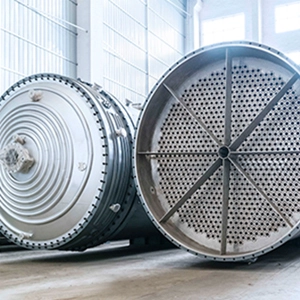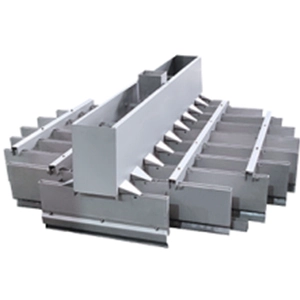
Distillation columns are among the most widely used separation units in chemical plants. Most chemical-process professionals are familiar with their basic operation, but diagnosing abnormalities such as flooding, liquid backup, severe entrainment, and hydraulic overload can still be difficult.
Operators who do not recognize the corresponding changes in pressure, temperature, flow, and liquid level may respond too slowly or make adjustments that worsen the problem. Understanding the mechanisms, warning signs, and appropriate corrective actions is therefore essential for stable operation.
Column Flooding

What Is Flooding?
Flooding occurs when liquid accumulates inside a distillation column faster than it can flow downward through the trays, downcomers, or packing.
In tray columns, flooding is commonly associated with two mechanisms:
- Downcomer flooding: Liquid and froth back up in the downcomer and may reach the tray above.
- Entrainment flooding: Excessive vapor velocity carries large quantities of liquid droplets upward to the next tray.
The operating condition at which flooding begins is called the flood point. Distillation columns are designed to operate below this limit with an appropriate hydraulic safety margin.
As a column approaches flooding, its pressure drop generally rises sharply while mass-transfer efficiency declines. If the condition continues, normal vapor–liquid contact is disrupted and stable column operation may become impossible.
Downcomer Flooding
Rising vapor encounters resistance as it passes through each tray. Therefore, the pressure below a tray is higher than the pressure above it.
Liquid can flow downward through the downcomer only when the available liquid head is sufficient to overcome:
- The pressure difference across the tray
- Frictional losses in the downcomer
- The resistance at the downcomer outlet
- The liquid height over the outlet weir
If liquid flow remains constant while vapor flow increases, tray pressure drop also increases. A greater liquid head is then required in the downcomer, causing the liquid level to rise.
If the vapor flow becomes too high, the liquid and froth may back up to the tray above. Downward drainage becomes restricted, liquid begins accumulating on the trays, and the column eventually floods.
Downcomer flooding can also occur when vapor flow remains constant but liquid flow increases. The larger liquid load increases both the resistance through the downcomer and the liquid height over the outlet weir.
Entrainment Flooding
At elevated vapor velocity, liquid droplets are carried upward with the vapor to the tray above.
This entrained liquid increases the liquid load on the upper tray. The deeper froth layer then produces more entrainment, further reducing the disengagement space between the froth surface and the tray above.
As this self-reinforcing process develops:
- Droplet carryover increases
- Large droplets may be projected directly onto the upper tray
- Froth may reach the tray above
- Tray efficiency declines
- Column pressure drop increases
- The column may ultimately flood
Excessive entrainment is one of the most common mechanisms leading to tray-column flooding.
Typical Signs of Flooding
Common operating indications include:
- A rising pressure differential between the column bottom and overhead
- A narrowing temperature difference between the top and bottom of the column
- A falling reflux-drum liquid level
- Reduced bottoms-product flow
- Deterioration in both overhead and bottoms product quality
- Unstable tray temperatures and pressure
- Abnormal liquid-level behavior
- Increasing reboiler duty without the expected improvement in separation
No single symptom proves that flooding has occurred. The diagnosis should be based on several related operating trends and, where possible, compared with the column’s hydraulic design limits.
Corrective Actions
Depending on the cause, appropriate actions may include:
- Reducing reboiler duty and upward vapor flow
- Reducing the reflux rate
- Reducing the feed rate
- Checking the condition and clearance of downcomer outlets
- Confirming that tray decks, weirs, and downcomers are not damaged or obstructed
- Checking for foaming, fouling, polymer formation, or solids deposition
- Confirming the accuracy of pressure, flow, temperature, and level instruments
Operators should make controlled adjustments and observe the response. Abruptly changing several variables at once may make the underlying cause more difficult to identify.
Severe Liquid Backup and Column Inundation

In Chinese operating terminology, yanta is sometimes used to describe severe liquid accumulation or inundation in part of a column. In international engineering practice, this condition is generally treated as an advanced form of flooding or downcomer backup rather than a completely separate hydraulic phenomenon.
Liquid progressively accumulates above a particular tray and fills part of the column section. Upward vapor flow becomes restricted, and normal heat and mass transfer between the vapor and liquid phases can no longer be maintained.
Typical Operating Signs
Possible indications include:
- A falling overhead temperature
- A falling reflux-drum level
- Rising bottom liquid level
- Rising column-bottom pressure
- Increasing column differential pressure
- Poor overhead and bottoms product quality
The exact response depends on the process, control strategy, condenser arrangement, feed composition, and location of the hydraulic restriction.
Common Causes
Blocked downcomers
Downcomers may be obstructed by:
- Metal fragments or welding slag remaining from construction
- Corrosion products
- Crystallized solids
- Polymer deposits
- Coke or fouling material
- Damaged or displaced internal components
A blocked downcomer prevents reflux liquid from draining normally and can rapidly cause liquid backup above the affected tray.
Excessive liquid load
An excessive feed or reflux rate may exceed the capacity of the downcomers even when they are mechanically intact.
The increased liquid load raises the height over the outlet weir and the resistance to downward flow, eventually causing liquid to accumulate on the trays.
Corrective Actions
Possible actions include:
- Reducing the feed rate
- Reducing the reflux rate
- Reducing reboiler duty if vapor load is also excessive
- Checking whether the abnormality is localized or column-wide
- Shutting down the column for inspection if an internal blockage or mechanical failure is suspected
When physical obstruction or internal damage is the cause, operating adjustments may provide only temporary relief. The equipment must be inspected and repaired.
Severe Hydraulic Overload and Loss of Fractionation

The Chinese term chongta is often used for a severe column upset involving excessive vapor and liquid loads, sudden entrainment, liquid carryover, or a major loss of fractionation.
When both vapor and liquid loads are too high, tray pressure drop increases and the liquid level in the downcomers rises. At the same time, the increased liquid flow raises the liquid height over the outlet weirs.
If the downcomers become completely filled, adjacent trays may become hydraulically connected by backed-up liquid. Normal stagewise fractionation is then severely disrupted.
Common Causes
Any condition that produces excessive vapor or liquid traffic may contribute, including:
- Excessive feed rate
- A feed composition containing more light components than expected
- Water entering a hydrocarbon feed
- Excessive bottom stripping steam
- Excessive reboiler duty
- Excessively high feed temperature
- Reflux interruption followed by an abrupt restart
- Poor or uneven reflux distribution
- Sudden vapor generation
- Unstable pressure control
- Foaming or rapid gas release
Typical Operating Signs
Possible symptoms include:
- Rising overhead temperature
- Rising overhead pressure
- Rising side-draw temperatures
- Rising reflux temperature
- Sudden changes in bottom liquid level
- Loss of product separation
- Off-specification side streams
- Darkening or contamination of distillate products
- Large and rapid fluctuations in column differential pressure
These signs depend on the specific column. A rapid fall in bottom level may indicate that liquid has been displaced upward, but level behavior must always be interpreted together with flow measurements and instrument validation.
Corrective Principles
The primary objective is to reduce the vapor and liquid loads:
- Reduce reflux flow when it is excessive
- Reduce reboiler duty or bottom steam
- Reduce the feed rate
- Stabilize feed composition and temperature
- Restore uniform reflux distribution
- Correct pressure-control or condenser problems
In severe cases, it may be necessary to:
- Stop the feed
- Shut off or substantially reduce bottom heating
- Allow tray temperatures and differential pressure to fall
- Re-establish circulation gradually
- Restart the feed and heat input under controlled conditions
The plant’s approved operating procedures, interlocks, and process-safety requirements must take priority during any upset response.

Diagnosing Flooding from Operating Data
A stabilizer column experiencing hydraulic problems may show the following trends:
- Separation deteriorates and bottoms purity falls.
- Operators increase heating steam, but the sensitive-tray temperature remains below its normal target.
- With overhead pressure unchanged, increasing reflux does not restore the expected upper-tray temperature.
- The temperature difference between a lower sensitive tray and an upper tray becomes significantly smaller.
- Light components increase in the lower section while heavy components increase in the upper section.
- Column differential pressure rises while bottom level remains controllable.
Together, these observations may indicate severe flooding rather than insufficient reboiler duty or reflux.
If the condition involves a sudden, severe hydraulic upset, the bottom level may change rapidly. However, terminology such as flooding, inundation, and chongta is not always used consistently between plants. Diagnosis should therefore rely on physical mechanisms and operating data rather than labels alone.
How Incorrect Operator Responses Can Worsen Flooding
For a column that has been properly designed and previously operated normally, hydraulic problems should first be evaluated against recent operating changes, provided the feed composition and equipment condition have not changed substantially.
A common sequence is:
- The sensitive-tray temperature falls.
- The operator increases bottom steam or reboiler duty.
- The overhead temperature rises.
- The operator increases reflux.
- Both internal vapor and liquid loads continue to increase.
- The column exceeds its hydraulic capacity and floods.
Each individual adjustment may appear reasonable when considered in isolation. Together, however, they can force the column farther beyond its design operating envelope.
In one stabilizer-column case, both reflux flow and bottom heating steam were substantially above their normal values. Even after the flows were reduced, the column failed to return to equilibrium after 16 hours.
The plant eventually stopped the feed, shut off the heating steam, and allowed the column to cool. The system was then restarted and returned to normal operation.
This illustrates an important principle: once a column is severely flooded, simply returning the control set points to their previous values may not immediately restore normal hydraulic conditions. A controlled reset or restart may be required.
Why Does a Distillation Column Need Reflux?

Continuous distillation process flow.
Reflux is a fundamental requirement for rectification.
Part of the condensed overhead vapor is returned to the column, where it flows downward and contacts the rising vapor. Through repeated vaporization and condensation, light components become concentrated toward the top while heavy components become concentrated toward the bottom.
The principal functions of reflux are to:
- Provide descending liquid for vapor–liquid mass transfer
- Remove part of the heat carried upward through the column
- Maintain the internal heat and material balance
- Condense heavier components from the rising vapor
- Promote vaporization of lighter components from the descending liquid
- Improve overhead product purity and separation
Reflux is essential, but more reflux is not always better. Excessive reflux increases internal traffic and can cause entrainment, high pressure drop, flooding, and unnecessary energy consumption.
Reflux provides the descending liquid required for rectification.
Natural and Pumped Reflux
Reflux arrangements can be classified according to how the liquid is returned to the column.
Natural Reflux
With natural reflux, the condenser or reflux receiver is installed above the reflux inlet. Condensed liquid returns to the column by gravity.

Natural reflux has several advantages:
- Simple flow arrangement
- No reflux pump
- Lower electrical consumption
- Fewer rotating-equipment maintenance requirements
Its limitations include:
- Reflux flow may vary with column pressure and available static head
- Reflux ratio may be more difficult to control accurately
- Response to process disturbances can be slower
- Equipment elevation requirements may increase structural cost
Natural reflux is often considered for relatively small units or services where a wide reflux operating range is acceptable.
Pumped Reflux
With pumped or forced reflux, condensate enters a reflux drum and is returned to the column by a pump.

Pumped reflux offers:
- Stable and measurable reflux flow
- Faster adjustment during disturbances
- Accurate flow control
- Easier ratio or cascade control
- Greater layout flexibility
Its limitations include:
- Additional pump power
- More equipment and maintenance
- Additional potential leakage points
- Possible pump cavitation or loss of flow with volatile, low-boiling liquids
Adequate Net Positive Suction Head (NPSH), suitable reflux-drum pressure, appropriate subcooling, and reliable pump-control design are especially important for low-boiling services.
Internal and External Reflux
The terms internal reflux and external reflux require careful definition because they may be used differently between plants.
Internal Reflux
In its broad thermodynamic sense, internal reflux refers to the downward liquid flow inside the column. This liquid includes externally returned reflux and any liquid produced by condensation within the column.
In equipment terminology, internal reflux may also describe arrangements in which overhead vapor is partially or fully condensed at the column top and the condensate returns directly without leaving the upper assembly.
A partial condenser may condense part of the overhead vapor and return the liquid directly to the column, while the remaining vapor proceeds to another condenser or product system.
A total condenser may also be mounted directly above the column with an internal receiver or reflux distributor. Part of the condensate is withdrawn as product, while the remainder returns to the column.
Potential advantages include:
- Fewer external piping connections
- Reduced leakage risk
- No external reflux pump in some configurations
- Compact installation
Potential limitations include:
- Reflux flow may be difficult to measure directly
- Reflux ratio may be less precise
- Internal distributors or splitters may require custom design
- Inspection and maintenance may be more difficult
- Adjustment range may be limited
For hazardous, highly toxic, or high-boiling materials, reducing external connections may be beneficial. However, the final selection requires a process-safety and operability assessment.

External Reflux
With external reflux, overhead vapor is condensed outside the column. The condensate normally enters a reflux drum, after which part is withdrawn as product and part is returned through external piping.
The reflux line may contain:
- A reflux pump
- Flowmeter
- Control valve
- Sight glass
- Temperature and pressure instruments
- Ratio or cascade control
External reflux is widely used because it provides measurable, continuously adjustable flow. It can also respond automatically to changes in feed rate, composition, pressure, or product-quality requirements.
Its disadvantages include additional equipment, energy consumption, maintenance requirements, and potential leakage points.
Selecting Between Internal and External Reflux
The selection should consider:
- Required reflux measurement accuracy
- Reflux-ratio operating range
- Feed and composition variability
- Hazard and toxicity of the process fluid
- Leakage risk
- Available static head
- Pump NPSH
- Column and condenser layout
- Maintenance access
- Capital and operating costs
- Control-system requirements
External reflux generally provides better measurement and control. Internal or gravity-return arrangements may be attractive when leakage minimization, simplicity, or handling of hazardous media is more important.
For example, some hydrogen fluoride distillation systems use internal reflux to reduce external circulation and potential leakage points. The suitability of such a configuration must be evaluated for the specific process.
Hot and Cold Reflux
Reflux can also be classified according to its temperature.
Hot Reflux
Reflux returned at approximately its bubble-point temperature is called hot reflux or saturated liquid reflux.
Because it is already close to saturation, relatively little rising vapor must condense to heat the reflux to its boiling condition.
Cold Reflux
Reflux returned below its bubble-point temperature is called cold reflux or subcooled reflux.
Subcooled reflux absorbs sensible heat after entering the column. This causes part of the rising vapor to condense, increasing the internal liquid flow below the reflux entry.
This may improve overhead condensation and influence separation without increasing the measured external reflux flow. However, it does not create additional physical trays or automatically increase the number of theoretical stages.
Its actual effects include:
- Changing internal vapor and liquid traffic
- Increasing condenser subcooling duty
- Increasing the heat required in the reboiler
- Affecting the upper-column temperature profile
- Potentially improving overhead product recovery or purity
- Increasing the risk of local hydraulic overload if not included in the design
For a total-condenser system, slightly subcooled reflux may be convenient because:
- Complete condensation reduces vapor losses
- Maintaining condensate at the exact bubble point can be difficult
- Limited subcooling helps provide stable reflux-pump suction conditions
However, excessive subcooling increases energy use and may disrupt the intended internal-flow profile. The reflux thermal condition must be included correctly in process simulation and hydraulic calculations.
Total Reflux
Total reflux is the operating condition in which all condensed overhead liquid is returned to the column and no distillate product is withdrawn.
At total reflux:
- No overhead product is produced
- Internal liquid and vapor circulation is maximized for the given heat input
- The column achieves its maximum separation for a fixed number of theoretical stages
- The required number of stages is minimized for a specified separation
Total reflux is commonly used during startup to establish the column temperature and composition profiles and bring the overhead product toward specification.
It may also be used temporarily during process disturbances. However, it is not a normal long-term production mode because no overhead product is withdrawn.
Total reflux must still remain within the column’s hydraulic capacity. Excessive heat input under total reflux can generate enough internal traffic to cause entrainment or flooding.
Conclusion
Flooding and severe hydraulic upsets are rarely solved by increasing both reflux and reboiler duty. These actions may intensify the original problem by raising the vapor and liquid loads beyond the column’s design capacity.
A reliable diagnosis should evaluate:
- Column differential pressure
- Temperature profile
- Feed rate and condition
- Reflux and reboiler duty
- Overhead and bottoms compositions
- Reflux-drum and column-bottom levels
- Condenser and reboiler performance
- Downcomer or packing condition
- Foaming, fouling, and solids formation
- Instrument accuracy and control response
Reflux is essential to distillation, but its flow rate, thermal condition, return method, and control strategy must match the column’s thermodynamic and hydraulic design.
Stable distillation depends on balancing separation performance, internal traffic, pressure drop, heat duty, equipment capacity, and operating flexibility—not on maximizing any single operating variable.