Global Market Overview
As a high-performance amorphous thermoplastic engineering plastic, Cycloolefin Copolymer (COC) is triggering a material revolution in high-end fields such as optical devices, medical packaging, and 5G communications, thanks to its excellent optical properties, heat resistance, and biocompatibility.
Typical Application Cases:
This specialty material, known as “plastic crystal”, the global COC/COP market is experiencing rapid growth. According to the latest research data, the global COC market size reached approximately USD 1.134 billion in 2024 and is projected to grow to USD 1.751 billion by 2031, with a compound annual growth rate (CAGR) of 6.5%.
Global Production Capacity Distribution
Currently, global COC/COP production capacity is mainly concentrated in Japanese enterprises. According to statistics from the Chemical Market Research Institute:
47,600 tons
These enterprises have long monopolized the global market with their first-mover technological advantages. Their industrial development is accompanied by technical barriers and supply chain challenges. Among them, the devolatilization process, as a key link in quality control, has become a core technological breakthrough point for entering the high-end market.
II. Upstream and Downstream Industry Chain
The COC industry chain features the characteristic of “tight at both ends and difficult in the middle”, with high technical barriers from upstream monomer synthesis to downstream application development.
Upstream Segment
Norbornene (NB), as the core monomer, has its production technology strictly blocked by Japanese enterprises. Domestically, only Lujing Chemical has a 500-ton/year synthesis plant, which is far from meeting the planned production capacity demand.
Midstream Polymerization
The core of the midstream polymerization segment is metallocene catalysis technology. COC adopts an addition polymerization process, where ethylene and norbornene monomers open their π-bonds to form a random copolymer under the action of metallocene catalysts such as zirconocene.
Downstream Applications
Downstream application development shows a diversified trend, with different fields putting forward differentiated requirements for COC performance. Optical components require high light transmittance and low birefringence, while medical packaging emphasizes biocompatibility and sterilization resistance.
COC Production Process Flow

III. Technical Bottlenecks
Currently, global COC/COP production capacity is mainly concentrated in Japanese enterprises. According to statistics from the Chemical Market Research Institute:
Production Capacity Distribution of Japanese Enterprises
Zeon Corporation has a production capacity of 47,600 tons
Polyplastics has a production capacity of 35,000 tons
Mitsui Chemicals has a production capacity of 6,400 tons
JSR Corporation has a production capacity of 5,000 tons
Technical Barriers
These enterprises have long monopolized the global market with their first-mover technological advantages. Their industrial development is accompanied by technical barriers and supply chain challenges. Among them, the devolatilization process, as a key link in quality control, has become a core technological breakthrough point for entering the high-end market.
IV. Monomer Devolatilization Technology
There are numerous technical bottlenecks in the production process of cycloolefin copolymers, among which the devolatilization process is one of the key links affecting product quality and production costs. Devolatilization is a process where unreacted monomers or solvents are volatilized by heating and removed from the polymer.
This process must consider effectively heating to raise the temperature to volatilize monomers and solvents, while allowing the polymer to reach above its softening point and gain fluidity, but at the same time avoiding overheating that would damage the polymer’s molecular weight, color, and other properties.
Technical Requirements for Devolatilization Process
For high-performance polymers such as COC/COP, the requirements for the devolatilization process are particularly strict. The devolatilization of molten polymers is a separation process controlled by thermodynamics and mass transfer, and its effective treatment needs to meet various conditions:
Filament Diffusion
Increasing specific surface area by forming thin films or filaments
Bubble Transfer
When the pressure of the environment where the polymer solution is located is lower than the vapor pressure of the volatile components, a large number of bubbles will nucleate to improve mass transfer efficiency
Heat Transfer Limitation
Proper temperature control to avoid degradation or deterioration of polymer structure caused by overheating
V. Technology Introduction
Process Principle
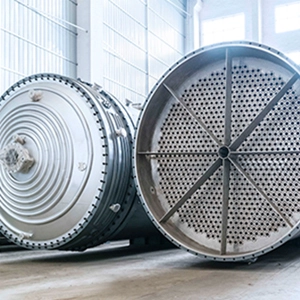
DODGEN devolatilization process achieves efficient removal of solvents and monomer volatiles in COC production through high-efficiency heat exchangers and vacuum separation technology. Its core includes:
Multi-stage Separation
Adopting a three-stage series separation design to reduce volatile concentration step by step
Precise Control
Operating temperature 220-260℃, vacuum degree ≤3kPa, ensuring sufficient volatilization of volatile components
Technical Advantages
Residue Control
Capable of controlling cyclohexane residue below 200ppm
Energy Consumption Reduction
35% more energy-efficient than traditional twin-screw extrusion processes, with solvent recovery rate increased to 99.5%
Environmental Compliance
VOCs emissions reduced to 15mg/m³, meeting the requirements of EU REACH regulations