Introduction
Bisphenol A is an organic intermediate used predominantly to make engineering plastics and thermoset resins.
Aliases:
- 2,2-bis(4-hydroxyphenyl)propane; diphenylolpropane; BPA
Primary uses:
- Polycarbonate plastics (optical media, glazing, auto components)
- Epoxy resins (can/coil coatings, composite matrices, adhesives)
- Smaller volumes in flame retardants and specialty resins
Market Overview
Global BPA demand is anchored by polycarbonate and epoxy resins, together typically accounting for about 90–95% of consumption. APAC is the growth and capacity center.
Regional production/consumption (approximate share by volume):
- Asia-Pacific: 60–65% (China-led capacity additions; strong domestic PC and epoxy draw)
- North America: 15–20% (resilient epoxy, steady PC in automotive/medical)
- Europe: 12–18% (regulatory headwinds in packaging; industrial epoxies stable)
- Middle East/Other: 3–6% (select integrated phenol–acetone–BPA hubs)
BPA Regional Production/Consumption Share (2025 Estimate)
Application breakdown (global, approximate):
- Polycarbonate: 65–70%
- Epoxy resins: 25–30%
- Others (UPR modifiers, flame retardants, specialty resins): 3–7%
BPA Global Application Share (2025 Estimate)
Recent trendlines indicate low-to-mid single-digit CAGR through 2030, with APAC capacity additions outpacing domestic demand in some years, pressuring margins cyclically. Automotive lightweighting and electrical/electronics sustain PC usage; infrastructure, wind, and protective coatings support epoxies. Regulatory pressure in food-contact packaging dampens legacy demand but is partly offset by industrial and composite applications.
Representative sources: Mordor Intelligence 2024, Coherent Market Insights 2023–2024, ResearchAndMarkets 2025/2034 outlooks, and public capacity trackers show Asia’s dominant expansion pipeline.
Value Chain
The BPA value chain is well-integrated around the cumene route and resin end-markets.
Flow (upstream to downstream):
Upstream
- Phenol and acetone (cumene oxidation chain; benzene and propylene feedstocks)
- Catalysts and additives (acidic ion-exchange resins, thiol co-catalysts, antioxidants)
- Utilities and HSE systems (steam, chilled water, emissions abatement)
Midstream (BPA synthesis and purification)
- Condensation of phenol with acetone over acidic catalysts to form p,p-BPA with o,p-BPA isomer and by-products
- Product workup via adduct crystallization (BPA–phenol), melt crystallization, filtration, washing, and phenol recovery
- Finishing operations (flake, prill, or molten BPA logistics)
Downstream
- Polycarbonate production (phosgene-based or non-phosgene transesterification routes)
- Epoxy resin production (BPA diglycidyl ether; advanced epoxies)
- Specialty uses (flame-retardant intermediates, high-heat resins)
Risk/Opportunity signals:
- Upstream: phenol/acetone spreads and cumene operating rates determine BPA cost curves.
- Midstream: technology choice (crystallization scheme) drives purity, color, and OPEX.
- Downstream: demand diversity across automotive, E/E, construction, packaging stabilizes cycles.
Production Technologies
Conventional synthesis uses acid-catalyzed condensation of phenol and acetone. Plants employ cation-exchange resins and thiol promoters to favor p,p-BPA, followed by purification to remove isomers, color bodies, and residual phenol.
Common purification routes:
- Adduct crystallization (BPA–phenol complexing), reslurry/washes, and phenol recovery
- Solvent-assisted crystallization variants (legacy units)
- Melt crystallization (solvent-free purification of molten BPA)
Melt crystallization (focus):
Process steps
- Prepare molten feed (controlled residence time to limit color precursors)
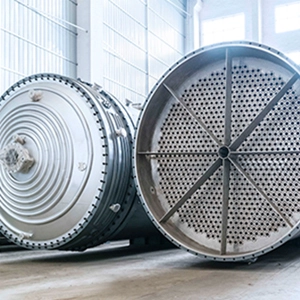
- Fractional melt crystallization on cooled surfaces or in scraped/suspension systems
- Sweating/washing phases to displace occluded mother liquor and reject o,p-BPA
- Controlled remelting, polishing filtration, stabilization, and finishing
Advantages
- High purity and low color without solvent handling
- Reduced phenol circulation and lower effluent burden
- Compact footprint; retrofit-friendly in brownfield revamps
Limitations
- Sensitive to fouling and crystal habit; requires tight thermal gradients
- Capital for specialized crystallizers; operator training
- Feed variability (isomer/oligomer load) can degrade yield if not managed
Practical insight:
In multi-train retrofits, we’ve observed 15–25% reductions in phenol recycle and notable color index improvements when melt crystallization replaced secondary adduct stages. Success hinges on antioxidant regime, crystal washing control, and disciplined decolorization upstream; otherwise, fouling and yield loss erode benefits.
Comparison snapshot:
| Criterion | Melt crystallization | Adduct crystallization | Vacuum distillation |
|---|---|---|---|
| Solvent/phenol load | Low | High (phenol complex) | None |
| Purity/color | Very high | High | Moderate (thermal risk) |
| Energy profile | Moderate–low | Moderate (reboil/loop) | High (deep vacuum) |
| Complexity | Medium (crystal control) | Medium (solid–liquid handling) | High (polymerization risk) |
| Typical retrofit use | Brownfield polishing | Base-case workhorse | Niche/legacy units |
Why it’s gaining traction: Environmental performance (lower solvent/phenol handling), energy intensity improvements, and the need for tighter o,p-BPA control for high-spec PC and epoxy grades. Recent engineering literature and vendor case studies support step-change quality with manageable OPEX when operated within robust thermal windows.
Trends and Challenges
- Regulation and safety: EU scientific opinions (EFSA 2023) trigger tighter migration limits in food-contact; thermal paper and infant products remain restricted in multiple regions, compressing packaging demand.
- Market structure: APAC capacity additions keep utilization cyclic; trade flows shift with antidumping actions and regional arbitrage in phenol/acetone.
- Substitution: BPA-free coatings (polyester/oleoresin) and alternative bisphenols (BPS/BPF) gain in select niches; performance/cost keeps BPA dominant in PC and industrial epoxies.
- Sustainability: Push for solvent-free purification (melt crystallization), phenol/acetone derived with lower carbon intensity, electrified utilities, and PC chemical recycling pilots.
- End-use dynamics: EVs, ADAS optics, and 5G infrastructure favor PC/epoxies; construction coatings and wind blades support epoxy demand despite packaging headwinds.