
Definition
Carbon disulfide (CS₂), also known as carbon bisulfide, is a sulfur-containing organic compound composed of one carbon atom and two sulfur atoms. It is a colorless to pale yellow liquid with a characteristic odor and is widely used as an industrial chemical intermediate.
Due to its strong solvency and high reactivity, carbon disulfide has historically played an important role in the production of chemicals, synthetic materials, and sulfur-containing compounds.
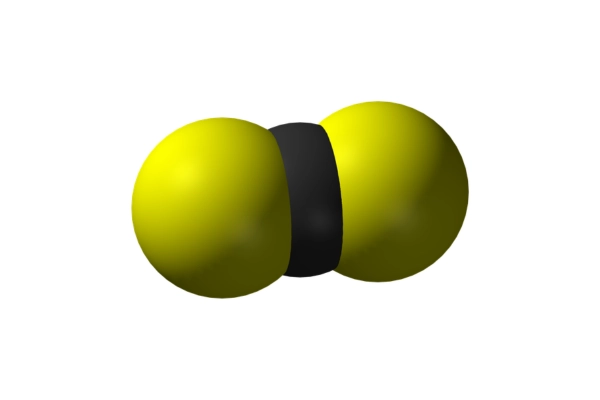
Physical and Chemical Properties
Carbon disulfide has a molecular weight of 76.14 and a boiling point of approximately 46.3°C.
Key characteristics include:
- Colorless to pale yellow liquid
- Insoluble in water
- Soluble in ethanol and ether
- Excellent solvent for sulfur, phosphorus, iodine, resins, rubber, and waxes
- Highly flammable
- Volatile under ambient conditions
Carbon disulfide is relatively stable under normal storage conditions. However, it can react with strong oxidizing agents and may decompose under high-temperature conditions.
Production Methods
Modern industrial production of carbon disulfide primarily involves the reaction of sulfur with carbon-containing feedstocks at elevated temperatures.
A simplified process route is:
Sulfur
+
Carbon Source
↓
High-Temperature Reaction
↓
Carbon Disulfide
↓
Condensation and Purification
Historically, charcoal was commonly used as the carbon source. Modern facilities often utilize petroleum-derived feedstocks or natural gas-based routes to improve efficiency and product consistency.
After synthesis, crude carbon disulfide typically undergoes condensation, purification, and distillation to achieve the desired product quality.
Industrial Advantages
Carbon disulfide remains an important industrial intermediate because of its unique chemical and solvent properties.
Strong Solvency
It dissolves sulfur and many nonpolar materials efficiently, making it useful in specialized chemical processes.
Sulfur Chemistry Intermediate
Carbon disulfide serves as a key raw material in the manufacture of sulfur-containing chemicals and specialty intermediates.
Process Versatility
Its reactivity enables its use in multiple downstream production routes across the chemical industry.
Industrial Applications
Carbon disulfide has been widely used in the manufacture of:
- Cellulose-based products
- Rubber chemicals
- Sulfur-containing intermediates
- Agricultural chemicals
- Specialty solvents
Historically, carbon disulfide was an important raw material in viscose rayon production, where it was used during cellulose processing.
Today, it continues to serve as a valuable intermediate in several chemical manufacturing sectors.
Safety Considerations
Because carbon disulfide is highly volatile and flammable, strict safety controls are required during storage, transportation, and processing.
Industrial facilities typically focus on:
- Vapor containment
- Fire prevention systems
- Ventilation management
- Leak detection
- Process monitoring
Proper handling procedures are essential to minimize operational risks and maintain safe plant conditions.
Related Terms
- Sulfur
- Viscose Rayon
- Sulfur Chemistry
- Solvent Recovery
- Distillation
- Gas-Liquid Separation