Introduction
For decades, advances in industrial polymerization were primarily driven by catalyst innovation, larger production units, and incremental process optimization. These approaches enabled the commercial production of polyethylene (PE), polypropylene (PP), polystyrene (PS), PVC, PET, and many other high-volume polymers that support modern manufacturing. However, as product specifications become more demanding and sustainability targets become stricter, conventional scale-up strategies are approaching their engineering limits.
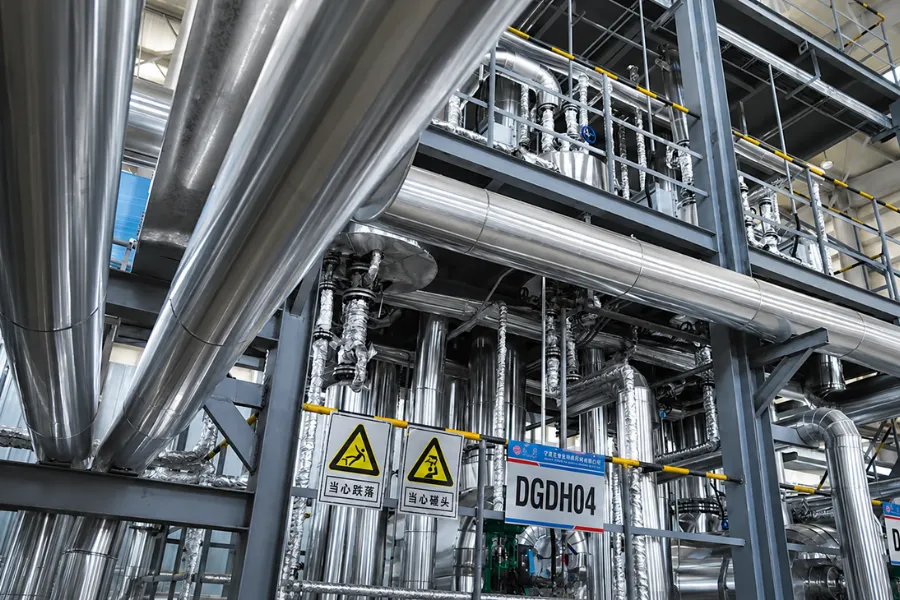
Unlike many chemical reactions, polymerization continuously changes its own reaction environment. As conversion increases, viscosity rises, heat transfer efficiency declines, diffusion slows, and residence time distribution (RTD) begins to influence molecular weight distribution (MWD) and polymer architecture. Simply increasing reactor size rarely delivers proportional productivity because the challenges extend beyond reaction chemistry to transport phenomena and process controllability.
In commercial polymer plants, increasing cooling surface alone rarely solves heat accumulation. As viscosity increases, convective heat transfer deteriorates while reactor hydrodynamics become increasingly difficult to control. Consequently, hot spots, uneven mixing, and localized conversion differences may still develop even when additional cooling capacity is installed. For this reason, successful scale-up engineering depends not only on thermal management but also on reactor geometry, mixing strategy, and flow behavior.
These challenges are reshaping the priorities of polymer manufacturing. The critical question is no longer how to accelerate polymerization reactions, but how to maintain stable reaction conditions from laboratory development through pilot validation and full-scale commercial production. Process robustness, reproducibility, and operational stability have become equally important performance indicators alongside conversion and productivity.
This transition has accelerated the adoption of process intensification. Rather than representing a single reactor technology, process intensification is an engineering methodology that integrates reaction engineering, heat and mass transfer, hydrodynamics, industrial process control, and continuous manufacturing into a unified production strategy. Advanced reactor systems—including continuous flow reactors, tubular reactors, loop reactors, static mixers, reactive extrusion systems, and modular reactor trains—are transforming how polymerization processes are designed, optimized, and commercialized.
Why Traditional Polymerization Processes Are Reaching Their Engineering Limits
The limitations of conventional polymerization are rarely caused by reaction kinetics alone. Instead, they originate from the interaction between chemistry and engineering as reaction conditions evolve during production.
Heat Transfer Becomes the First Scale-Up Bottleneck
Most commercial polymerization reactions release significant amounts of heat. As reactors become larger, the surface-area-to-volume ratio decreases, reducing the effectiveness of conventional cooling systems. Higher temperatures accelerate reaction rates, which further increase heat generation and create a positive feedback loop.
In industrial practice, thermal management is therefore much more than installing larger jackets or additional cooling coils. As polymer viscosity increases, fluid circulation weakens and convective heat transfer becomes less efficient. Maintaining acceptable reactor hydrodynamics often becomes just as important as increasing heat-transfer area. This explains why two reactors with identical cooling capacities may exhibit very different operating stability after scale-up.
Viscosity Changes the Entire Reaction Environment
Unlike many low-viscosity chemical systems, polymerization mixtures continuously become thicker as molecular chains grow.
Increasing viscosity simultaneously affects:
- Mixing efficiency
- Mass transfer
- Diffusion rates
- Pressure drop
- Heat removal
- Process controllability
Eventually, diffusion limitations reduce chain termination more rapidly than chain propagation. The resulting gel (Trommsdorff) effect accelerates polymerization unexpectedly while sharply increasing thermal load. At this stage, reactor performance depends less on intrinsic reaction kinetics and more on the ability of the engineering system to maintain stable transport conditions.
Residence Time Distribution Directly Affects Polymer Quality
Industrial polymer production requires consistent molecular architecture rather than simply achieving high conversion.
Wide RTD may produce:
- Broader molecular weight distribution (MWD)
- Copolymer composition drift
- Variable branching density
- Inconsistent polymer morphology
- Greater batch-to-batch variability
For many specialty polymers, controlling RTD contributes more to product consistency than marginal improvements in catalyst activity. This is one reason why modern polymerization reactor technologies increasingly emphasize flow management rather than reactor volume alone.
Process Intensification Is Not Equipment—It Is an Engineering Strategy
Many engineers initially associate process intensification with adopting compact reactors or microreactor technology. In reality, reactor hardware is only one component of a much broader engineering philosophy.
True process intensification combines multiple engineering disciplines into a single manufacturing strategy, including:
- Reaction engineering
- Heat and mass transfer optimization
- Micromixing control
- Residence time management
- Industrial process control
- Process Analytical Technology (PAT)
- Downstream process integration
The objective is not simply to make reactions faster, but to establish a wider and more stable process window that consistently delivers product quality under industrial operating conditions.
This perspective fundamentally changes reactor selection. Instead of asking “Which reactor is more advanced?”, engineers ask:
- Which reactor provides sufficient thermal management?
- Which configuration maintains product consistency throughout scale-up?
- Which system offers the best balance between productivity, flexibility, and operational robustness?
Once these questions become the focus, chemical reactor equipment is no longer viewed as standalone hardware. It becomes an integrated engineering platform that enables continuous polymer production, improves commercial reproducibility, and reduces industrial deployment risk.
How Advanced Reactor Technologies Reshape Polymerization
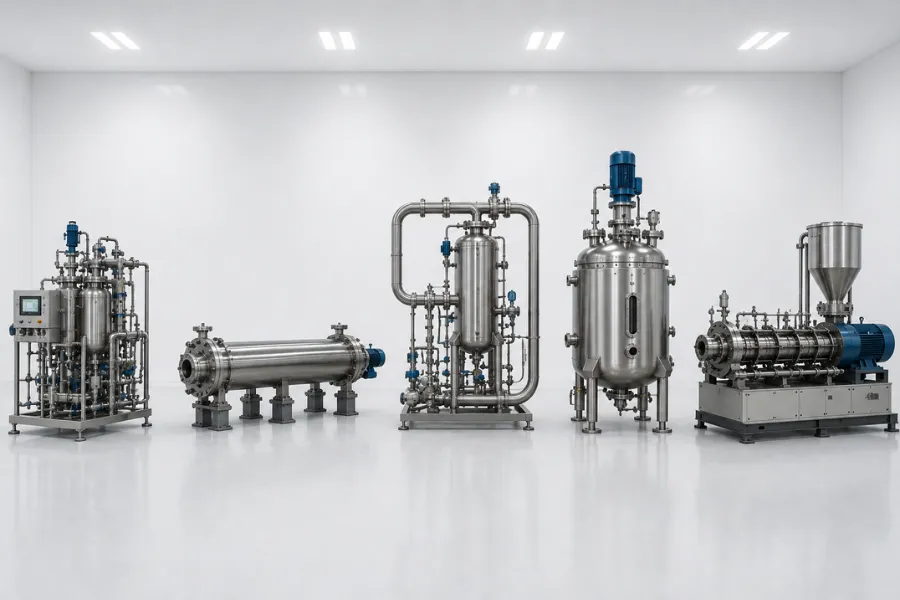
As polymerization systems become increasingly complex, reactor selection is no longer based solely on production capacity. Modern industrial reactor design focuses on matching reactor characteristics with reaction kinetics, heat release, viscosity evolution, mixing requirements, and long-term operational stability.
Each reactor configuration solves a different engineering problem. Selecting the wrong reactor may still achieve acceptable conversion, but it often compromises product consistency, energy efficiency, or commercial scalability.
Reactor Selection Depends on Engineering Constraints
Instead of asking which reactor is “best,” process engineers typically begin by identifying the dominant process limitation.
| Polymerization Challenge | Preferred Reactor | Engineering Reason |
|---|---|---|
| High heat release | Tubular Reactor | Excellent heat-transfer capability and narrow temperature gradients |
| Narrow molecular weight distribution | Plug Flow/Continuous Flow Reactor | Controlled residence time distribution (RTD) |
| High-viscosity polymerization | Reactive Extrusion | Superior distributive and dispersive mixing with continuous conveying |
| Slurry polymerization | Loop Reactor | Stable circulation and efficient solids suspension |
| Flexible multi-grade production | CSTR or Semibatch Reactor | High operational flexibility and easier formulation changes |
This engineering-first approach is replacing traditional equipment-first thinking. The objective is to optimize the entire polymer manufacturing process rather than maximize the performance of an individual reactor.
When Is a Tubular Reactor Preferable to a CSTR?
Tubular reactors and Continuous Stirred Tank Reactors (CSTRs) are both widely used in commercial polymer production, yet they solve different engineering problems.
A tubular reactor is generally preferred when heat removal and residence time control dominate process performance. Its plug-flow characteristics reduce RTD, making it suitable for highly exothermic polymerizations such as LDPE production, where temperature uniformity directly influences polymer structure and product quality.
A CSTR, by comparison, provides excellent bulk mixing and operational flexibility. It performs well for solution, suspension, and emulsion polymerizations where stable composition control or frequent product grade changes are required. However, the broader RTD may lead to wider molecular weight distributions and greater composition variability at high conversion.
From an industrial perspective, neither configuration is universally superior. The preferred reactor depends on whether the process prioritizes thermal management, flexibility, product uniformity, or operational simplicity.
Hybrid Reactor Systems Are Becoming the Industrial Standard
Many modern polymer plants no longer rely on a single reactor type.
Instead, multiple reactor technologies are integrated into one production train, allowing each stage to operate under conditions optimized for its specific function.
Typical examples include:
- CSTR followed by a tubular reactor to balance mixing and conversion
- Loop reactor combined with a gas-phase reactor for bimodal polyethylene production
- Multiple CSTRs connected in series to narrow residence time distribution
- Twin-screw reactive extrusion integrated with upstream polymerization for continuous polycondensation
Rather than maximizing the capability of one reactor, hybrid systems optimize the performance of the entire process. This reflects a broader shift toward process integration, where reaction, heat exchange, mixing, devolatilization, purification, and material handling are engineered as one coordinated manufacturing system.
Why Numbering-Up Is Replacing Traditional Scale-Up
One of the most significant trends in process intensification is the transition from conventional scale-up to numbering-up.
Traditional scale-up increases reactor size to raise production capacity. While this approach has supported the polymer industry for decades, larger reactors often experience disproportionate increases in thermal gradients, mixing limitations, and hydrodynamic complexity. As viscosity rises during polymerization, these effects become increasingly difficult to predict and control.
Numbering-up follows a different philosophy. Instead of building one larger reactor, multiple identical reactor modules operate in parallel while maintaining the same local reaction environment.
This strategy offers several engineering advantages:
- Heat-transfer performance remains consistent.
- Residence time distribution is preserved.
- Process validation becomes easier.
- Commercial expansion is more modular.
- Operational risk is distributed rather than concentrated in a single large unit.
For continuous flow polymerization and other intensified processes, numbering-up often provides better industrial reproducibility than conventional geometric scale-up.
Engineering Insight
Successful scale-up engineering is rarely about making equipment larger. It is about preserving the same reaction environment—including hydrodynamics, thermal management, micromixing, and residence time distribution—across every production scale.
When these engineering conditions remain consistent, laboratory results are far more likely to be reproduced in pilot plants and commercial facilities. This philosophy explains why modular continuous manufacturing has become an increasingly important pathway for next-generation commercial polymer production, particularly for specialty polymers requiring tight quality specifications and robust process control.
Engineering Trade-Offs Define the Success of Process Intensification
One misconception surrounding process intensification is that it simply makes polymerization faster or more efficient. In reality, every intensified process introduces new engineering trade-offs that must be carefully managed.
The objective of reaction engineering is therefore not to maximize a single parameter, but to achieve the optimal balance between productivity, product quality, operational stability, and lifecycle economics.
Every Engineering Improvement Comes with a Trade-Off
Industrial polymerization requires engineers to balance multiple competing objectives throughout process development and commercialization.
| Engineering Objective | Typical Trade-Off |
|---|---|
| Higher conversion | Higher viscosity and greater thermal load |
| Faster reaction rate | Narrower operating window and increased heat removal demand |
| Narrow molecular weight distribution | More sophisticated reactor and process control |
| Higher throughput | Increased pressure drop and mixing complexity |
| Continuous production | Greater system integration and automation requirements |
These trade-offs explain why process intensification is fundamentally an engineering optimization problem rather than a simple equipment upgrade.
Engineering Insight: Productivity Alone Is a Misleading KPI
A common mistake during early process development is focusing primarily on conversion or production rate.
In commercial operation, higher conversion is not always the optimal target. Increasing conversion often raises melt viscosity, pressure drop, fouling tendency, and energy consumption, while reducing the flexibility of industrial process control. In some polymerization systems, operating at a slightly lower conversion can improve overall plant productivity by shortening cleaning cycles, stabilizing operation, and maintaining consistent product quality.
This shift from maximizing reaction performance to optimizing overall manufacturing performance represents one of the defining characteristics of modern polymer manufacturing.
From Scale-Up to Commercial Deployment
For many polymer technologies, laboratory synthesis is no longer the greatest challenge. The real engineering difficulty begins when transferring a successful reaction from bench scale to continuous commercial production.
Many promising polymerization processes fail during scale-up because the reaction environment changes significantly as production capacity increases. Heat transfer, mixing efficiency, residence time distribution, and hydrodynamics rarely scale linearly with reactor size.
Typical Scale-Up Risks
During industrial deployment, engineers commonly encounter:
- Reduced heat-transfer efficiency
- Non-uniform temperature profiles
- Mixing dead zones
- Increased fouling
- Pressure instability
- Broader molecular weight distribution
- Product quality fluctuations
These issues cannot usually be solved by increasing equipment size alone. They require redesigning the overall process architecture.
Why Pilot Validation Matters
Successful pilot validation is not simply a smaller version of commercial production. Its purpose is to verify whether critical engineering variables remain stable before significant capital investment.
Typical pilot studies evaluate:
- Thermal management capability
- Process robustness under varying operating conditions
- Residence time distribution
- Product reproducibility
- Industrial process control strategy
- Startup and shutdown behavior
These results provide the engineering foundation for reliable commercial deployment while significantly reducing scale-up risk.
Industrial Example
Consider a high-viscosity free-radical polymerization process.
Laboratory experiments may demonstrate excellent conversion and narrow molecular weight distribution because the reactor volume is small and heat can be removed efficiently. However, after conventional scale-up, the same formulation may experience localized overheating, diffusion-controlled gel effects, unstable viscosity profiles, and inconsistent polymer properties.
Rather than modifying reaction chemistry, engineers increasingly solve these problems through process intensification by combining continuous reactor platforms, enhanced thermal management, static mixing, modular reactor configurations, and advanced industrial process control. In many cases, redesigning the process architecture produces greater commercial benefits than further catalyst optimization.
The Future of Polymer Manufacturing Is Integrated Process Engineering
The next generation of commercial polymer production will not be defined by a single breakthrough reactor. Instead, competitive advantage will come from integrating multiple engineering technologies into one coordinated manufacturing platform.
Future polymer plants are expected to combine:
- Continuous reactor platforms
- High-efficiency static mixing
- Advanced thermal management systems
- Inline Process Analytical Technology (PAT)
- Digital industrial process control
- Modular production units
- Integrated purification and downstream processing
This evolution reflects a broader transition from isolated unit operations to fully integrated process systems.
Industrial Evolution Timeline
The evolution of polymer production illustrates this engineering transformation:
Batch Production
↓
Semibatch Operation
↓
Continuous Polymer Production
↓
Integrated Process Systems
↓
Digital & Intelligent Polymer Manufacturing
At each stage, the objective has remained the same: improve process stability, product consistency, and commercial scalability while reducing operational risk.
Today, chemical reactor equipment is no longer viewed as an independent production asset. It serves as the foundation of an integrated manufacturing platform where reaction engineering, thermal management, hydrodynamics, automation, and process optimization operate together to deliver robust and economically sustainable industrial polymerization.
Conclusion
The era of process intensification represents a fundamental shift in how polymerization processes are engineered rather than simply how reactors are designed. As polymer systems become more complex and product specifications more demanding, successful industrial polymerization increasingly depends on the integration of reaction engineering, transport phenomena, process control, and scale-up engineering into a unified manufacturing strategy.
Modern chemical reactor equipment—including continuous flow reactors, tubular reactors, loop reactors, reactive extrusion systems, and hybrid reactor configurations—enables manufacturers to overcome longstanding challenges associated with heat transfer, viscosity growth, residence time distribution, and commercial reproducibility. Their greatest value lies not in accelerating reactions alone, but in creating wider operating windows, more robust processes, and more reliable commercial production.
For organizations planning new polymer manufacturing projects or upgrading existing production lines, reactor selection should never be considered in isolation. Evaluating reaction characteristics, process integration requirements, pilot validation results, long-term operational robustness, and commercialization objectives together will ultimately determine whether a polymerization process can transition successfully from laboratory innovation to sustainable industrial deployment.