What Is Diethyl Carbonate?

목차

Definition

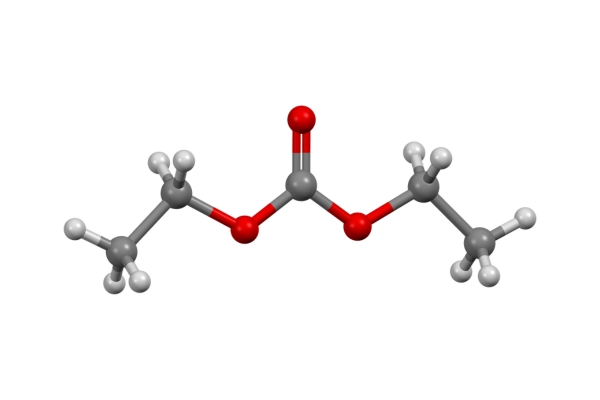
Diethyl carbonate (DEC), also known as ethyl carbonate, is an organic carbonate compound with the molecular formula C₅H₁₀O₃ and a molecular weight of 118.13. It is a colorless, transparent liquid with a slight irritating odor and exhibits many of the characteristics commonly associated with organic solvents.

Due to its favorable solvency and compatibility with a wide range of organic materials, diethyl carbonate is recognized as an important organic intermediate in chemical manufacturing and has long been used in solvent, resin, and cellulose-related applications.

What Is Diethyl Carbonate?

Physical and Chemical Properties

Diethyl carbonate is a clear liquid with relatively stable chemical behavior under normal handling conditions.

Key characteristics include:

  • Molecular formula: C₅H₁₀O₃
  • Molecular weight: 118.13
  • Colorless and transparent appearance
  • Slight irritating odor
  • Limited solubility in water
  • Miscible with alcohols, ethers, aromatic hydrocarbons, and chlorinated solvents

The compound can decompose in the presence of metallic sodium and displays solvent properties that make it suitable for numerous industrial formulations and processing systems.

Solubility Characteristics

One of the most important features of diethyl carbonate is its ability to dissolve a variety of organic materials used in industrial manufacturing.

According to traditional chemical references, diethyl carbonate can dissolve:

  • Nitrocellulose
  • Cellulose acetate
  • Polyvinyl acetate
  • Alkyd resins

Its compatibility with these materials has made it a useful solvent in coatings, resin systems, and cellulose processing applications.

At the same time, it exhibits poor compatibility with certain polymers, including some fluoropolymer materials and chlorinated rubber products.

Industrial Relevance

The industrial importance of diethyl carbonate comes primarily from its dual role as a solvent and an organic intermediate.

Historically, it has been widely used in the production and processing of:

  • Nitrocellulose
  • Cellulose acetate
  • 합성 수지
  • Natural resins
  • Industrial coatings

Rather than serving as a bulk commodity chemical, diethyl carbonate is valued because its carbonate functionality and solvent properties enable a variety of downstream chemical transformations and formulation processes.

Its versatility has made it a useful component in industries where solvent performance, material compatibility, and processing efficiency are important considerations.

Cellulose Processing Applications

Diethyl carbonate has traditionally been associated with cellulose-related industries because of its ability to dissolve cellulose derivatives such as nitrocellulose and cellulose acetate.

These materials are widely used in coatings, films, specialty materials, and industrial formulations. The solvent characteristics of diethyl carbonate help facilitate processing, formulation, and application of these cellulose-based products.

As a result, it has long been regarded as a practical solvent within cellulose manufacturing and finishing operations.

Resin Manufacturing Applications

Another important application area for diethyl carbonate is resin manufacturing.

The compound can dissolve various resin systems, including alkyd resins and polyvinyl acetate materials, making it useful in formulation and processing operations.

In resin production, solvent selection can significantly influence viscosity, application performance, drying behavior, and overall product quality. Diethyl carbonate has therefore been utilized in a range of coating and resin-related processes where controlled solvent performance is required.

Production Methods

A traditional production route for diethyl carbonate involves the reaction of absolute ethanol with phosgene to form ethyl chloroformate, followed by further reaction with ethanol to generate diethyl carbonate.

The crude product is subsequently purified through washing and distillation to obtain the finished material.

From a process engineering perspective, purification efficiency and product quality are strongly influenced by reaction control, impurity removal, and separation performance.

Safety Considerations

Diethyl carbonate is generally considered easier to handle than many highly reactive specialty chemicals. Nevertheless, appropriate industrial safety practices remain necessary.

Industrial facilities typically focus on:

  • Ventilation control
  • Solvent vapor management
  • Proper storage conditions
  • Fire prevention measures
  • Contamination control

As with most organic solvents, operators should follow established handling procedures and avoid unnecessary exposure during storage, transfer, and processing operations.

Related Terms

  • Dimethyl Carbonate (DMC)
  • Ethyl Chloroformate
  • Organic Carbonates
  • Nitrocellulose
  • Cellulose Acetate
  • Alkyd Resin

관련 라이선스 기술 및 장비

화학 공정 솔루션

애플리케이션

지속 가능성

메시지 보내기

반응 및 분리 전문, 저탄소 기술 파트너

도겐-화학-공정-회사

문의하기

고객의 요구 사항을 충족하기 위해 최선을 다합니다.