Definición
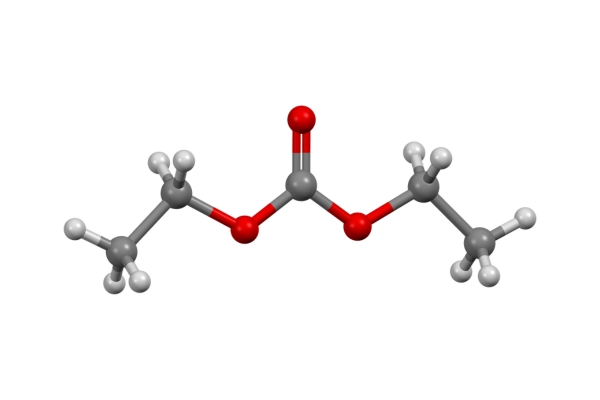
El carbonato de dietilo (DEC), también conocido como carbonato de etilo, es un compuesto orgánico de carbonato con la fórmula molecular C₅H₁₀O₃ y un peso molecular de 118,13. Es un líquido incoloro y transparente con un ligero olor irritante y presenta muchas de las características que suelen asociarse a los disolventes orgánicos.
Gracias a su buena solvencia y a su compatibilidad con una amplia gama de materiales orgánicos, el carbonato de dietilo se considera un importante compuesto orgánico intermedio en la industria química y se utiliza desde hace mucho tiempo en aplicaciones relacionadas con disolventes, resinas y celulosa.
Propiedades físicas y químicas
El carbonato de dietilo es un líquido transparente con un comportamiento químico relativamente estable en condiciones normales de manipulación.
Las características clave incluyen:
- Fórmula molecular: C₅H₁₀O₃
- Peso molecular: 118,13
- Aspecto incoloro y transparente
- Ligero olor molesto
- Solubilidad limitada en agua
- Miscible con alcoholes, éteres, hidrocarburos aromáticos y disolventes clorados
El compuesto puede descomponerse en presencia de sodio metálico y presenta propiedades disolventes que lo hacen adecuado para numerosas formulaciones industriales y sistemas de procesamiento.
Características de solubilidad
Una de las propiedades más importantes del carbonato de dietilo es su capacidad para disolver una gran variedad de materiales orgánicos utilizados en la fabricación industrial.
Según las obras de referencia tradicionales sobre química, el carbonato de dietilo puede disolver:
- Nitrocelulosa
- Acetato de celulosa
- Acetato de polivinilo
- Resinas alquídicas
Su compatibilidad con estos materiales lo ha convertido en un disolvente muy útil en recubrimientos, sistemas de resinas y aplicaciones relacionadas con el procesamiento de la celulosa.
Al mismo tiempo, presenta una compatibilidad deficiente con determinados polímeros, entre los que se incluyen algunos materiales fluoropolímeros y productos de caucho clorado.
Relevancia industrial
La importancia industrial del carbonato de dietilo se debe principalmente a su doble función como disolvente y como compuesto intermedio orgánico.
A lo largo de la historia, se ha utilizado ampliamente en la producción y el procesamiento de:
- Nitrocelulosa
- Acetato de celulosa
- Resinas sintéticas
- Resinas naturales
- Recubrimientos industriales
En lugar de utilizarse como producto químico básico a granel, el carbonato de dietilo es muy apreciado porque su funcionalidad carbonato y sus propiedades como disolvente permiten llevar a cabo una gran variedad de transformaciones químicas posteriores y procesos de formulación.
Su versatilidad lo ha convertido en un componente útil en sectores en los que el rendimiento de los disolventes, la compatibilidad con los materiales y la eficiencia en el procesamiento son factores importantes a tener en cuenta.
Aplicaciones del procesamiento de la celulosa
El carbonato de dietilo se ha asociado tradicionalmente a las industrias relacionadas con la celulosa debido a su capacidad para disolver derivados de la celulosa, como la nitrocelulosa y el acetato de celulosa.
Estos materiales se utilizan ampliamente en recubrimientos, películas, materiales especiales y formulaciones industriales. Las propiedades disolventes del carbonato de dietilo contribuyen a facilitar el procesamiento, la formulación y la aplicación de estos productos a base de celulosa.
Por ello, desde hace tiempo se considera un disolvente práctico en los procesos de fabricación y acabado de la celulosa.
Aplicaciones en la fabricación de resinas
Otro ámbito de aplicación importante del carbonato de dietilo es la fabricación de resinas.
Este compuesto puede disolver diversos sistemas de resinas, entre ellos las resinas alquídicas y los materiales de acetato de polivinilo, lo que lo hace útil en operaciones de formulación y procesamiento.
En la producción de resinas, la elección del disolvente puede influir de manera significativa en la viscosidad, el rendimiento de la aplicación, el comportamiento de secado y la calidad general del producto. Por ello, el carbonato de dietilo se ha utilizado en diversos procesos relacionados con los recubrimientos y las resinas en los que se requiere un rendimiento controlado del disolvente.
Métodos de producción
Una vía de producción tradicional del carbonato de dietilo consiste en la reacción del etanol absoluto con el fosgeno para formar cloroformiato de etilo, seguida de una reacción posterior con etanol para generar carbonato de dietilo.
A continuación, el producto bruto se purifica mediante lavado y destilación para obtener el producto final.
Desde el punto de vista de la ingeniería de procesos, la eficiencia de la purificación y la calidad del producto dependen en gran medida del control de la reacción, la eliminación de impurezas y el rendimiento de la separación.
Consideraciones de seguridad
En general, se considera que el carbonato de dietilo es más fácil de manipular que muchos productos químicos especiales altamente reactivos. No obstante, sigue siendo necesario aplicar las prácticas adecuadas de seguridad industrial.
Las instalaciones industriales suelen centrarse en:
- Control de la ventilación
- Gestión de los vapores de disolventes
- Condiciones adecuadas de almacenamiento
- Medidas de prevención de incendios
- Control de la contaminación
Al igual que con la mayoría de los disolventes orgánicos, los operarios deben seguir los procedimientos de manipulación establecidos y evitar la exposición innecesaria durante las operaciones de almacenamiento, trasvase y procesamiento.
Términos relacionados
- Carbonato de dimetilo (DMC)
- Cloroformiato de etilo
- Carbonatos orgánicos
- Nitrocelulosa
- Acetato de celulosa
- Resina alquídica