정의
Degassing, also called degasification, is a separation process used to remove dissolved gases, entrained air, or gas bubbles from liquids and process streams. In chemical processing, the term most commonly refers to the removal of non-condensable gases dissolved in a liquid.
Degassing is used when dissolved oxygen, carbon dioxide, air, volatile gases, or other gaseous components can cause corrosion, interfere with downstream reactions, reduce product quality, or affect process stability.
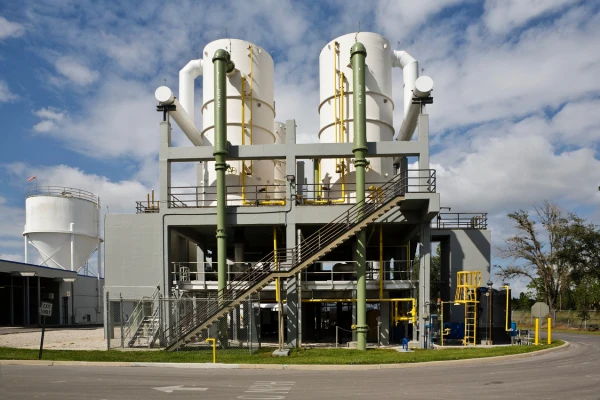
The process is commonly carried out under reduced pressure in packed columns, spray towers, vacuum vessels, or other equipment designed to promote gas-liquid mass transfer.

How Does Degassing Work?
The principle of degassing is based on reducing gas solubility in the liquid and creating a mass transfer driving force for dissolved gases to leave the liquid phase.
This can be achieved by lowering the system pressure, increasing temperature, introducing a stripping gas or steam, or increasing the gas-liquid interfacial area. Under vacuum conditions, the equilibrium solubility of dissolved gases decreases, allowing them to transfer from the liquid into the gas phase and be removed from the system.
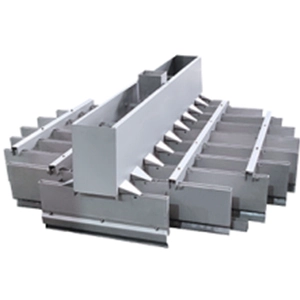
Efficient degassing therefore depends not only on vacuum level or temperature but also on mass transfer area, liquid distribution, residence time, and the ability to continuously remove the released gas.
Common Degassing Methods
Vacuum degassing is widely used in industrial processes. The liquid is exposed to reduced pressure inside a vacuum vessel, packed tower, or spray system, which promotes the release of dissolved gases.
Thermal degassing reduces gas solubility by heating the liquid, while steam or gas stripping removes dissolved gases through direct gas-liquid contact. For applications requiring stricter removal performance, water vapor or an inert carrier gas may be used together with reduced-pressure operation.
Other methods include membrane degassing, gas purging, ultrasonic degassing, and chemical treatment. The appropriate method depends on liquid properties, gas concentration, required removal efficiency, operating scale, and downstream process requirements.
산업 분야 적용
Degassing is applied in chemical production, polymer processing, water treatment, petroleum refining, and high-purity material manufacturing.
In a chemical process, a degassing unit may be installed downstream of a reactor, extraction system, or liquid storage stage to remove dissolved gases before purification, evaporation, polymerization, or final product processing.
For example, dissolved oxygen removal can help reduce corrosion in process water systems, while the removal of residual gases and volatile components can improve product consistency in polymer and specialty chemical production.
엔지니어링 고려 사항
Degassing performance depends on the relationship between phase equilibrium, mass transfer kinetics, equipment configuration, and downstream gas handling.
A deeper vacuum can improve gas removal but also increases vacuum system requirements and may cause valuable volatile components to evaporate with the removed gases. Heating can accelerate degassing but increases energy consumption and may be unsuitable for heat-sensitive materials.
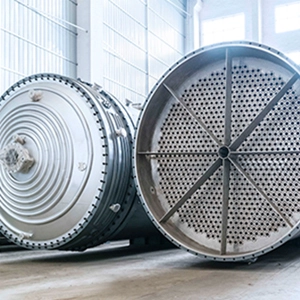
Packed columns and spray towers improve gas-liquid contact, while vacuum vessels may be preferred for batch operation or high-viscosity liquids. Process engineers must therefore evaluate operating pressure, temperature, residence time, liquid distribution, pressure drop, foaming tendency, and required residual gas concentration.
The released gas stream must also be safely handled through condensation, recovery, scrubbing, or other treatment systems when it contains valuable, hazardous, or environmentally regulated components.
관련 용어
- Vacuum Degassing
- 증기 세정
- Gas Solubility
- 물질 전달
- 충진 컬럼
- 기체-액체 분리기
- 분산화
- Vacuum System