Definition
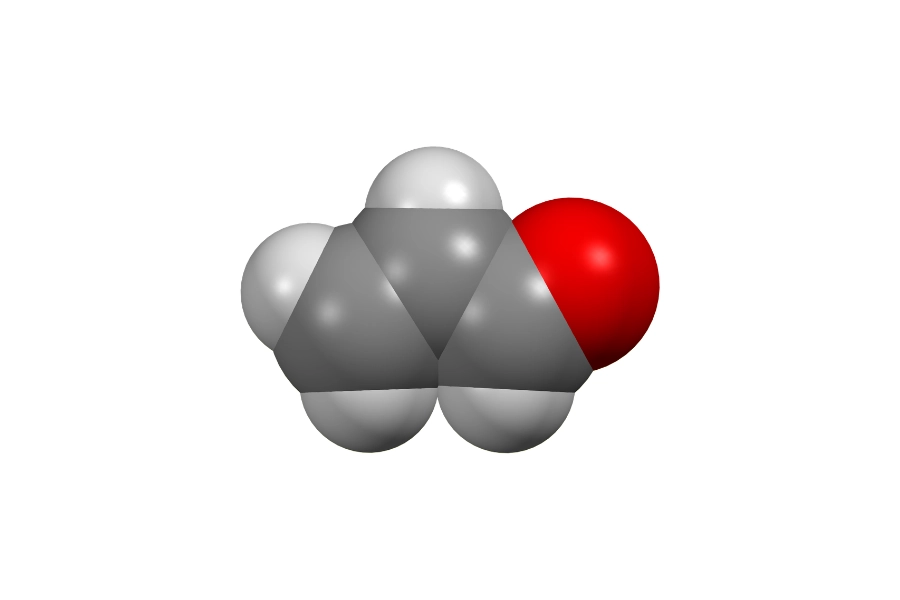
Acrolein (CH₂=CHCHO), also known as propenal or acrylaldehyde, is the simplest unsaturated aldehyde. It is a colorless, highly volatile liquid with a strong irritating odor.
It is an important reactive intermediate in industrial organic chemistry due to its high chemical activity and tendency to participate in oxidation and polymerization reactions.

Physical and Chemical Properties
Acrolein exhibits high reactivity and chemical instability under normal conditions.
Key properties include:
- Molecular formula: CH₂=CHCHO
- Appearance: colorless liquid
- Strong irritating odor
- Density: ~0.84 g/cm³ (20°C)
- Boiling point: ~52.5°C
- Melting point: ~-87.7°C
- Soluble in water, ethanol, and ether
- Highly reactive α,β-unsaturated aldehyde structure
Due to its conjugated double bond and aldehyde functional group, acrolein easily undergoes oxidation, polymerization, and addition reactions.
Industrial Applications
Acrolein is mainly used as an intermediate chemical rather than a final product.
일반적인 애플리케이션은 다음과 같습니다:
- Production of acrylic acid
- Synthesis of resins and polymer intermediates
- Manufacturing of agrochemicals and herbicides
- Fine chemical and pharmaceutical intermediates
In industrial processes, acrolein is typically consumed immediately in downstream reactions due to its instability and toxicity.
생산 기술
Industrial production of acrolein is commonly based on catalytic oxidation processes.
Main routes include:
- Gas-phase oxidation of propylene
- Catalytic oxidation using metal oxide catalysts
- Controlled oxidation of allyl alcohol
The reaction is highly exothermic, requiring strict control of temperature, oxygen concentration, and residence time to maintain selectivity and prevent over-oxidation to acrylic acid or COx by-products.
Separation and purification are typically carried out using absorption and distillation systems designed for volatile and reactive compounds.
엔지니어링 고려 사항
From an engineering perspective, acrolein systems require precise process control due to high reactivity and toxicity.
Key considerations include:
- Reaction selectivity control in oxidation systems
- Prevention of undesired polymerization reactions
- Strict temperature management in exothermic conditions
- Corrosion-resistant material selection for equipment
Small deviations in operating conditions can significantly impact yield, safety, and by-product formation.
Plant Operations and Handling
In industrial environments, acrolein is handled in closed systems with strict containment and monitoring.
Operational controls typically include:
- Controlled feed of propylene and oxygen
- Gas scrubbing systems for emission control
- Leak detection due to toxicity and volatility
- Short residence time operation to minimize degradation
Because of its strong irritant properties and high chemical reactivity, even low-level exposure is considered a significant safety concern in plant operations.
Related Chemicals
- 아크릴산
- Propylene
- Allyl Alcohol
- Formaldehyde
- Unsaturated aldehydes