التعريف
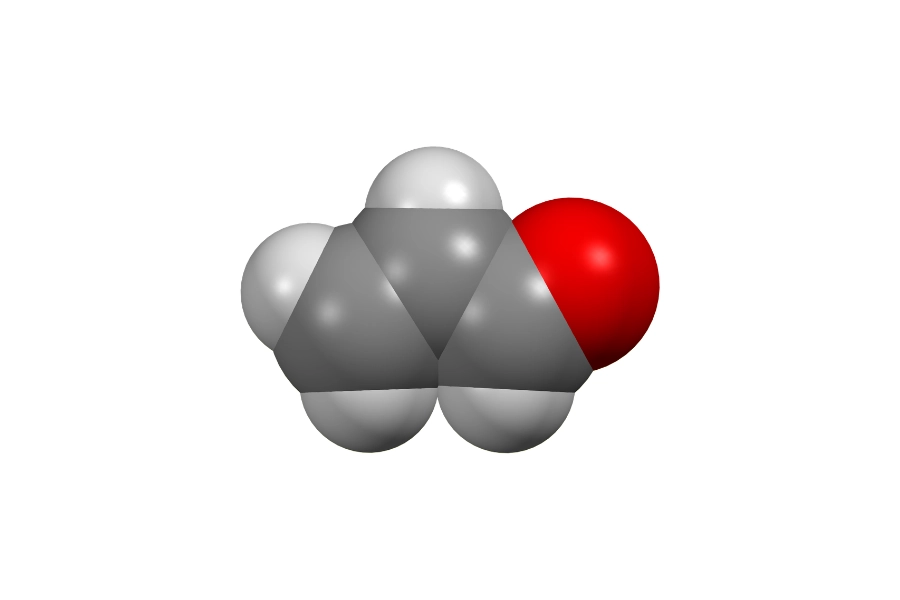
الأكرولين (CH₂=CHCHO)، المعروف أيضًا باسم البروبينال أو الأكريلالدهيد، هو أبسط أنواع الألدهيدات غير المشبعة. وهو سائل عديم اللون وشديد التطاير، وله رائحة قوية مهيجة.
وهو مادة وسيطة تفاعلية مهمة في الكيمياء العضوية الصناعية، وذلك بسبب نشاطه الكيميائي العالي وميله للمشاركة في تفاعلات الأكسدة والبلمرة.
الخصائص الفيزيائية والكيميائية
يتميز الأكرولين بدرجة عالية من التفاعلية وعدم الاستقرار الكيميائي في الظروف العادية.
تشمل الخصائص الرئيسية ما يلي:
- الصيغة الجزيئية: CH₂=CHCHO
- المظهر: سائل عديم اللون
- رائحة قوية مزعجة
- الكثافة: ~0.84 غ/سم³ (20 درجة مئوية)
- درجة الغليان: ~52.5 درجة مئوية
- نقطة الانصهار: ~-87.7 درجة مئوية
- قابل للذوبان في الماء والإيثانول والإيثر
- بنية ألدهيد غير مشبعة α،β ذات تفاعلية عالية
نظرًا لوجود رابطة مزدوجة مترافقة ومجموعة وظيفية ألدهيدية، فإن الأكرولين يخضع بسهولة لتفاعلات الأكسدة والبلمرة والإضافة.
التطبيقات الصناعية
يُستخدم الأكرولين بشكل أساسي كمادة كيميائية وسيطة وليس كمنتج نهائي.
تشمل التطبيقات النموذجية ما يلي:
- إنتاج حمض الأكريليك
- تخليق الراتنجات والمواد الوسيطة البوليمرية
- تصنيع المواد الكيميائية الزراعية ومبيدات الأعشاب
- المواد الكيميائية الدقيقة والمواد الوسيطة الصيدلانية
في العمليات الصناعية، يُستهلك الأكرولين عادةً على الفور في التفاعلات اللاحقة بسبب عدم استقراره وسميته.
تكنولوجيا الإنتاج
يعتمد الإنتاج الصناعي للأكرولين عادةً على عمليات الأكسدة التحفيزية.
تشمل الطرق الرئيسية ما يلي:
- الأكسدة في الطور الغازي للبروبيلين
- الأكسدة التحفيزية باستخدام محفزات أكسيد معدني
- الأكسدة المتحكم فيها لكحول الأليل
هذه التفاعل شديد التحرر للحرارة، مما يتطلب مراقبة دقيقة لدرجة الحرارة وتركيز الأكسجين ووقت البقاء، وذلك للحفاظ على الانتقائية ومنع حدوث أكسدة مفرطة تؤدي إلى تكوين حمض الأكريليك أو نواتج ثانوية من نوع COx.
يتم إجراء عمليات الفصل والتنقية عادةً باستخدام أنظمة الامتصاص والتقطير المصممة للمركبات المتطايرة والتفاعلية.
الاعتبارات الهندسية
من الناحية الهندسية، تتطلب أنظمة الأكرولين تحكماً دقيقاً في العمليات نظراً لارتفاع درجة تفاعليتها وسميتها.
تشمل الاعتبارات الرئيسية ما يلي:
- التحكم في انتقائية التفاعل في أنظمة الأكسدة
- الوقاية من تفاعلات البلمرة غير المرغوب فيها
- الإدارة الصارمة لدرجة الحرارة في الظروف التي تتسم بإطلاق الحرارة
- اختيار المواد المقاومة للتآكل للمعدات
يمكن أن تؤثر التغيرات الطفيفة في ظروف التشغيل بشكل كبير على الإنتاجية والسلامة وتكوين المنتجات الثانوية.
عمليات المصنع والمناولة
في البيئات الصناعية، يتم التعامل مع الأكرولين في أنظمة مغلقة تخضع لإجراءات احتواء ومراقبة صارمة.
تشمل الضوابط التشغيلية عادةً ما يلي:
- التغذية المنظمة للبروبيلين والأكسجين
- أنظمة تنقية الغازات للتحكم في الانبعاثات
- الكشف عن التسربات بسبب السمية والتطاير
- التشغيل بفترة بقاء قصيرة لتقليل التدهور إلى أدنى حد ممكن
ونظرًا لخصائصه المهيجة القوية وتفاعليته الكيميائية العالية، يُعتبر حتى التعرض لمستويات منخفضة منه مصدر قلق كبير فيما يتعلق بالسلامة في عمليات المصنع.
المواد الكيميائية ذات الصلة
- حمض الأكريليك
- البروبيلين
- كحول الأليل
- الفورمالديهايد
- الألدهيدات غير المشبعة