On July 1, 2026, GB 38031-2025, Safety Requirements for Power Batteries for Electric Vehicles, officially came into effect in China. Under the new Chinese national standard, the requirement that a battery must not catch fire or explode after thermal runaway has shifted from an industry target to a mandatory safety baseline.
This marks a significant milestone for China’s power battery industry. As safety evolves from a competitive advantage into a market-entry requirement, the industry’s priorities are undergoing a fundamental shift. Instead of focusing solely on production capacity and cost reduction, attention is returning to the foundation of battery performance—material purity. High-purity materials, together with the separation and purification technologies behind them, are becoming essential to ensuring the safety, reliability, and long-term stability of power batteries.
Material Purity: The First Line of Battery Safety
In electrolyte formulations, 비닐렌 카보네이트 (VC) typically accounts for only 1–3% of the total composition, yet it plays a decisive role in forming a stable solid electrolyte interphase (SEI) on the anode. The quality of this protective layer directly influences not only cycle life but also the battery’s thermal stability under demanding operating conditions.
As energy storage installations continue to expand and LFP (lithium iron phosphate) batteries increasingly require 4–6% VC, this seemingly minor additive has become strategically important throughout the battery supply chain.
Market attention often focuses on fluctuations in VC prices. However, an even more critical factor is frequently overlooked: purity. A one-order-of-magnitude difference in impurity levels can lead to dramatically different cell formation behavior, gas generation characteristics, and long-term capacity retention.
Today, 99.99% purity has become the minimum requirement for battery-grade VC, while leading battery manufacturers and export-oriented applications increasingly demand 99.999% (5N) purity. Under China’s new battery safety standard, purity is no longer simply a quality metric—it has become a safety requirement.
Overcoming Purification Challenges Through Melt Crystallization
VC presents one of the most demanding purification challenges among battery materials. With a melting point of only 19–22°C, it is highly reactive and readily undergoes polymerization and discoloration when exposed to elevated temperatures.
These characteristics significantly limit the effectiveness of conventional distillation. Higher operating temperatures increase the risk of uncontrolled polymerization, while repeated distillation stages raise energy consumption without efficiently removing trace impurities.
The combination of low melting point, thermal sensitivity, and ultra-high purity requirements makes 용융 결정화 particularly well suited for VC purification.
Operating at relatively low temperatures helps avoid the polymerization window, while the solvent-free process prevents the introduction of additional contaminants. Through efficient single-stage separation and optimized multistage crystallization, melt crystallization can consistently produce 5N-grade and even higher-purity VC, while consuming substantially less energy than traditional distillation.
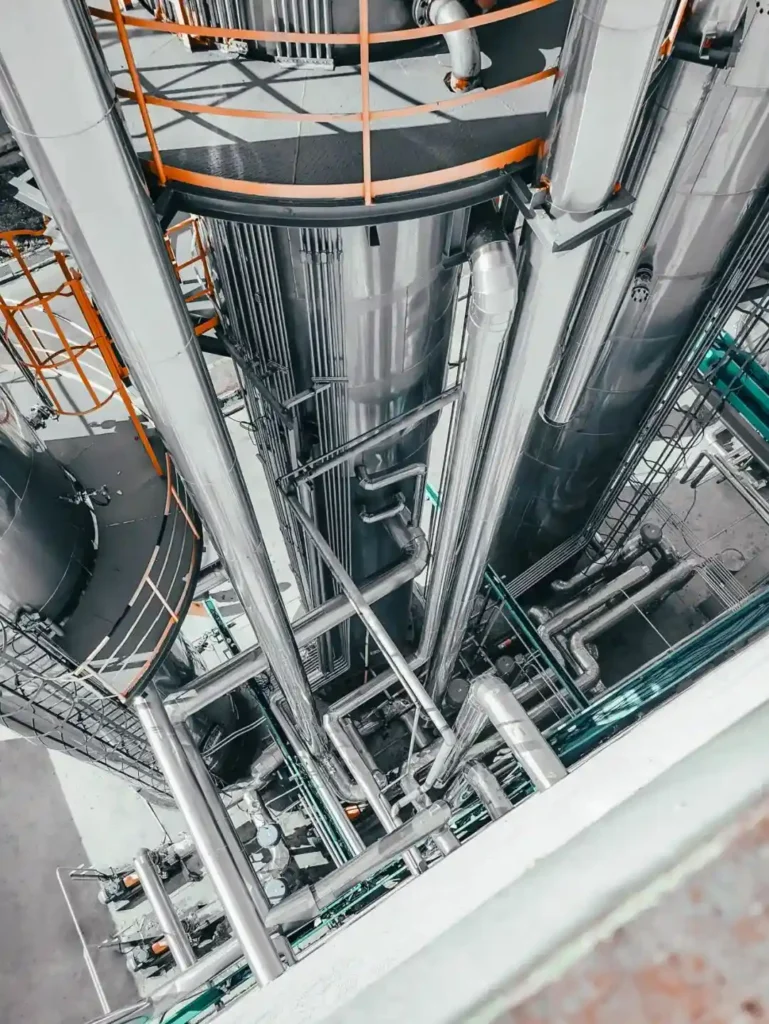
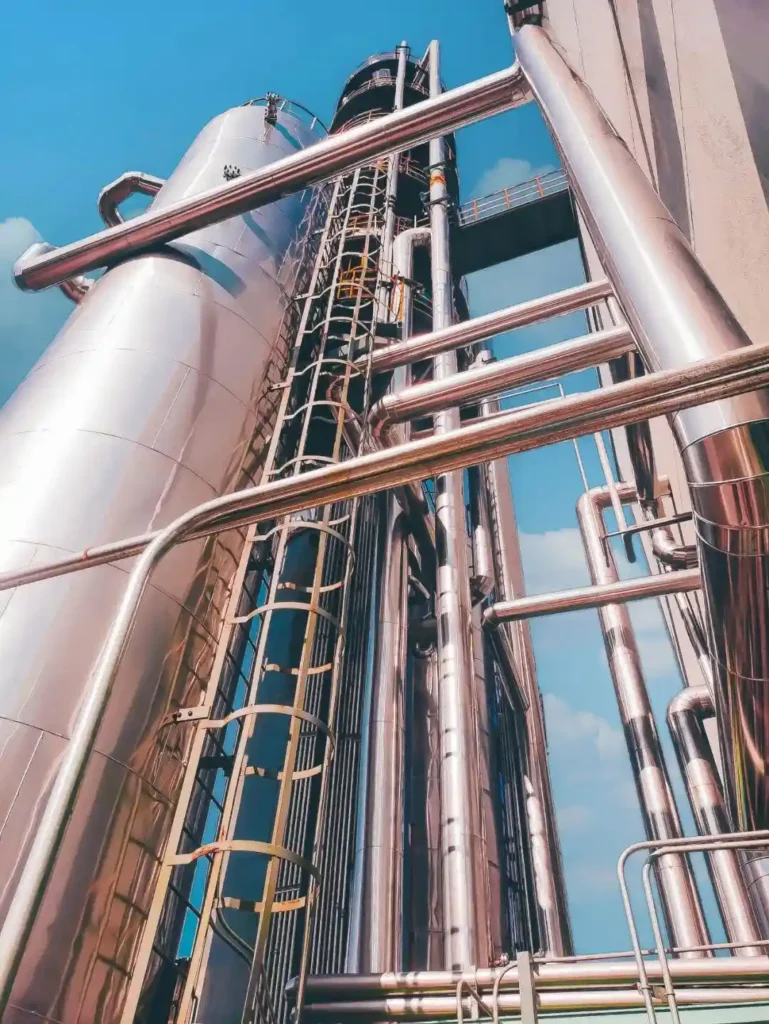
The principle itself is well understood; the real challenge lies in industrial implementation.
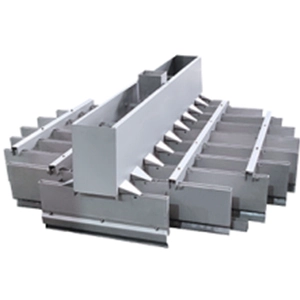
Achieving consistent performance requires precise control of temperature and flow fields inside the crystallizer, accurate coordination between sweating and melting stages, and reliable long-term continuous operation. These capabilities cannot be obtained from textbooks alone—they are developed through years of engineering practice and industrial operation.
This is the true barrier in high-purity separation technology: the competitive advantage lies not in theory, but in the ability to build and operate robust industrial systems.
Supporting the Industry Through Proven Process Technology
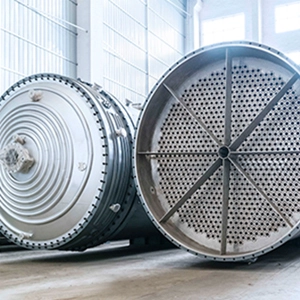
Over the past several years, the purification sections of many mainstream VC production facilities in China have adopted 도겐‘s integrated melt crystallization technology.
At the request of our customers, we are unable to disclose individual project names. Maintaining confidentiality for critical production processes is standard practice within the industry and reflects our commitment to protecting our partners’ proprietary operations.
We take pride in working behind the scenes. Process intensification and high-purity separation are disciplines where success is measured not by visibility, but by reliability. Every day of stable plant operation is a testament to sound engineering—and perhaps the highest recognition a process technology company can receive.
From VC 그리고 FEC to a growing range of electronic chemicals and advanced materials, the rapid development of China’s new energy industry continues to raise the bar for separation and purification technologies.
도겐 remains committed to advancing this critical field by delivering more reliable crystallization systems, achieving higher product purity, and continuously improving energy efficiency.
While market cycles and price fluctuations are inevitable, industry expectations for product purity, safety, and reliability will continue to rise. 도겐 will continue working closely with partners across the value chain, leveraging advanced process technologies and continuous innovation to strengthen the quality foundation and safety of the new energy materials industry.