Definición
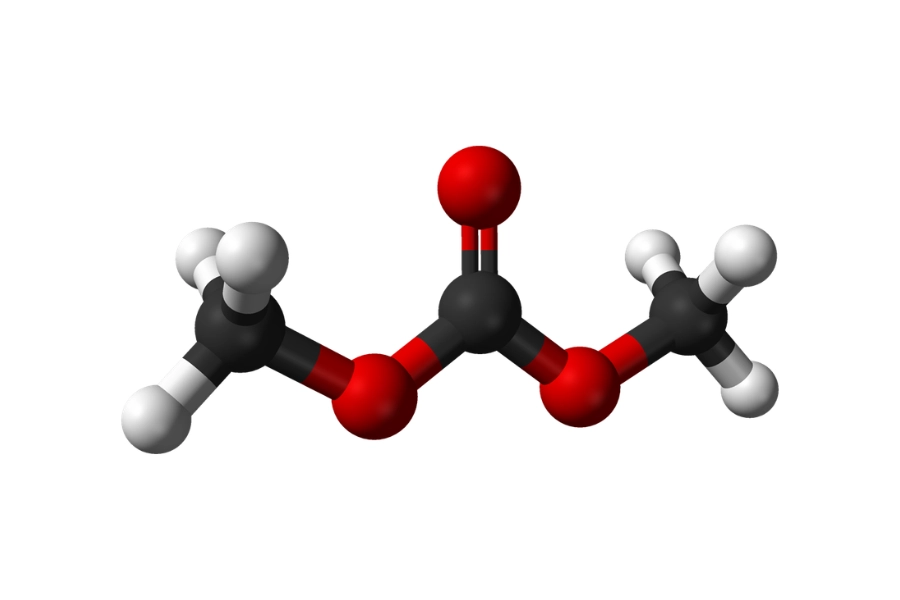
El carbonato de dimetilo (DMC), cuya fórmula molecular es (CH₃O)₂CO, es un compuesto orgánico incoloro e inflamable que pertenece a la familia de los ésteres de carbonato. También se conoce como carbonato de metilo y se considera un intermediario químico respetuoso con el medio ambiente debido a su baja toxicidad y a sus características biodegradables.
El DMC se utiliza ampliamente como disolvente ecológico, agente metilante e intermediario clave en las industrias químicas y energéticas modernas.
Propiedades físicas y químicas
El carbonato de dimetilo presenta una volatilidad moderada y una alta solubilidad en muchos disolventes orgánicos.
Entre sus principales características se incluyen:
- Fórmula molecular: (CH₃O)₂CO
- Peso molecular: 90,07
- Aspecto: líquido incoloro y transparente
- Olor: ligeramente irritante
- Líquido inflamable
- Baja toxicidad en comparación con los reactivos tradicionales a base de fosgeno
- Miscible con alcoholes, éteres y muchos disolventes orgánicos
- Solubilidad limitada en agua
Desde el punto de vista químico, el DMC contiene grupos funcionales tanto de carbonato como de metilo, lo que le permite participar en reacciones de metilación, carbonilación y transesterificación.
Aplicaciones industriales
El carbonato de dimetilo se utiliza ampliamente en los sectores químico, energético y farmacéutico.
Entre sus principales aplicaciones se incluyen:
- Sustituto ecológico de reactivos tóxicos como el fosgeno y el sulfato de dimetilo
- Agente de metilación en síntesis orgánica
- Fabricación de materiales de policarbonato
- Disolvente para resinas, recubrimientos y adhesivos
- Aditivo para combustible destinado a mejorar la eficiencia de la combustión
- Sistemas de electrolitos para baterías de iones de litio (normalmente con EC, DEC o EMC)
En muchos sistemas industriales, el DMC es muy apreciado por sustituir a los reactivos clorados o a base de sulfatos, altamente tóxicos, lo que lo convierte en un componente importante en la fabricación sostenible de productos químicos.
Tecnología de producción
La producción industrial de carbonato de dimetilo se lleva a cabo normalmente mediante varias vías:
- Carbonilación oxidativa del metanol
- Transesterificación del carbonato de propileno con metanol
- Procesos de síntesis catalítica basados en el monóxido de carbono
Los métodos de producción modernos dan prioridad a los procesos sin fosgeno debido a cuestiones medioambientales y de seguridad. El diseño de los procesos suele integrar sistemas catalíticos, separación por destilación y circuitos de reciclaje para mejorar el rendimiento y la eficiencia.
Consideraciones técnicas
Desde el punto de vista de la ingeniería química, la producción y la aplicación del DMC implican varios factores clave:
Selectividad de la reacción
El control de los subproductos es fundamental en los sistemas de carbonilación catalítica.
Seguridad de los procesos
El DMC es inflamable, por lo que es necesario controlar adecuadamente la concentración en fase de vapor y las fuentes de ignición.
Eficiencia de separación
El comportamiento similar al de un azeótropo en las mezclas de alcohol exige un diseño eficiente del sistema de destilación.
Operaciones y manipulación en planta
En entornos industriales, el DMC se manipula en condiciones controladas debido a su volatilidad e inflamabilidad.
Entre las consideraciones operativas se incluyen:
- Sistemas de almacenamiento y transporte herméticos
- Ventilación y control de vapores
- Control de la temperatura para evitar la acumulación de vapor
- Sistemas de prevención de incendios y protección contra explosiones
- Comprobaciones de compatibilidad con los materiales utilizados en tuberías y depósitos de almacenamiento
Debido a su toxicidad relativamente baja, el DMC se considera más seguro que muchos agentes metilantes tradicionales, pero su inflamabilidad sigue siendo un factor de riesgo operativo clave.
Sustancias químicas relacionadas
- Metanol
- Carbonato de propileno
- Carbonato de etileno (CE)
- Sulfato de dimetilo (DMS)
- Fosgeno (COCl₂)