현탁 중합이란 무엇인가?

목차

정의

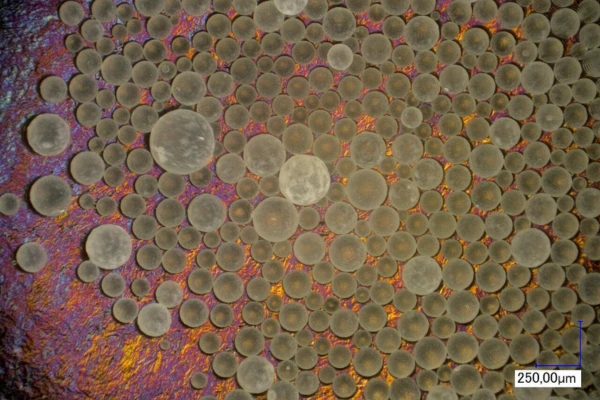
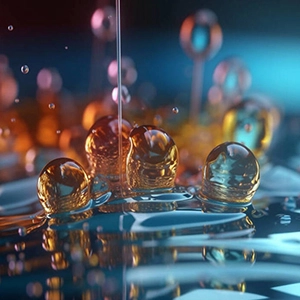
Suspension polymerization, also known as bead polymerization, is a polymer manufacturing process in which water-insoluble monomers are mechanically dispersed as droplets in a continuous medium, typically water, with the aid of dispersing agents. Polymerization occurs within these suspended droplets, producing solid polymer beads that can be easily separated after the reaction.

Unlike solution polymerization, the monomer droplets remain as discrete reaction units throughout the process, allowing effective heat removal while producing relatively uniform polymer particles.

현탁 중합

핵심 원칙

In suspension polymerization, mechanical agitation and dispersing agents—such as gelatin, polyvinyl alcohol (PVA), or inorganic stabilizers—prevent monomer droplets from coalescing during the reaction.

Each suspended droplet acts as an individual microreactor where polymerization takes place. After the reaction is complete, agitation is stopped and the polymer beads are recovered by filtration, centrifugation, or drying.

Because water serves as the continuous phase, reaction heat can be removed efficiently, helping maintain stable polymerization conditions.

장점

Suspension polymerization offers several important process advantages:

  • Efficient heat dissipation
  • Good temperature control during polymerization
  • Uniform polymer bead size
  • Relatively simple product recovery
  • Suitable for large-scale industrial production

The polymer beads produced are often suitable for direct handling, storage, or further processing.

제한 사항

Although suspension polymerization provides excellent process stability, several factors require careful control.

Typical challenges include:

  • Maintaining stable droplet size throughout the reaction
  • Selecting appropriate dispersing agents
  • Preventing droplet agglomeration
  • Controlling particle size distribution
  • Removing residual dispersants when required

Product quality depends heavily on agitation conditions, stabilizer selection, and reactor operating parameters.

산업 분야 적용

Suspension polymerization is widely used for manufacturing a variety of commercial polymers, including:

  • Polyvinyl chloride (PVC)
  • Polystyrene (PS)
  • Polyvinylidene chloride (PVDC)
  • Polymethyl methacrylate (PMMA)

Because the process naturally produces free-flowing polymer beads with relatively uniform particle size, it is commonly used in applications where granular polymer products are preferred.

The polymer beads may be used directly or further processed through compounding, extrusion, or molding operations.

엔지니어링 고려 사항

Successful suspension polymerization depends on maintaining stable droplet dispersion throughout the reaction.

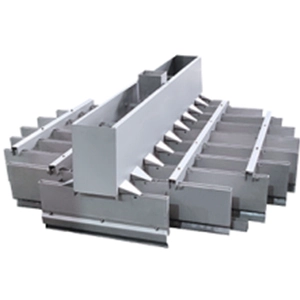
Engineers typically evaluate agitation intensity, droplet size distribution, dispersing agent performance, heat removal capacity, and reactor configuration during process design. Improper mixing may cause droplet coalescence, resulting in non-uniform particle size and inconsistent product quality.

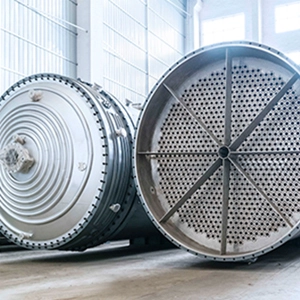
Industrial suspension polymerization systems commonly integrate 중합 반응기, 열교환기, and downstream solid-liquid separation equipment to improve process stability, particle consistency, and production efficiency.

관련 용어

LinkedIn에서 저희 엔지니어링 팀을 팔로우하세요

LinkedIn에서 DODGEN을 팔로우하시면, 성공적인 산업 개발을 뒷받침하는 공정 엔지니어링 관련 통찰력, 산업 기술 최신 동향, 주요 프로젝트 사례 및 실무 노하우를 확인하실 수 있습니다.

프로세스 기술 엔지니어링 솔루션 산업 프로젝트 회사 뉴스

최신 소식을 놓치지 마세요.

LinkedIn에서 저희를 팔로우해 주세요

관련 라이선스 기술 및 장비

화학 공정 솔루션

애플리케이션

지속 가능성

메시지 보내기

반응 및 분리 전문, 저탄소 기술 파트너

도겐-화학-공정-회사

문의하기

고객의 요구 사항을 충족하기 위해 최선을 다합니다.