Post-Treatment of Solution-Polymerized Polymers: Wet Coagulation and Dry Devolatilization

목차

The product leaving a solution 중합 반응기 may contain 80%–90% solvent. Post-treatment must remove this solvent, recover unreacted monomers where necessary, and convert the concentrated polymer into a stable, saleable form such as pellets.

This operation becomes increasingly difficult as the solvent content decreases. Polymer viscosity rises sharply, diffusion slows, heat transfer becomes less efficient, and excessive mechanical shear may damage the molecular structure.

Two principal post-treatment routes are currently used:

  • Wet coagulation
  • Dry devolatilization

Wet Coagulation

Wet coagulation is a conventional process that remains widely used in many established production plants.

How Wet Coagulation Works

The polymer solution is sprayed at high velocity into hot water while steam strips out the solvent and unreacted monomers.

Contact with hot water causes the polymer to precipitate rapidly as rubber crumbs. A vapor mixture containing solvent and water leaves from the top of the coagulation vessel for recovery, while the polymer crumbs remain in the water and proceed to dewatering and drying.

장점과 한계

Wet coagulation is technically mature and uses relatively simple primary equipment. However, it also has several disadvantages:

  • High wastewater generation
  • Significant exhaust-gas treatment requirements
  • High steam and drying energy consumption
  • Long downstream processing sequence
  • Large equipment footprint
  • Additional dewatering and drying equipment

A complete wet-coagulation line may require extrusion dewatering, expansion drying, hot-air drying, solvent recovery, and wastewater treatment.

Wet coagulation has been a standard process in many older EPDM plants for decades. One persistent operating problem is the high tackiness of EPDM crumbs.

The particles may adhere to one another during collision and transport. Prolonged operation can lead to pipeline blockage, polymer buildup on the coagulation vessel, and interruption of production for manual cleaning.

Dry Devolatilization

Dry devolatilization removes solvents without introducing water. It uses thermal energy, pressure reduction, mechanical surface renewal, and vacuum extraction to separate volatile components from the polymer.

A typical system contains two stages:

Primary static devolatilization followed by secondary dynamic devolatilization

First Stage: Primary or Static Devolatilization

The first stage concentrates a polymer solution with a high solvent content. Depending on the process, solvent concentration may be reduced from 80%–90% to several percent or lower.

Flash devolatilization is a common primary solvent-removal method for polyolefin elastomer, or POE, production.

A sudden pressure reduction causes part of the solvent to vaporize rapidly. Before entering the flash vessel, the polymer solution is normally heated to provide the energy required for solvent evaporation.

Vaporized solvent leaves through the top of the vessel and enters a vapor-removal and recovery system. The concentrated polymer solution exits from the bottom.

In some POE processes, flash treatment can increase polymer concentration from approximately 25% to more than 99%. Data reported by Yue Sheng Technology indicate that a flash-assisted twin-screw extrusion process can directly remove 50%–75% of the solvent.

Actual performance depends on the initial polymer concentration, solvent properties, temperature, pressure, polymer viscosity, heat-transfer conditions, and vapor disengagement capacity.

A falling-strand devolatilizer is another type of static devolatilization equipment.

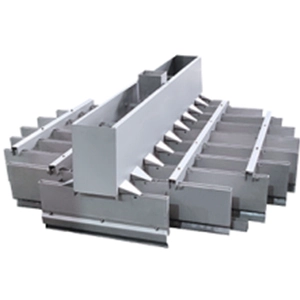
The polymer melt or concentrated solution passes through slots or distributor openings to form multiple thin strands. These strands fall under gravity inside a vacuum chamber.

Under high vacuum, dissolved gases and solvents expand, diffuse toward the strand surface, and escape. Bubble growth and rupture further increase the rate of volatile removal.

The equipment contains no internal rotating components, providing several potential advantages:

  • Simple mechanical structure
  • Relatively low equipment investment
  • Limited mechanical shear
  • Low risk of molecular-chain degradation
  • Reduced maintenance requirements

도겐’s DSXL technology follows this process route. The polymer is first heated in a high-efficiency heat exchanger and then distributed uniformly into a vacuum devolatilization vessel.

The material falls as multiple strands under high vacuum, creating a larger surface area for mass transfer and allowing volatile components to escape rapidly. 도겐 has applied this technology in several large industrial projects.

Falling-strand devolatilization is particularly suitable for shear-sensitive polymers because it does not rely on intensive mechanical kneading. The technology can reportedly handle materials with viscosities of up to 8,000 Pa·s and may be applied to both POE and EPDM systems.

However, static devolatilization has an inherent performance limit. It depends mainly on diffusion, bubble growth, bubble rupture, and the exposed surface area of the falling strands.

As the residual volatile content decreases and polymer viscosity increases, mass-transfer resistance becomes dominant. Static equipment alone may therefore be unable to achieve very low residual solvent levels.

Second Stage: Secondary or Dynamic Devolatilization

Primary devolatilization reduces the solvent content to an intermediate level. Further removal generally requires equipment that continuously renews the polymer surface.

The twin-screw devolatilizing extruder is one of the main types of dynamic devolatilization equipment.

As the screws convey and knead the polymer, the material surface is repeatedly stretched, divided, folded, and renewed. Multiple independently controlled vacuum-venting sections remove the released solvent and other volatile components.

Yue Sheng Technology reports that its controlled multistage devolatilization process can reduce residual solvent levels to approximately 50–200 ppm in a twin-screw extruder.

Companies such as Meizilon and Coperion have also developed industrial POE devolatilization systems.

In April 2026, PetroChina Blue Ocean New Materials, Sichuan Zhongwang, and Daqing Petrochemical Engineering jointly completed the ZHP480 twin-screw devolatilizing extrusion and pelletizing unit.

The reported specifications include:

  • Screw diameter of 486 mm
  • Single-line processing capacity of 40 t/h
  • Domestically developed drive system
  • Domestically developed devolatilizing extruder
  • Integrated control and pelletizing systems
  • Independent intellectual property

The unit uses synchronized zoned continuous flexible online devolatilization. Multistage stripping and repeated surface renewal reportedly maintain residual polymer VOC levels within approximately 150–300 ppm.

The system is designed to process high-performance metallocene-based materials, including FDPE, POE, and EPDM.

Sichuan Zhongwang has also established continuous devolatilization pilot facilities in Lanzhou New Area, covering capacities from thousands to tens of thousands of tonnes per year. These facilities are used to validate devolatilization processes for advanced polymer materials.

Dry twin-screw devolatilization and pelletizing of metallocene EPDM have been tested on this platform.

A horizontal twin-shaft kneading devolatilizer uses two counter-rotating, self-cleaning shafts to stretch and fold the polymer into thin films or layers.

This equipment is particularly suitable for highly viscous materials whose viscosity rises to thousands of pascal-seconds during the final stages of solvent removal.

The average residence time can be extended to several minutes, allowing high-boiling residual components more time to diffuse through the polymer and reach an exposed surface.

A horizontal kneader may be combined with a twin-screw extruder. In such a configuration:

  • The horizontal kneader performs deep devolatilization.
  • The twin-screw extruder completes final devolatilization, pressure buildup, and pelletizing.

POE and EPDM Require Different Devolatilization Strategies

Although POE and EPDM are both solution-polymerized elastomers, their post-treatment requirements differ considerably.

POE: Flash Devolatilization Is Widely Used

POE generally leaves the polymerization section as a relatively low-viscosity solution with good flowability. These characteristics make flash devolatilization suitable for primary solvent removal.

Many industrial POE processes use a combination of:

Flash vessel or large-capacity devolatilizer followed by deep devolatilization equipment

After leaving the polymerization reactor, the solution enters a flash vessel or equipment such as a LIST devolatilizer to remove most of the solvent. The remaining solvent content may be reduced to approximately 1% before the material enters a twin-screw extruder for final devolatilization.

Flash pre-devolatilization has been applied extensively in both patented process designs and commercial POE production.

EPDM: Higher Viscosity Complicates Flashing

EPDM is a terpolymer with relatively high molecular weight and branching. Its solution viscosity is generally much higher than that of POE.

Rapid solvent evaporation during flashing also causes a substantial temperature decrease. For a low-viscosity POE solution, the material may remain sufficiently fluid after this cooling.

For EPDM, however, simultaneous cooling and concentration can cause the material to become highly viscous or precipitate. Once flowability is lost, transport through downstream devolatilization equipment becomes difficult.

For this reason, flash devolatilization is less straightforward for EPDM and requires more careful control of:

  • Preheating temperature
  • Flash pressure
  • Solvent evaporation rate
  • Polymer concentration
  • 체류 시간
  • Discharge temperature
  • Equipment torque and conveying capacity

Many EPDM plants continue to use wet coagulation. Although the process has relatively high energy and material consumption, retrofitting an older plant to dry devolatilization may require substantial capital investment and process modification.

Published process parameters from Coperion indicate that both EPDM and POE may enter final devolatilization equipment with approximately 5%–15% solvent. Residual levels below 1,000 ppm may be achievable after treatment.

Achieving this target is generally less demanding for POE using a flash-plus-twin-screw configuration. EPDM usually requires more careful equipment selection and operating control because of its higher viscosity and greater sensitivity to temperature loss during solvent evaporation.

The fundamental difference can be summarized as follows:

POE generally has lower solution viscosity and is more suitable for flash devolatilization. EPDM is more viscous and may lose flowability during rapid flashing.

결론

A polymer stream leaving a solution polymerization reactor may follow either of two principal post-treatment routes.

Wet coagulation uses hot water and steam to precipitate the polymer and strip out solvent. It is mature and robust but generates significant wastewater, consumes substantial energy, and requires a long dewatering and drying sequence.

Dry devolatilization removes solvent without adding water. A typical process uses flash or falling-strand equipment for primary static devolatilization, followed by a twin-screw extruder or horizontal kneader for dynamic deep devolatilization.

POE is generally well suited to flash pre-devolatilization because of its relatively low solution viscosity. EPDM presents greater challenges because rapid solvent evaporation can lower the temperature, sharply increase viscosity, and reduce flowability.

Equipment development in China is expanding the available options for dry polymer devolatilization. 도겐’s DSXL falling-strand devolatilization technology provides a low-shear approach for primary solvent removal, while large twin-screw systems such as the ZHP480 target high-throughput dynamic devolatilization and pelletizing.

The appropriate process should be selected according to polymer rheology, solvent properties, residual VOC requirements, thermal sensitivity, shear sensitivity, throughput, wastewater constraints, energy consumption, and overall project economics.

LinkedIn에서 저희 엔지니어링 팀을 팔로우하세요

LinkedIn에서 DODGEN을 팔로우하시면, 성공적인 산업 개발을 뒷받침하는 공정 엔지니어링 관련 통찰력, 산업 기술 최신 동향, 주요 프로젝트 사례 및 실무 노하우를 확인하실 수 있습니다.

프로세스 기술 엔지니어링 솔루션 산업 프로젝트 회사 뉴스

최신 소식을 놓치지 마세요.

LinkedIn에서 저희를 팔로우해 주세요

관련 라이선스 기술 및 장비

화학 공정 솔루션

애플리케이션

지속 가능성

메시지 보내기

반응 및 분리 전문, 저탄소 기술 파트너

도겐-화학-공정-회사

문의하기

고객의 요구 사항을 충족하기 위해 최선을 다합니다.