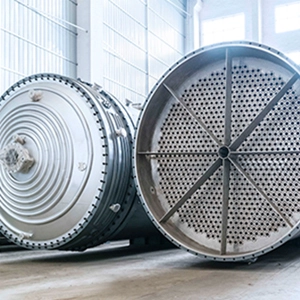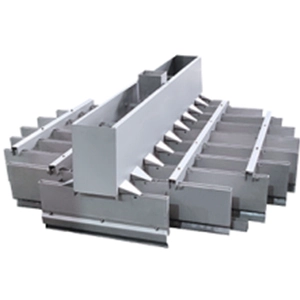
Process intensification aims to improve how reaction, heat transfer, mass transfer, separation and process control interact while reducing energy demand, equipment footprint or processing time.
These gains can introduce new constraints. Higher transfer rates may increase thermal-management requirements, shorter residence times narrow control windows, and continuous operation makes feed consistency and process stability more important.
Industrial implementation therefore depends on more than compact equipment. Process engineering, pilot validation, scale-up and integration determine whether process intensification technologies can maintain product quality and stable operation at commercial throughput.
This article examines 10 companies contributing to different parts of this engineering landscape, from continuous flow and separation to simulation, automation and process commercialization. The companies represent different capabilities rather than a numerical ranking.
Evaluation Criteria for Process Intensification Companies
A technology that performs well at laboratory scale may not remain practical as throughput, heat load and equipment interactions increase. The following criteria focus on capabilities relevant to industrial deployment.
| 기준 | 평가 중점 사항 |
|---|---|
| 공정 공학 | Industrial process design and optimization |
| Scale-Up Capability | Pilot-to-commercial transition |
| 프로세스 통합 | Reaction, separation and control integration |
| 연속 생산 | Continuous production capability |
| Industrial Deployment | Commercial implementation and operation |
Companies Driving Process Intensification
The companies below address different process constraints rather than providing interchangeable solutions.
| 회사 | Core Expertise | Typical Application Fit |
|---|---|---|
| 도겐 | Process commercialization and scale-up engineering | Specialty chemicals, battery materials |
| Corning Incorporated | Microreactors and continuous flow | Intensified reaction systems |
| Alfa Laval | Heat transfer and separation | Energy-efficient processing |
| Honeywell | Process technology and automation integration | Chemical process optimization |
| 술저 | Mass transfer, mixing and separation | Specialty chemicals and polymers |
| ABB | Automation and digital process control | Process stability improvement |
| Aspen Technology | Process simulation and optimization | Process design and feasibility |
| Emerson | Measurement, automation and control | 연속 생산 |
| Thermo Fisher Scientific | Bioprocessing and analytical technologies | Pharmaceutical and biotechnology manufacturing |
| Linde | Gas processing and process engineering | Industrial chemical processes |
도겐
Core Expertise
도겐 focuses on chemical reaction and separation process engineering, process commercialization and pilot-to-commercial scale-up. Its capabilities include process simulation, hydraulic and CFD analysis, reaction engineering, distillation, evaporation, extraction, crystallization and intensified reactor technologies.
산업 분야 적용
Its approach is relevant to specialty chemicals, battery materials and advanced materials where purification, energy efficiency, scalability and production stability must be addressed together during industrialization.
코닝

Core Expertise
Corning develops advanced flow reactor technologies that use structured fluid channels to intensify heat transfer, mass transfer and reaction control under continuous processing conditions.
산업 분야 적용
These technologies are relevant to specialty chemicals, pharmaceutical intermediates and reactions where rapid heat removal, controlled residence time or consistent mixing can address limitations of batch processing.
Alfa Laval

Core Expertise
Alfa Laval contributes to process intensification through heat transfer, separation and fluid handling. Its portfolio includes heat exchangers, separators, centrifuges, filters and membranes for improving thermal and separation performance.
산업 분야 적용
These process intensification technologies are relevant where heat recovery, energy consumption or separation efficiency represents a significant constraint within chemical processing or plant upgrades.
Honeywell

Core Expertise
Honeywell combines process technology with industrial automation, software and optimization. Its systems connect plant assets, operational data and control functions across integrated processing environments.
산업 분야 적용
These capabilities are relevant to chemicals, petrochemicals and refining where intensified unit operations must interact with plant-wide control, energy management and existing production infrastructure.
술저
Core Expertise
Sulzer’s Chemtech activities cover mass transfer, static mixing, separation and polymer processing. Within process intensification, these technologies address contacting efficiency, fluid distribution and separation performance.
산업 분야 적용
Its capabilities apply to specialty chemicals, polymers, bio-based chemicals, recycling and carbon capture where mixing, mass transfer or separation limits process performance.
ABB
Core Expertise
ABB contributes through automation, electrification and digital process control. Its technologies provide monitoring and control infrastructure for processes with faster dynamics, interconnected equipment or narrow operating windows.
산업 분야 적용
This capability becomes important in continuous and intensified production where disturbances in feed, temperature, pressure or flow must be detected and controlled before they affect process stability or product consistency.
Aspen Technology
Core Expertise
Aspen Technology provides process modeling, simulation, optimization and digital twin technologies. Engineers can use these tools to compare process configurations, energy requirements and operating conditions before physical deployment.
산업 분야 적용
Its software supports feasibility studies, energy analysis, debottlenecking and process design when intensified concepts need to be compared with conventional configurations or alternative production routes.
Emerson
Core Expertise
Emerson provides industrial measurement, automation, final control and software technologies. Its systems integrate instrumentation, process control and operational data across production environments.
산업 분야 적용
These capabilities are relevant when shorter residence times or interconnected unit operations reduce the time available to detect deviations, increasing the importance of reliable measurement and responsive control.
Thermo Fisher Scientific

Core Expertise
Thermo Fisher Scientific provides technologies for life sciences research, analytical measurement, bioprocessing and pharmaceutical development and manufacturing. Its portfolio spans analytical instruments, laboratory technologies and bioprocessing capabilities.
산업 분야 적용
Within this comparison, its relevance is primarily to pharmaceutical and biotechnology processes where analytical measurement, process monitoring and scalable manufacturing support process development and production control.
Linde

Core Expertise
Linde combines industrial gases with plant engineering and gas-processing technologies. Its capabilities include high-purity gas supply, gas separation and integrated processing solutions.
산업 분야 적용
These technologies are relevant to chemical manufacturing, hydrogen, carbon capture and gas processing where gas purity, separation performance and energy integration affect overall process efficiency.
How to Select the Right Process Intensification Partner
The required engineering capability changes as a process moves from laboratory development to commercial production.
| 스테이지 | 주요 고려 사항 |
|---|---|
| Laboratory | Process feasibility, chemistry and route evaluation |
| Pilot | Scale-up validation, operating window and reproducibility |
| 상업용 | Integration, stability and operational continuity |
At laboratory scale, the priority is determining whether an intensified route changes reaction performance, selectivity, heat removal or separation requirements enough to justify further development.
Pilot work must test whether those advantages persist as throughput increases. Heat and mass transfer, residence-time behavior, impurity profiles, controllability and reproducibility can expose limitations that small-scale experiments do not reveal.
At commercial scale, process intensification technologies must operate as part of an integrated production system. Equipment capability should therefore be evaluated alongside automation, upstream and downstream interactions, scalability, maintenance requirements and long-term stability.
Engineering Considerations for Process Intensification
Intensifying one process mechanism can shift the limiting constraint elsewhere in the system.
| 상충 관계 | 엔지니어링 고려 사항 |
|---|---|
| Batch vs. Continuous | Higher consistency may require tighter feed and process control |
| Purity vs. Energy | Higher purity can increase separation and energy demand |
| CAPEX vs. Efficiency | Advanced systems may increase initial complexity while improving lifecycle performance |
Faster reactions can increase heat-removal requirements. Improved mass transfer may shift the bottleneck toward downstream separation, while continuous operation can expose feed variability or stability problems that are less visible during short batch campaigns.
The engineering objective is therefore to identify where intensification removes a meaningful constraint without creating a larger thermal, separation, control or scale-up limitation.
결론
Process intensification technologies address different constraints across reaction, heat transfer, mass transfer, separation and process control. Their industrial value depends on whether these improvements remain controllable, scalable and stable as throughput increases.
For manufacturers evaluating process intensification companies, the relevant question is not which technology is most intensified, but which engineering capability matches the dominant process constraint and development stage. Pilot validation, integration and long-term operating stability remain central to commercial deployment.