Industrial carbon disulfide production does not end at the reactor outlet. The reaction gas still requires CS₂ recovery, removal of light and heavy impurities, H₂S conversion, sulfur recovery, and treatment of residual sulfur species before product and emission requirements can be met.
These functions form two connected process paths: one produces purified CS₂, while the other converts and recovers sulfur. Condensation performance, distillation conditions, sulfur conversion, and recycle loads therefore have to be evaluated against the same material and energy balance.
Why CS₂ Purification Is a System-Level Separation Problem
Crude CS₂ can contain H₂S, water, elemental sulfur, heavy oil, organic sulfur compounds, and other impurities with different volatility and phase behavior. A single separation mechanism cannot remove all of them efficiently.
| Component or Stream | Separation Behavior | Main Engineering Response |
|---|---|---|
| H₂S | Light, largely non-condensable sulfur species | Stabilization and downstream sulfur recovery |
| 물 | Light impurity with phase-separation implications | Stabilization and liquid-phase management |
| CS₂ | Main volatile product | Condensation and staged distillation |
| Elemental sulfur | Heavy component | Bottoms separation and recycle |
| Heavy oil and organics | Low-volatility impurities | Still-column removal |
| DMS and difficult sulfur species | May constrain volatility-based separation | VLE and azeotropic behavior evaluation |
A carbon disulfide purification process must therefore control where each impurity leaves the system. Moving an impurity from the liquid product into an off-gas is not equivalent to removing it from the overall process if that component subsequently increases recovery losses or downstream treatment load.
CS₂ Recovery by Condensation From Reaction Gas
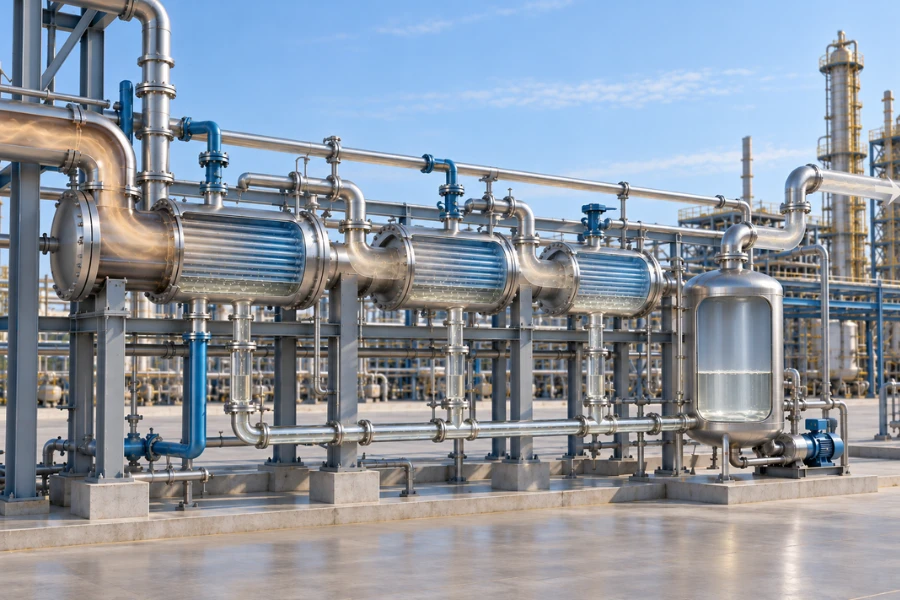
Condensation provides an initial separation between volatile CS₂ and gases that remain largely non-condensable under the selected operating conditions. Cooling the reaction gas transfers CS₂ into the liquid phase, while a larger fraction of H₂S remains in the gas stream for downstream sulfur recovery.
Depending on the required recovery and available utilities, condensation may use cooling water or lower-temperature cooling. The condensed CS₂-rich stream proceeds to purification, while non-condensable gas and residual CS₂ vapor continue toward gas treatment.
Condenser Temperature Changes Recovery and Downstream Load
Lower condenser temperature can increase CS₂ recovery from the vapor phase, but additional cooling has utility and process consequences. The useful operating point depends on vapor-liquid equilibrium, gas composition, cooling availability, residual CS₂ losses, and the downstream capacity available to handle non-condensables.
If condensation is insufficient, more CS₂ leaves with the gas phase. This reduces product recovery while increasing the hydrocarbon and sulfur-containing load entering downstream treatment.
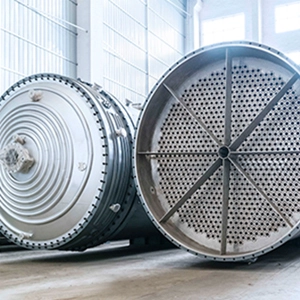
Scale-up can shift this balance. As reaction-gas throughput increases, vapor loading and condenser duty increase together, while heat-transfer area, coolant approach temperature, and pressure drop can limit the recovery achieved at the original operating conditions. Commercial-scale CS₂ recovery therefore requires verification of the thermal and hydraulic operating window rather than proportional enlargement of condenser size alone.
Staged Distillation for CS₂ Purification
After condensation, staged distillation separates impurity classes that cannot be controlled through cooling alone. A typical CS₂ purification arrangement uses a stabilizer for light components followed by a still column for less volatile contaminants.
Stabilizer Controls Light Components
The stabilizer primarily removes light components such as H₂S and water from the CS₂-rich liquid.
Light-end removal directly affects product quality and the sulfur load transferred to the gas-treatment system. Feed-composition changes can therefore alter both stabilizer performance and the load seen by downstream sulfur recovery.
Still Column Removes Sulfur and Heavy Impurities
The still column separates CS₂ from lower-volatility materials such as elemental sulfur, absorption oil, and heavy organic impurities. The bottoms stream then requires recycle or further handling according to its composition.
The basic carbon disulfide purification sequence becomes:
Crude CS₂ → Light-End Stabilization → Heavy-Impurity Separation → Purified CS₂
Separating these functions makes troubleshooting more specific. Elevated light impurities point toward stabilization performance, while sulfur or heavy-organic breakthrough directs attention toward the still column and bottoms management.
Distillation Scale-Up Requires More Than Matching Reflux
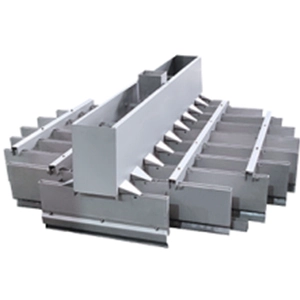
A separation demonstrated at smaller scale cannot be reproduced by transferring reflux ratio alone. Commercial operation also changes vapor and liquid traffic, column hydraulics, heat duty, pressure drop, feed variability, and the operating margin between normal loading and hydraulic constraints.
For high-purity carbon disulfide production, scale-up therefore requires the separation target and the column operating window to remain compatible under expected feed and throughput variation.
Reflux Ratio Is an Energy-Purity Decision
The still-column reflux ratio affects separation performance as well as internal liquid traffic, condenser duty, and reboiler energy demand.
The supplied industry reference indicates that reflux ratios in the approximate range of 0.3 to 0.6 can produce similar separation results under certain CS₂ purification conditions. The range should not be interpreted as a universal optimum because feed composition, column configuration, product specification, and operating pressure can change the required reflux.
The energy relationship is straightforward:
Higher Reflux → Higher Internal Liquid Load → Higher Reboiler Duty → Higher Condenser Duty
Once the required purity and operating margin are reached, increasing reflux can add steam and cooling demand without producing a proportional improvement in separation. The practical target is the lowest stable energy input that consistently maintains the required product specification and separation margin.
Azeotropes Can Limit Conventional CS₂ Distillation
Boiling-point difference alone does not establish whether conventional distillation can reach the required impurity specification.
CS₂ can form an azeotropic system with dimethyl sulfide (DMS). Under azeotropic conditions, vapor-liquid equilibrium limits the composition change achievable through ordinary distillation, so adding stages or increasing reflux cannot indefinitely improve separation.
The relevant design sequence is therefore:
Feed Composition → VLE Behavior → Relative Volatility / Azeotrope Check → Required Purity → Separation Strategy
This prevents additional column height or energy input from being used to compensate for a thermodynamic separation limit.
Claus Sulfur Recovery Converts H₂S Into Elemental Sulfur
H₂S separated during CS₂ recovery and purification becomes a feed to the sulfur recovery system. The Claus process converts this sulfur-bearing gas into elemental sulfur through a thermal reaction section followed by catalytic conversion and sulfur condensation.
Thermal Conversion Establishes the Reaction Balance
In the thermal section, part of the H₂S is oxidized to SO₂. The remaining H₂S reacts with SO₂ to form elemental sulfur and water.
The H₂S-to-SO₂ relationship entering subsequent stages affects Claus conversion. Feed-composition variation and combustion control therefore influence the sulfur recovery achievable downstream.
Catalytic Conversion and Sulfur Condensation Work Together
Residual H₂S and SO₂ continue reacting over catalysts such as activated alumina in subsequent catalytic stages.
A typical sequence is:
Reaction → Cooling → Sulfur Condensation → Reheat → Catalytic Reaction → Sulfur Condensation
Sulfur condensation is not only a product-recovery operation. Removing sulfur between reaction stages changes the equilibrium condition for subsequent conversion, making cooling and condensation part of the overall reaction strategy.
Why Claus Recovery Requires Tail Gas Treatment
According to the supplied reference material, a conventional Claus unit typically recovers approximately 95% to 98% of incoming sulfur. The remaining tail gas can still contain H₂S, SO₂, COS, CS₂, and sulfur vapor.
Where plant-wide sulfur recovery or emission requirements exceed what the Claus section can achieve, the remaining sulfur species must be converted, recovered, or otherwise treated downstream.
Tail Gas Treatment Extends Overall Sulfur Recovery
Commercial tail gas processes use different mechanisms to address the sulfur remaining after Claus conversion.
| Tail Gas Treatment Route | Main Mechanism | Engineering Characteristic |
|---|---|---|
| Sub-dew-point processes | Promote additional sulfur formation at lower temperature | Uses equilibrium and sulfur removal to increase recovery |
| Selective oxidation | Oxidizes remaining H₂S directly to elemental sulfur | Avoids a complete reduction-and-amine recycle loop |
| Reduction and absorption | Converts sulfur species to H₂S before selective absorption | Enables high recovery through H₂S capture and recycle |
Process selection depends on the sulfur species present, required recovery, available utilities, recycle strategy, emission requirements, and acceptable operating complexity.
SCOT Uses Hydrogenation, Absorption, and Recycle
The Shell Claus Off-gas Treating process follows the reduction-and-absorption route:
Claus Tail Gas → Hydrogenation → Cooling → H₂S Absorption → Amine Regeneration → H₂S Recycle
Hydrogenation converts residual sulfur species such as SO₂, COS, CS₂, and sulfur vapor toward H₂S. Converting multiple sulfur species into a common form simplifies the downstream separation task.
After cooling, selective amines such as MDEA or hindered amines absorb H₂S. Regeneration produces an H₂S-rich stream that can be returned to the Claus section, making the TGTU part of the sulfur-recovery loop rather than a terminal disposal operation.
The supplied industry reference indicates that Claus combined with advanced tail gas treatment can raise overall sulfur recovery beyond 99.5%, with high-performance configurations approaching 99.98%.
Higher Sulfur Recovery Changes the Process Load
Higher sulfur recovery does not come from conversion efficiency alone. Reduction-and-absorption systems add hydrogenation duty, cooling, solvent circulation and regeneration, H₂S recycle, and final off-gas handling.
The design trade-off can be summarized as:
Recovery Target ↔ Utility Demand ↔ Recycle Load ↔ Process Complexity ↔ Emission Requirement
For example, increasing H₂S recycle reduces sulfur discharge but returns material to the upstream Claus section. The resulting recycle load must be included when sizing and evaluating the sulfur recovery system rather than treated as zero-load internal circulation.
Process Signals Can Reveal Where Recovery Performance Is Lost
Because CS₂ purification and sulfur recovery share material flows, the location where a problem appears may not be where it originates.
| 공정 신호 | 추정되는 작용 기전 | 확인해야 할 사항 | 기술 대응 |
|---|---|---|---|
| CS₂ loss increases in off-gas | Insufficient condensation | Condenser temperature, cooling duty and gas load | Review condensation operating window |
| Light impurities increase in CS₂ product | Stabilizer limitation | Feed composition and stabilizer conditions | Rebalance light-end removal |
| Energy use rises without purity improvement | Excessive reflux | Reflux ratio against actual separation response | Optimize reflux and column duty |
| Heavy impurities appear in product | Still-column separation deteriorates | Feed loading, column operation and bottoms removal | Review heavy-end separation |
| Claus sulfur recovery declines | Reaction balance or conversion changes | Feed composition and Claus operating conditions | Restore reaction and sulfur balance |
| TGTU load rises unexpectedly | More sulfur leaves the Claus section | Claus outlet sulfur composition | Diagnose upstream conversion before increasing TGTU duty |
The matrix also prevents downstream units from masking upstream limitations. Increasing cooling, reflux, solvent circulation, or tail gas capacity may temporarily control a symptom while leaving the original condensation, distillation, or Claus-conversion constraint unresolved.
Safety and Materials Influence CS₂ Purification Design
CS₂ has an autoignition temperature of approximately 90°C according to the supplied reference material. Its volatility and flammability require ignition-source control, closed handling, vapor containment, and appropriate inerting during purification and storage.
Material compatibility must also be considered. The supplied references advise avoiding aluminum and certain reactive metals, while carbon steel, stainless steel, or suitable copper alloys may be considered according to the actual service environment.
These constraints affect equipment layout, condenser and storage design, metallurgy, instrumentation, vapor management, and inert-gas protection. They therefore belong inside the process-design basis rather than being treated only as operating precautions.
Integrating CS₂ Purification, Sulfur Recovery, and Tail Gas Treatment
The complete process can be represented through two coupled recovery paths:
Reaction Gas → CS₂ Condensation → Stabilization → Heavy-Impurity Distillation → High-Purity CS₂
and:
H₂S-Rich Gas → Claus Conversion → Sulfur Condensation → Tail Gas Treatment → H₂S Recycle / Final Gas Treatment
Performance depends on the balances connecting these paths. Insufficient condensation transfers more CS₂ to gas treatment, changes in stabilization alter downstream sulfur loading, lower Claus conversion increases TGTU duty, and H₂S recycle returns material to the sulfur recovery section.
For industrial deployment, condensation capacity, column hydraulics, vapor-liquid equilibrium, heat duties, sulfur conversion, recycle accumulation, and control response should therefore be validated within the same process model and operating envelope.
도겐 applies this integrated approach to high-purity process engineering and chemical process industrialization. Separation strategy, process modeling, pilot validation, purification engineering, and pilot-to-commercial scale-up can be used together to determine whether a CS₂ purification and sulfur recovery system can maintain product quality, recovery, energy performance, and operating stability at commercial scale.