Definición
El stripping es un proceso de transferencia de masa que se utiliza para eliminar componentes volátiles de un líquido mediante el contacto de este con un gas o vapor. Se puede elegir entre vapor, aire, nitrógeno u otro medio de stripping adecuado, en función de las propiedades del componente objetivo, los requisitos de recuperación y las condiciones del proceso posterior.
El stripping funciona reduciendo la presión parcial del componente volátil de interés en la fase gaseosa en contacto, lo que genera una fuerza motriz para la transferencia de masa del líquido al gas. Por lo tanto, la eficacia del proceso depende del equilibrio vapor-líquido, de la temperatura y la presión de funcionamiento, de la eficiencia del contacto entre fases y de los caudales de ambas fases.
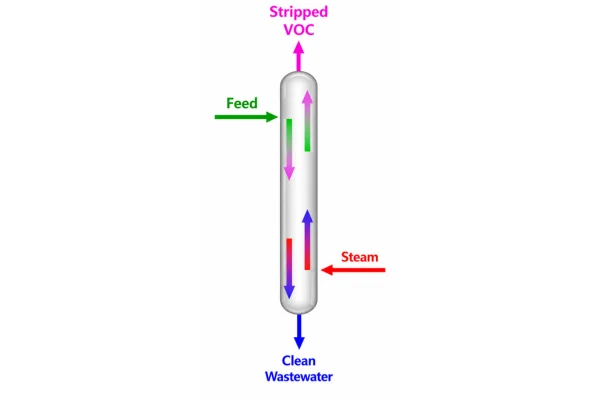
¿Cómo funciona el stripping?
En una columna de separación típica, el líquido fluye hacia abajo mientras que el gas o vapor de separación se desplaza hacia arriba, lo que da lugar a un contacto gas-líquido a contracorriente. Los componentes volátiles pasan a la fase gaseosa y se eliminan con la corriente de cabeza, mientras que el líquido tratado sale por la parte inferior.
Cuando se utiliza vapor, las sustancias volátiles pueden eliminarse a temperaturas inferiores a sus puntos de ebullición normales. A continuación, el vapor de cabeza puede condensarse y enviarse a un proceso de separación de fases o a una purificación adicional cuando sea necesario recuperar el disolvente o el producto.
El stripping se suele considerar el proceso inverso a la absorción. En la absorción, un componente pasa de la fase gaseosa a un disolvente líquido, mientras que en el stripping, un componente volátil pasa de la fase líquida a una corriente de gas o vapor.
Aplicaciones industriales
El proceso de separación por extracción se utiliza ampliamente para la recuperación de disolventes, la eliminación de compuestos orgánicos volátiles, la purificación de productos químicos intermedios, la eliminación de gases disueltos y la recuperación de componentes ligeros de los líquidos de proceso.
En la producción de productos químicos a base de disolventes, se puede instalar una columna de separación aguas abajo de un reactor o de una unidad de extracción para eliminar los disolventes residuales o las impurezas volátiles antes de la purificación final. Esto da lugar a una secuencia típica del proceso:
Reactor o extracción → Stripping → Purificación final
El stripping también puede combinarse con la destilación, la extracción, la condensación y la separación gas-líquido cuando una única operación de separación no permite alcanzar las especificaciones requeridas para el producto o el objetivo de recuperación.
Consideraciones técnicas
El diseño y el funcionamiento de un proceso de separación requieren encontrar un equilibrio entre el rendimiento de la separación, el consumo energético, la capacidad de los equipos y los requisitos de tratamiento posteriores.
Aumentar el caudal de vapor o de gas de separación puede mejorar la fuerza motriz de la transferencia de masa y la eficiencia de la separación, pero también incrementa el consumo de servicios públicos y puede aumentar la carga sobre los condensadores, los separadores de gas y líquido o los sistemas de recuperación situados aguas abajo.
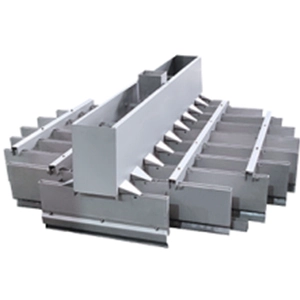
Los componentes internos de las columnas influyen considerablemente en el rendimiento. El relleno estructurado puede proporcionar una amplia superficie de transferencia de masa con una caída de presión relativamente baja, mientras que las bandejas pueden resultar más adecuadas en función de las diferentes cargas de líquido, los rangos de funcionamiento o las condiciones de incrustación.
Los ingenieros de procesos también deben tener en cuenta el equilibrio vapor-líquido, la relación líquido-gas, la caída de presión, el riesgo de inundación, la composición de la alimentación, la eficiencia de separación requerida y la pureza del producto. Por lo tanto, el sistema de separación adecuado depende del objetivo de separación global y no únicamente del rendimiento de la columna de separación.
Términos relacionados
- Absorción
- Descapado con vapor
- Destilación al vapor
- Transferencia de masa
- Equilibrio vapor-líquido
- Columna de separación
- Embalaje estructurado
- Separador de gas y líquido