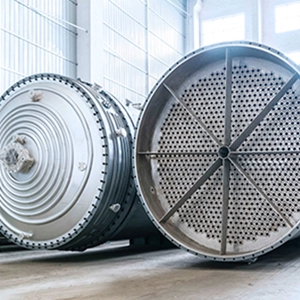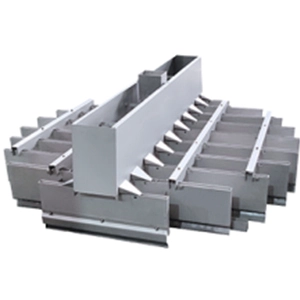
Reactive distillation combines esterification and distillation in one column to address reaction-equilibrium limitations while recovering products through vapor-liquid separation. For methyl acetate production, its feasibility depends on whether the column can achieve the required conversion and purity without exceeding catalyst, energy or hydraulic constraints.
The central engineering requirement is to satisfy reaction kinetics, phase equilibrium, separation performance and hydraulic capacity simultaneously. A feasible design must account for reflux ratio, reactant feed locations, catalyst contact, operating pressure and the effects of scale-up. Simulation can identify candidate configurations, but reliable industrial design requires experimental validation and an operating margin.
Why Conventional Esterification Creates Separation Challenges
Reaction Equilibrium in Methyl Acetate Production
Methyl acetate (MeOAc) is produced through the reversible reaction of acetic acid with methanol.
CH3COOH + CH3OH ⇌ CH3COOCH3 + H2O
As the reaction approaches equilibrium, the net rate of ester formation decreases. A conventional reactor may require excess reactant, recycle or additional separation to achieve the desired overall conversion.
In a conventional flowsheet, the reactor and purification equipment operate as separate units. Depending on feed composition and product specifications, the process may require reactant recovery, multiple distillation steps and associated heat exchangers.
These operations affect both material circulation and utility consumption. A valid comparison with reactive distillation must use the same production capacity, feed basis and final product specifications rather than assuming that conventional esterification has a fixed conversion limit.
Water Removal and Nonideal Phase Behavior
Water is a product of esterification. Removing water from the reacting environment can favor additional ester formation by changing the local reaction composition and equilibrium driving force.
Reactive distillation combines this effect with continuous separation, but removing water from the reaction zone does not mean that water must leave through the column overhead.
Methyl acetate, methanol, acetic acid and water form a nonideal mixture with important azeotropic behavior. Their distribution within the column depends on multicomponent vapor-liquid equilibrium, feed locations, pressure and the selected separation configuration.
For this reason, a methyl acetate reactive distillation design cannot be established from individual component boiling points alone. The thermodynamic model must describe the relevant mixture behavior before reflux ratio, stage count or product withdrawal locations can be evaluated reliably.
How Reactive Distillation Integrates Reaction and Separation
Column Configuration and Process Functions
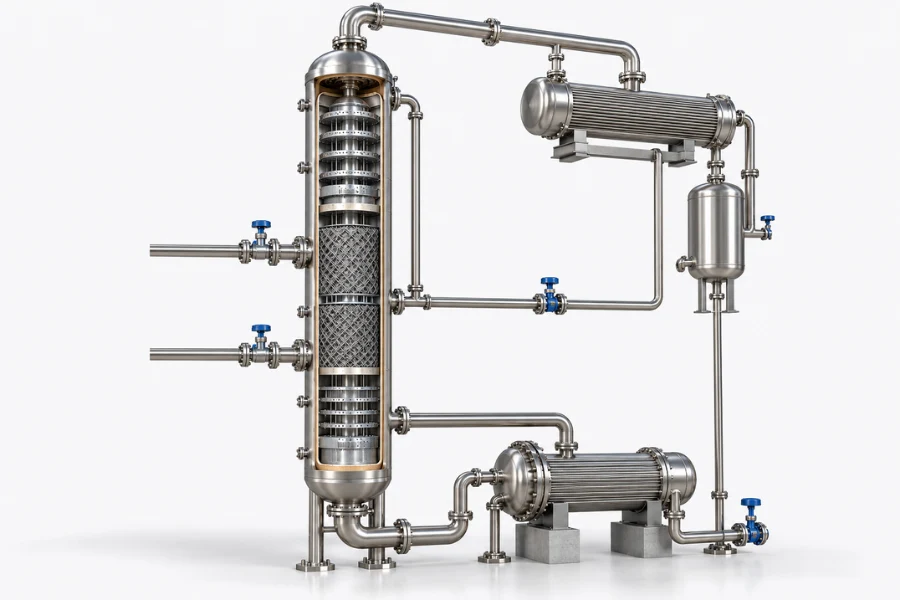
A reactive distillation column can combine rectifying, reactive and stripping sections. Their arrangement determines where reaction occurs and how products and unconverted reactants move through the column.
Rectifying section
The upper section uses vapor-liquid contact and reflux to control the overhead composition. Its performance affects methyl acetate recovery, volatile-component separation and internal liquid circulation.
Reactive section
The reactive zone provides contact between acetic acid, methanol and the catalyst. The available reaction capacity depends on catalyst activity, temperature, local composition, liquid holdup and residence time.
Stripping section
The lower section influences the composition of the bottoms stream by separating more volatile components from descending liquid. Its required performance depends on the feed arrangement and the separation objectives.
In the methyl acetate configurations analyzed by Huss and colleagues, high-purity methyl acetate is recovered as the distillate, while water is recovered in the bottoms stream. This product arrangement describes the studied system rather than a universal configuration for every esterification reaction.
Lessons From the Historical Methyl Acetate Process
The industrial methyl acetate process developed through work associated with Eastman Kodak in the 1980s became a widely cited example of reactive distillation.
The historical literature describes a comparison between an integrated reactive distillation process and a conventional arrangement involving a reactor followed by nine distillation columns. Subsequent process integration literature reported substantial reductions in equipment requirements and energy consumption for that particular comparison.
The significance of this case is the integration of reaction and separation functions, not a universal percentage reduction in cost or energy demand.
A modern project assessment must include feed preparation, reactant recovery, catalyst requirements, product polishing, heat integration and utility systems. If these boundaries differ between alternatives, equipment-count or energy comparisons can be misleading.
Critical Design Variables for Methyl Acetate Reactive Distillation
Reflux ratio, feed locations, catalyst inventory, reactive-zone geometry and pressure interact through the column’s composition and temperature profiles. Optimizing each variable independently can produce a configuration that meets one objective while violating another.
| Design variable | Main engineering effect | Key trade-off |
|---|---|---|
| Índice de reflujo | Changes internal liquid traffic and separation performance | Product purity vs. energy demand |
| Feed location | Changes local reactant concentrations and composition profiles | Conversion vs. reactant recovery |
| Inventario de catalizadores | Determines available catalytic reaction capacity | Reaction rate vs. hydraulics and cost |
| Reactive-zone configuration | Influences catalyst contact, liquid distribution and residence time | Conversion vs. pressure drop |
| Presión de funcionamiento | Changes phase equilibrium and boiling temperatures | Separation behavior vs. thermal and kinetic effects |
The direction and magnitude of these effects depend on the selected configuration. The table is a design-screening framework, not a set of universal operating rules.
Reflux Ratio and the Feasible Operating Window
Reflux ratio is the ratio of liquid returned to the column to distillate withdrawn. Increasing reflux can improve separation under some conditions, but it also increases internal liquid and vapor traffic and may raise condenser and reboiler duties.
Huss, Chen, Malone and Doherty examined methyl acetate reactive distillation using a hierarchy of thermodynamic and kinetic models in their 2003 study, Reactive Distillation for Methyl Acetate Production.
In the limit of reaction and phase equilibrium, their analysis identified both minimum and maximum reflux constraints. Only a relatively narrow range of reflux ratios produced high conversion and high-purity methyl acetate under those assumptions.
The equilibrium-limit model also predicted multiple steady states throughout the feasible reflux range. When finite reaction rates were considered, multiple steady states did not occur over realistic reflux ratios in the studied configurations, although they appeared at higher reflux ratios outside normal operation.
These results distinguish thermodynamic feasibility from practical operating behavior. A reflux ratio that satisfies an equilibrium calculation may not be the preferred value once reaction kinetics, energy demand and hydraulic capacity are included.
Industrial sensitivity studies should therefore evaluate conversion, product purity, condenser duty, reboiler duty and column loading together. The selected operating point should provide sufficient margin for feed variation and control disturbances.
Feed Locations and Reactant Distribution
The feed locations of methanol and acetic acid influence the local reactant concentrations and the temperature and composition profiles through the reactive zone.
Changing a feed stage can improve reactant contact in one part of the column while increasing reactant losses or separation demand elsewhere. The appropriate arrangement depends on the complete reaction-separation model.
Candidate feed locations should be compared using conversion, product recovery, energy demand and hydraulic loading. If several configurations meet the nominal specification, the preferred design should also provide a workable operating range.
Catalyst Selection and Reactive-Zone Design
Acid-catalyzed methyl acetate synthesis has been studied using both homogeneous catalysts and heterogeneous acidic ion-exchange resins. Heterogeneous catalysts can reduce catalyst carryover, but their effectiveness depends on catalyst wetting, liquid holdup, temperature and contact time.
Pöpken, Steinigeweg and Gmehling investigated methyl acetate synthesis and hydrolysis using Katapak-S structured catalytic packing containing Amberlyst 15 resin. Their 2001 paper, Synthesis and Hydrolysis of Methyl Acetate by Reactive Distillation Using Structured Catalytic Packings, combined experiments and simulation to evaluate the behavior of the reactive column.
The research examined how reaction kinetics and separation performance influenced the agreement between model predictions and experimental results. It also considered effects such as residence-time distribution and heat loss.
A key modeling finding was that an adsorption-based kinetic model accounting for selective swelling of the polymeric catalyst was needed to reproduce both synthesis and hydrolysis experiments within experimental accuracy. A simpler pseudohomogeneous model reproduced synthesis behavior but did not adequately describe the hydrolysis experiments.
This distinction matters when selecting kinetic expressions for a new design. Parameters fitted to one catalyst and reaction configuration should not automatically be transferred to another operating range.
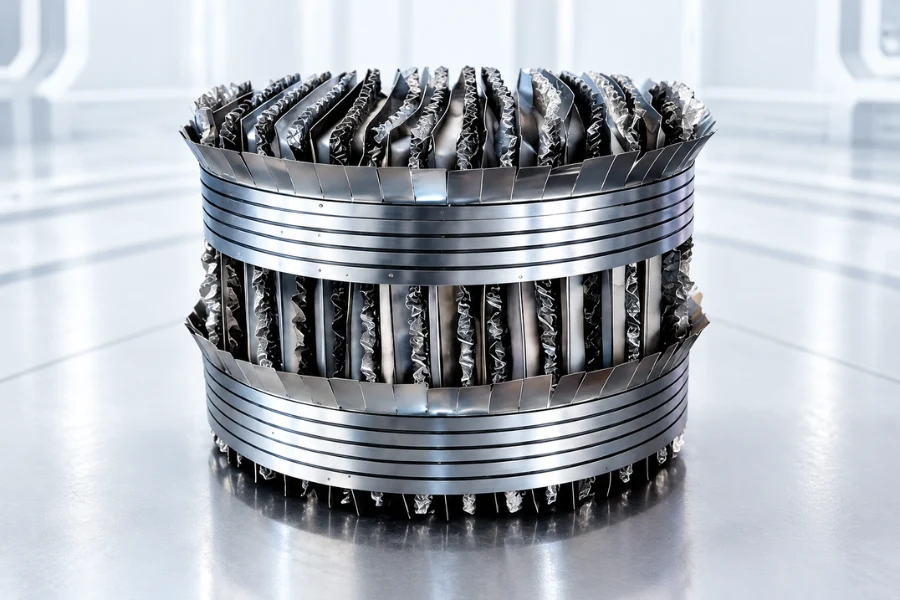
The choice of structured packings also affects vapor-liquid contact, liquid distribution and pressure drop. Conventional mass-transfer packing and structured catalytic packing serve different functions, so their hydraulic and reaction performance must be evaluated according to their actual construction.
For a catalytic reactive zone, the design must establish sufficient catalyst inventory and contact time without causing excessive pressure drop or poor liquid distribution. Additional catalyst does not necessarily improve conversion if wetting or mass transfer is limiting.
Operating Pressure and Thermodynamic Model Selection
Operating pressure affects boiling temperatures, vapor-liquid equilibrium and the internal traffic needed for separation. Changes in temperature and composition can also alter the local reaction rate.
The thermodynamic model must describe interactions among acetic acid, methanol, methyl acetate and water over the intended operating range.
Activity-coefficient models such as Wilson, NRTL and UNIQUAC may be suitable for nonideal liquid systems, provided their interaction parameters are supported by relevant experimental data.
A property method should be evaluated against the vapor-liquid equilibrium and azeotropic behavior that govern the intended separation. If liquid-liquid phase behavior is relevant to the configuration, that behavior must also be represented.
An inaccurate phase-equilibrium model can produce misleading predictions of reflux requirements, product purity and feasible operating limits, even when the simulation converges.
Process Simulation and Experimental Validation
Choosing the Appropriate Model
Different model types answer different design questions. Model complexity should increase when the engineering decision requires additional physical detail and reliable data are available.
| Model approach | Primary design purpose | Principal limitation |
|---|---|---|
| Equilibrium-stage model | Screen phase-equilibrium constraints and candidate column configurations | Requires assumptions about stage behavior and may not represent finite kinetics adequately |
| Finite-rate reaction model | Evaluate conversion against reaction kinetics, catalyst inventory and contact time | Depends on validated kinetic parameters and reaction-zone assumptions |
| Rate-based or nonequilibrium-stage model | Evaluate interphase heat and mass transfer and support detailed column design | Requires more detailed transport, interfacial-area and hydraulic information |
An equilibrium-stage model is useful for early feasibility screening. Finite-rate reaction modeling becomes necessary when catalyst activity and residence time determine whether the desired conversion can be achieved.
Rate-based modeling is particularly relevant when interphase mass-transfer resistance or column internals materially affect the design. It should not be selected solely because it is more sophisticated.
The Huss study demonstrates how a hierarchy of models can change conclusions about reflux constraints and steady-state behavior. The Pöpken experiments show why kinetic expressions and experimentally observed column behavior must be represented appropriately.
Simulation and Validation Workflow
1. Establish the design basis
Define feed composition, production capacity, product specifications, pressure, catalyst system and available utilities. Identify the product streams to which purity and recovery requirements apply.
2. Validate the thermodynamic model
Compare predicted vapor-liquid equilibrium and relevant phase behavior against experimental data over the intended composition and pressure ranges.
3. Establish reaction kinetics
Use kinetic parameters validated for the selected catalyst, temperature range and reaction mixture. Check whether catalyst swelling, adsorption or other mechanisms materially affect the rate expression.
4. Screen column configurations
Evaluate feed locations, stage count, reactive-zone extent, reflux ratio and pressure. Eliminate configurations that fail product specifications or exceed known catalyst and hydraulic constraints.
5. Evaluate sensitivity and trade-offs
Quantify the effects of key variables on conversion, purity, energy demand and equipment requirements. Use multi-objective optimization where improvement in one objective creates a penalty in another.
6. Validate against experiments
Compare predicted temperature profiles, compositions, conversion, pressure drop and utility demand with laboratory or pilot observations where available. Use discrepancies to refine the model before commercial sizing.
Interpreting Model Results
Simulation convergence establishes that the numerical solver has found a solution under its assumptions. It does not prove that the column will maintain the predicted performance with real catalyst packing and industrial vapor-liquid distribution.
A model may reproduce product composition while using incorrect assumptions about catalyst utilization, mass transfer or heat loss. Comparing multiple measured variables is therefore more informative than matching one product-purity result.
Where multiple steady states or strong nonlinear responses are possible, the engineering assessment should also consider operating-point sensitivity, startup and disturbance behavior.
Scale-Up Challenges and Industrial Trade-Offs
Hydraulic Performance and Column Internals
Increasing column diameter and throughput changes vapor velocity, liquid loading, distribution quality and pressure drop. These changes can affect the effective contact between reactants and catalyst even when nominal residence time is maintained.
The design of column internals influences liquid distribution, vapor-liquid contact and hydraulic capacity. Distributors, collectors, support structures and packing arrangements must be selected for the actual operating range.
Pilot testing should examine whether the proposed reactive zone maintains sufficient catalyst wetting and conversion without excessive pressure drop. Measurements can help calibrate hydraulic correlations and identify maldistribution before commercial equipment dimensions are finalized.
A successful laboratory reaction test does not establish full-scale column capacity. The scale-up basis must connect reaction performance to the hydraulic conditions expected in the commercial tower.
Thermal Management and Process Control
Reaction enthalpy contributes to the energy balance, but reboiler and condenser duties also depend on vaporization, reflux circulation, feed conditions and separation requirements.
Methyl acetate synthesis is often described as a nearly heat-neutral reactive distillation application because the reaction enthalpy is small relative to typical vaporization duties. This does not mean that the integrated process operates without external heating or cooling.
Energy evaluation should include feed preheating, column pressure, reflux requirements, condenser duty, reboiler duty and feasible heat-recovery arrangements.
Feed composition and utility disturbances can change the temperature and concentration profiles in the reactive zone. The control strategy should therefore consider product composition, column pressure, temperature measurements and the available manipulated variables.
Product Purity, Annualized Cost and CO2 Emissions
A 2026 study, Rate-Based Modeling, Multi-Objective Optimization and Economic–CO2 Emission Trade-Off Analysis of an Industrial-Scale Reactive Distillation Column for High-Purity Methyl Acetate Production, examined a modeled methyl acetate reactive distillation process at approximately 30,000 metric tons per year.
The researchers used rate-based nonequilibrium modeling and multi-objective optimization to evaluate total annual cost and CO2 emissions.
| Performance indicator | Reported result |
|---|---|
| Base-design methyl acetate purity | Approximately 98% |
| Selected optimized-design purity | 99.5% |
| Change in modeled total annual cost | 39.01% increase |
| Change in reported CO2 emission rate | 29.85% decrease |
These results describe the study’s particular model and optimization constraints, not measurements from an operating commercial plant or results achieved by DODGEN.
The comparison demonstrates that improving product quality and reducing modeled emissions can involve higher annualized costs. It does not establish that every lower-emission reactive distillation design will be more expensive.
A project-specific economic assessment should compare the value of the required purity against capital expenditure, utility demand, catalyst replacement, downstream purification and operating flexibility.
From Pilot Testing to Commercial Implementation
A Practical Scale-Up Validation Checklist
Laboratory studies establish kinetic and equilibrium data, but they provide limited evidence about full-scale liquid distribution and hydraulic behavior. Pilot testing should address the uncertainties most likely to affect commercial performance.
| Development stage | Required evidence | Engineering decision supported |
|---|---|---|
| Laboratorio | Reaction kinetics, equilibrium behavior and catalyst performance | Whether the reaction and separation concept is technically plausible |
| Process simulation | Feasible operating window, material balance, energy balance and candidate column configuration | Which designs justify experimental testing |
| Pilot testing | Conversion, product recovery, temperature profiles, liquid distribution and pressure drop | Whether the model represents practical reaction-separation performance |
| Commercial engineering | Equipment sizing, operating margins, control strategy, utility demand and maintenance requirements | Whether the process can meet specifications at an acceptable cost and risk |
Pilot measurements should be selected to calibrate the assumptions that dominate the commercial design. For example, unexpected pressure drop may require a different internal configuration, while lower-than-predicted conversion may indicate inadequate wetting, incorrect kinetics or insufficient residence time.
Establishing Commercialization Readiness
Commercialization readiness requires evidence that the selected configuration can meet product specifications under representative operating conditions, not simply at one simulated steady state.
The engineering basis should include acceptable conversion and recovery, validated hydraulic capacity, a workable control strategy, catalyst maintenance requirements and an economic comparison against the conventional alternative.
En desarrollo soluciones de tecnología de procesos for industrial implementation requires these reaction, separation and operating constraints to be evaluated as one system.
DODGEN provides process technology and equipment solutions relevant to reaction and separation integration. For a methyl acetate reactive distillation project, the appropriate engineering scope would depend on the validated design basis, project-specific operating requirements and the evidence needed before commercial deployment.
Conclusión
Methyl acetate reactive distillation illustrates how reaction and separation can be integrated to address equilibrium limitations, but its performance depends on more than thermodynamic feasibility.
The Huss study identifies reflux constraints and differences between equilibrium and finite-rate predictions. The Pöpken experiments demonstrate the importance of catalyst-specific kinetics and experimental validation. More recent rate-based optimization research shows how purity, annualized cost and emissions can compete in industrial-scale design.
A defensible commercialization decision requires validated thermodynamic and kinetic models, demonstrated catalyst and hydraulic performance, sufficient operating flexibility and an economic comparison based on equivalent product specifications.