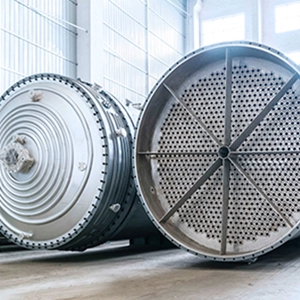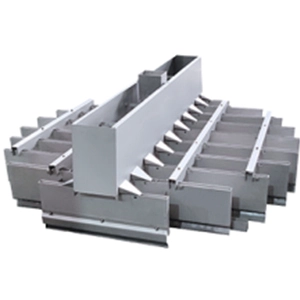
Producing polymer-grade lactide requires control of both chemical impurities and stereoisomer composition. Residual water, lactic acid, oligomers and unwanted lactide isomers can affect ring-opening polymerization, molecular weight development and the crystallization behavior of polylactic acid (PLA).
Vacuum distillation separates components through vapor–liquid equilibrium, while melt crystallization exploits solid–liquid equilibrium to enrich the desired crystal phase. Combining these technologies can improve purification flexibility, but the optimal sequence depends on feed composition, crystallization selectivity, thermal exposure and overall recovery requirements.
Impurities That Determine Lactide Purification Requirements
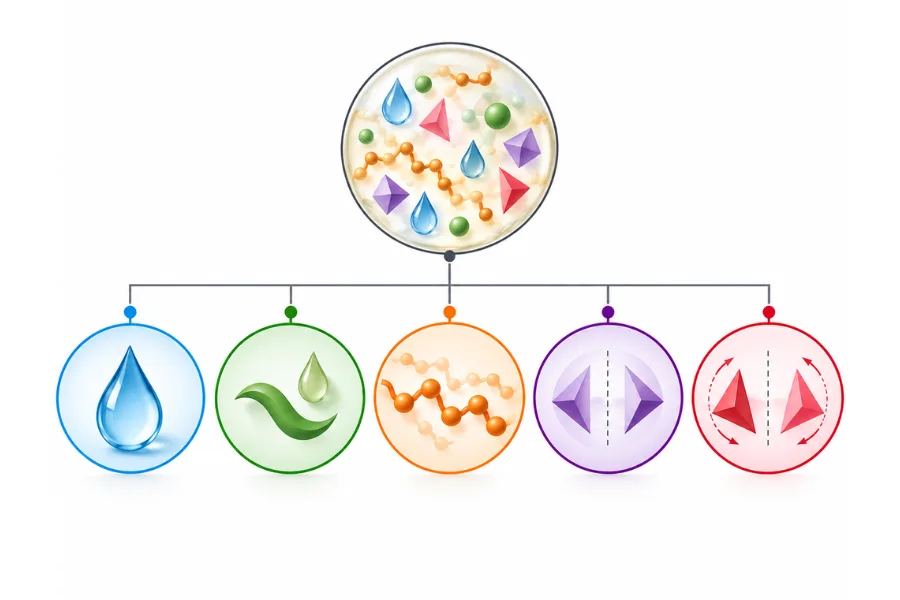
Crude lactide from lactic acid oligomer depolymerization may contain water, free lactic acid, oligomers and different lactide stereoisomers. These impurities require different control strategies, so total lactide purity alone cannot establish whether a product meets a particular PLA grade specification.
| Impurity | Main concern | Purification consideration |
|---|---|---|
| Agua | Promotes hydrolysis and affects polymerization | Moisture removal and dry handling |
| Lactic acid | Contributes acidity and hydroxyl functionality | Acid removal and control of reactive impurities |
| Lactic acid oligomers | Increase heavy-end loading and fouling potential | Heavy-residue separation |
| meso-Lactide | Changes stereoisomer composition and PLA crystallization behavior | Stereoisomer-selective separation |
| Unwanted D- or L-lactide | Alters the target monomer’s stereochemical composition | Optical purity control |
Chemical Purity Versus Optical Purity
Chemical purity measures lactide content relative to other chemical species. Stereochemical purity describes the distribution of L-lactide, D-lactide and meso-lactide.
A stream can have high chemical purity but an unsuitable stereoisomer distribution for a PLA grade requiring high stereoregularity. Conversely, removing water and residual acid does not necessarily improve optical purity.
These quality attributes require separate analytical controls. Karl Fischer titration is commonly used for water determination, acid-value or validated acidity methods assess residual acidity, and suitable chromatographic methods can distinguish stereoisomers. Oligomer content requires an analytical method appropriate to the relevant molecular-weight range.
Patent WO2004014889A1 describes purified lactide with residual acidity below 10 meq/kg, water below 200 ppm and eso-lactide below 1%. These are patent-specific targets, not universal specifications for every PLA grade.
Why Combine Distillation and Melt Crystallization for Lactide?
The two technologies exploit different phase-equilibrium properties. Their combination is useful when volatility-based separation alone cannot economically meet the required product specification or when crystallization alone cannot adequately manage the crude feed’s impurity burden.
Distillation: Separation by Volatility
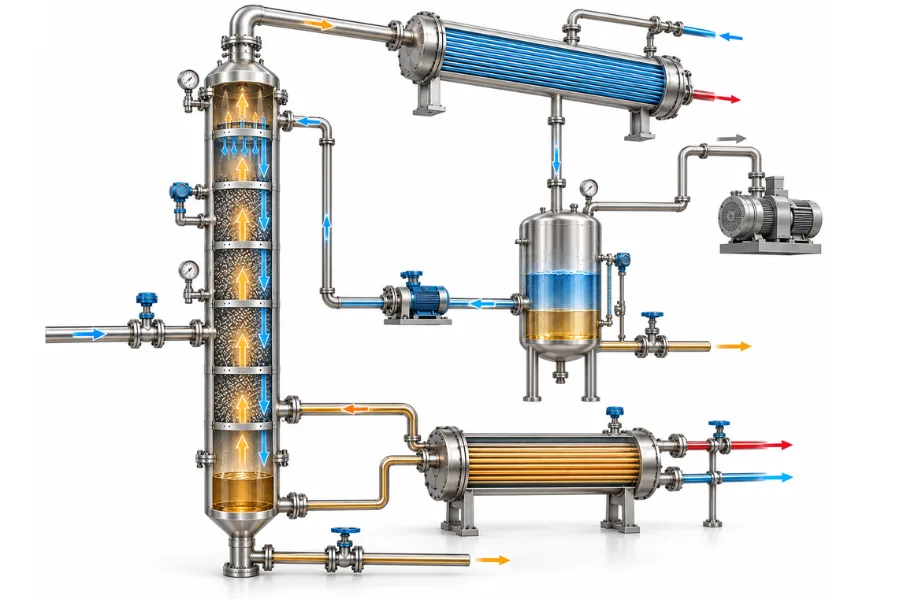
Vacuum distillation separates components according to vapor–liquid equilibrium. Depending on feed composition and column configuration, volatile impurities can be withdrawn separately from lactide-rich fractions, while heavier oligomeric residues are concentrated in the bottom stream.
Performance depends on relative volatility, theoretical stages, reflux ratio, pressure and liquid residence time. A difficult separation may require additional reflux or stages, increasing utility demand and potentially extending thermal exposure.
Melt Crystallization: Separation by Solid–Liquid Equilibrium
Melt crystallization forms a solid phase enriched in the desired component while impurities preferentially remain in the liquid phase. The extent of purification depends on phase equilibrium, crystal-growth kinetics and the amount of impurity-rich liquid retained within the crystal layer.
| Engineering factor | Destilación al vacío | Cristalización de la masa fundida |
|---|---|---|
| Separation principle | Vapor–liquid equilibrium | Solid–liquid equilibrium |
| Key operating variables | Pressure, reflux and temperature | Cooling profile, crystal fraction and sweating conditions |
| Limitación principal | Thermal exposure and separation difficulty | Impurity entrapment and cycle time |
| Main recovery loss | Product in distillate or residue streams | Lactide in mother liquor and sweating fractions |
| Scale-up concern | Column hydraulics and reboiler holdup | Heat transfer and crystal uniformity |
The process should be evaluated through a common material balance. Improving one unit operation is not necessarily beneficial if it increases downstream separation duty, recycle flow or valuable lactide losses.
Vacuum Distillation for Crude Lactide Purification
Vacuum operation lowers the boiling temperature required to vaporize lactide-containing mixtures, helping limit thermal exposure. However, pressure must be selected alongside column hydraulics, vapor loading and residence time.
Light- and Heavy-End Separation
A purification column may separate volatile fractions, lactide-rich product streams and high-boiling oligomeric residues. Removing heavy components before crystallization can reduce residue accumulation and improve feed consistency.
Actual stream compositions must be established through mixture-equilibrium data and process modeling. Lactic acid and water should not automatically be assigned to a particular outlet based only on their pure-component boiling points.
Pressure, Temperature and Residence Time
Patent EP2994462B1 describes a packed-column configuration with 6–30 theoretical stages, operating temperatures of 80–180°C and pressures of 3–50 mbar absolute. These values describe a disclosed process configuration rather than universally optimal conditions.
Lower pressure reduces boiling temperature but increases vapor volumetric flow at a given mass flow. This can affect column diameter, pressure drop and vacuum-system capacity.
Thermal risk also depends on temperature history, residence-time distribution and the concentrations of reactive impurities. A reboiler with excessive liquid holdup may expose lactide to prolonged heating even when the nominal operating temperature appears moderate.
Column design should therefore balance separation efficiency, hydraulic capacity, thermal exposure and product recovery rather than simply minimizing operating pressure.
Melt Crystallization for High-Purity Lactide
Melt crystallization can improve lactide purity without introducing an external crystallization solvent. Its effectiveness depends on the solid phase that forms and how impurities distribute between the crystals and the remaining melt.
Lactide Isomer Melting Behavior
Lactide stereoisomers have different melting characteristics, which influence crystallization strategy.
| Lactide form | Approximate melting point | Engineering significance |
|---|---|---|
| L-lactide | 96–97°C | Reference for L-lactide crystal formation |
| meso-Lactide | 54°C | Different crystallization behavior from L-lactide |
| rac-Lactide | Approximately 125°C | Associated with a distinct racemic crystalline phase |
These values refer to relatively pure materials and should not be used to predict the crystallization sequence of every mixture. In particular, rac-lactide is associated with a racemic crystalline compound; it should not be treated as an arbitrary physical mixture of D- and L-lactide or assigned a melting point by averaging their properties.
Mixture phase diagrams, eutectic behavior, possible compound formation, nucleation and crystal-growth kinetics determine which solid phase appears at a given temperature and composition. Experimental solid–liquid equilibrium data are therefore more useful for process selection than pure-component melting points alone.
Crystal Growth and Impurity Rejection
In falling-film crystallization, molten lactide flows over cooled vertical heat-transfer surfaces. As heat is removed, a crystalline layer forms and grows along the surface.
Cooling rate influences crystal morphology, growth rate and impurity incorporation. Rapid growth may trap mother liquor within crystal boundaries, while slower growth can improve selectivity at the expense of longer cycles and lower equipment throughput.
The cooling profile must be established for the actual feed composition and required crystal fraction rather than copied directly from another process.
Sweating and Product Melting
After crystal growth, the impurity-rich mother liquor is drained. The crystal layer is then warmed under controlled conditions so that impurity-enriched regions partially melt and drain away. This sweating stage reduces contamination in the remaining crystal layer before final melting and product recovery.
More intensive sweating can improve product purity but also sends more valuable lactide into the sweating fraction. The appropriate endpoint must therefore balance purity, recovery and cycle time.
Falling-Film Versus Static Crystallization
Falling-film crystallizers circulate molten feed across heat-transfer surfaces during crystal growth. Static crystallization uses a different circulation arrangement and may suit selected purification duties.
Sulzer Chemtech’s published PLA process describes falling-film crystallization for L-lactide purification and static crystallization for meso-lactide processing. This is a specific industrial process configuration, not a universal restriction on which crystallizer can handle each isomer.
Selection should account for phase behavior, heat-transfer requirements, throughput, cleaning and product recovery. The most suitable configuration is the one that meets the required separation performance under realistic operating conditions.
Which Lactide Purification Sequence Works Best?
The sequence of distillation and melt crystallization should be selected according to the crude feed’s impurity profile and the separation performance required from each stage. Published patents demonstrate that both distillation-first and crystallization-first routes are technically possible.
Route A: Distillation Before Melt Crystallization
Patent CN110498787B describes crude lactide distillation followed by falling-film melt crystallization and further treatment of impurity-rich fractions.
This arrangement may be advantageous when volatile impurities or oligomeric residues would otherwise complicate crystallization. Initial distillation can reduce the impurity burden entering the crystallizer, but its benefits must be weighed against thermal exposure, utility demand and product losses in the distillation streams.
Route B: Crystallization Before Distillation
Patent CN112500389B describes initial melt crystallization followed by distillation and additional crystallization.
The patent identifies suspension crystallization as a preferred configuration, rather than the only permissible crystallizer arrangement. In a continuous suspension system, crystal formation and growth occur in the bulk liquid, followed by solid–liquid separation and subsequent purification.
This route may be attractive when initial crystallization can selectively enrich the desired lactide isomer and reduce the load on downstream distillation. However, water, acids and oligomers may affect crystal growth, slurry handling and subsequent separation. These effects require feed-specific testing.
Engineering Criteria for Process Selection
| Feed or operating condition | Engineering decision |
|---|---|
| High water or free-acid concentration | Evaluate early impurity removal and hydrolysis risk |
| Significant oligomer content | Assess heavy-end removal before crystallization |
| Favorable initial crystal selectivity | Evaluate crystallization-first enrichment |
| High meso-lactide concentration | Assess stereoisomer separation and dedicated recovery |
| Limited thermal stability | Compare cumulative thermal exposure |
| High overall recovery requirement | Model recycle, purge and impurity accumulation |
Three questions should guide initial screening.
- Will the crude feed interfere with crystal growth, slurry handling or solids separation?
- Can initial crystallization achieve enough selectivity to reduce downstream distillation duty?
- Will recycling impurity-rich fractions recover valuable lactide without creating excessive impurity buildup?
Neither sequence is universally preferable. A reliable comparison requires consistent feed composition, product specifications, material balances and utility boundaries.
Thermal Stability, Recovery and Energy Trade-Offs
Integrated process performance depends on the interaction between separation efficiency, thermal history and material recovery.
Managing Thermal Exposure
Lactide may undergo hydrolysis, oligomer formation or stereochemical changes under unfavorable processing conditions. The extent of these reactions depends on reaction kinetics, temperature history, residence-time distribution and reactive impurity concentrations.
Vacuum stability, reboiler holdup and heating-surface temperature should be evaluated together. Lower temperatures may reduce certain reaction rates, but the benefit must be weighed against longer residence time or additional equipment requirements.
Product Purity and Recovery
Product purity, single-pass recovery and overall recovery measure different outcomes. A crystallization stage may produce highly pure lactide while leaving substantial recoverable material in the mother liquor and sweating fractions.
Patent EP2994462B1 provides an example of the performance achieved by a disclosed purification process:
| Quality indicator | Crude feed | Purified L-lactide product |
|---|---|---|
| L-lactide content | 89.94% | 99.89% |
| Residual acidity | Approximately 370 mEq/kg | 1.36 mEq/kg |
| Water content | Approximately 390 ppm | 15 ppm |
These figures are from a specific patent example and illustrate the change between feed and product in the disclosed process. They do not establish the independent removal efficiency of the crystallizer or guarantee equivalent performance for other feeds and plant configurations.
Mother Liquor Recovery and Impurity Control
Mother liquor and sweating fractions may contain both recoverable lactide and concentrated impurities. Depending on composition, these streams can undergo further crystallization, distillation or controlled return to upstream processing.
Recycling without a defined impurity-removal pathway can increase concentrations of oligomers, acids or unwanted stereoisomers. A recovery strategy should therefore include component-level material balances, defined purge streams and monitoring of recycle composition.
Energy assessment should cover reboiler duty, vacuum generation, crystallization cooling, sweating, remelting and additional recovery operations. Comparing only distillation steam demand or crystallizer temperature can misrepresent total process energy use.
Pilot Validation and Industrial Scale-Up
Laboratory purity results demonstrate separation potential but do not establish commercial production capacity. Industrial scale-up must verify stable product quality, acceptable recovery and reproducible operation across realistic feed variations.
Pilot Testing Requirements
Pilot trials should verify:
- Feed impurity variability and product quality.
- Distillation pressure stability and thermal exposure.
- Crystal growth, sweating behavior and product purity.
- Mother liquor composition and recovery potential.
- Heat-transfer performance and fouling tendency.
- Recycle accumulation and purge requirements.
- Effective throughput over repeated cycles.
Water, acidity, oligomer content and stereoisomer composition should be monitored independently using suitable analytical methods. A single bulk-purity result cannot establish compliance with all product specifications.
Crystallization Cycle Time and Effective Capacity
For cyclic falling-film or static crystallization, the average product rate depends on the recovered product mass and the complete operating cycle time.
[
\text{Average Product Rate}=
\frac{\text{Recovered Product per Cycle}}
{\text{Total Cycle Time}}
]
Total cycle time includes crystallization, drainage, sweating, melting and necessary preparation or switching operations. Extending the sweating stage may improve purity but reduce average throughput, potentially requiring additional crystallizer area or parallel equipment.
This cycle-based rate is not the same as annual saleable capacity. Annual output also depends on equipment utilization, planned maintenance, cleaning, unplanned downtime and the proportion of product meeting specification.
Continuous suspension crystallization requires a different capacity assessment based on slurry throughput, solids inventory, residence-time distribution and crystal separation performance.
Translating Pilot Data Into Commercial Design
Falling-film scale-up requires uniform liquid distribution across heat-transfer tubes. Uneven distribution can produce inconsistent crystal growth and product quality.
Distillation scale-up must address vapor loading, column hydraulics, pressure drop and reboiler residence time. The final process design should integrate both units through material balances, utility requirements, impurity specifications and realistic operating schedules.
Integrated Lactide Purification for Industrial Production
Lactide purification requires coordinated control of chemical impurities, stereoisomer composition, thermal exposure and overall recovery. The choice between distillation-first and crystallization-first operation should follow feed characterization, separation testing and integrated process evaluation.
DODGEN supports high-purity chemical processing through separation engineering, process integration and pilot-to-commercial scale-up, helping translate purification requirements into practical industrial process designs.
Technical References
- Perry’s Chemical Engineers’ Handbook, 7th Edition, Section 18, “Crystallization From the Melt.”
- Perry’s Chemical Engineers’ Handbook, 9th Edition, Section 18.4.4, “Melt Crystallization (Production of Refined Liquid).”
- Sulzer Chemtech, Purification of Dilactide Through Melt Crystallization, Sulzer Technical Review, 2008.
- CN110498787B — A Lactide Purification System and Purification Method.
- CN112500389B — A Method for Separation and Purification of Lactide.
- WO2004014889A1 — Method for the Production of Polylactide From a Solution of Lactic Acid or One of the Derivatives Thereof.
- EP2994462B1 — PLA on the Basis of the D-Lactide Enantiomer.
- Aliev et al. (2024), Synthesis of L-Lactide From Lactic Acid and Production of PLA Pellets: Full-Cycle Laboratory-Scale Technology, PubMed Central.