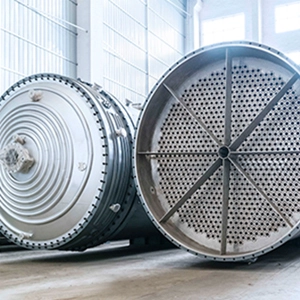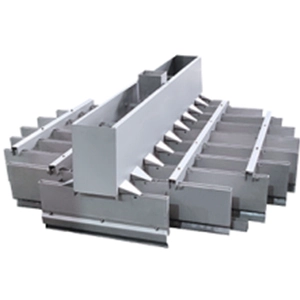
Definición
La destilación es un proceso de separación y purificación que se utiliza para separar los componentes de una mezcla líquida en función de las diferencias en su volatilidad o punto de ebullición. El proceso consiste en calentar una mezcla líquida hasta que uno o varios componentes se vaporicen, para a continuación condensar el vapor y convertirlo de nuevo en líquido.
Dado que las distintas sustancias hierven a temperaturas diferentes, la destilación puede utilizarse para aislar líquidos volátiles de materiales no volátiles o para separar entre sí varios componentes líquidos.
La destilación es una de las tecnologías de separación más utilizadas en las industrias química, petroquímica, farmacéutica y de refinería.
Principios fundamentales
La eficacia de la destilación depende de la diferencia entre los puntos de ebullición de las sustancias que se van a separar.
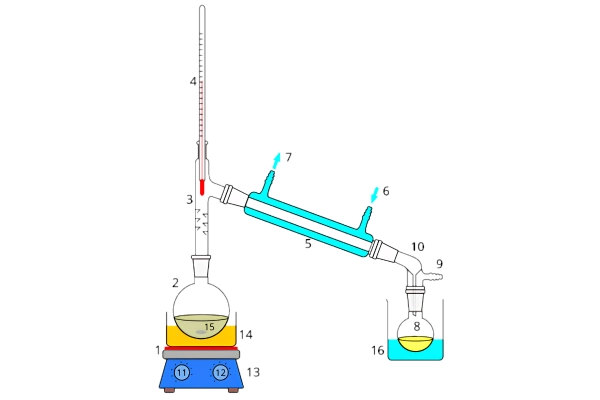
Un proceso típico de destilación consta de tres pasos básicos:
- Calentar la mezcla líquida para generar vapor.
- Condensar el vapor mediante un sistema de refrigeración.
- Recogida del líquido condensado, conocido como destilado.
Los componentes con puntos de ebullición más bajos tienden a vaporizarse primero, mientras que los de punto de ebullición más alto permanecen en fase líquida.
Cuanto mayor sea la diferencia de volatilidad entre los componentes, más fácil resulta la separación.
Tipos habituales de destilación
En la producción industrial se utilizan varios métodos de destilación.
Destilación simple
La destilación simple se suele utilizar cuando los puntos de ebullición de los componentes difieren significativamente. Se aplica habitualmente en operaciones de laboratorio y en procesos básicos de purificación.
Destilación fraccionada
La destilación fraccionada se utiliza cuando los puntos de ebullición están relativamente próximos entre sí. Una columna de fraccionamiento permite realizar ciclos repetidos de vaporización y condensación, lo que mejora la eficiencia de la separación y la pureza del producto.
Destilación al vapor
La destilación con vapor es adecuada para materiales sensibles al calor. La introducción de vapor reduce la temperatura efectiva de ebullición, lo que ayuda a evitar la degradación térmica del producto.
Destilación al vacío
La destilación al vacío se lleva a cabo a presión reducida, lo que reduce los puntos de ebullición y permite procesar de forma segura materiales de alto punto de ebullición o sensibles a la temperatura.
Aplicaciones industriales
La destilación es una de las operaciones unitarias más importantes en la industria química moderna.
Entre sus aplicaciones más habituales se encuentran:
Refino de petróleo
El refinado del petróleo crudo se basa en gran medida en la destilación para separar los hidrocarburos y obtener productos como la gasolina, el queroseno, el gasóleo y los aceites lubricantes.
Producción química
Muchas plantas químicas utilizan la destilación para recuperar disolventes, eliminar impurezas y purificar los productos de reacción.
Purificación del agua
La destilación permite eliminar de la agua las sales disueltas, los minerales y los contaminantes, obteniéndose así agua destilada de alta pureza.
Producción de alcohol
La destilación se utiliza ampliamente para concentrar el etanol durante la producción de bebidas alcohólicas y productos de alcohol industrial.
Relevancia industrial
El valor industrial de la destilación reside en su capacidad para purificar productos y recuperar componentes a escala comercial.
En la industria química, la calidad del producto suele depender de la eliminación eficaz de las impurezas y de la separación precisa de los compuestos deseados. Por lo tanto, la destilación desempeña un papel fundamental a la hora de mejorar la pureza del producto, la rentabilidad del proceso y la utilización de los recursos.
Muchas instalaciones de producción a gran escala incorporan sistemas de destilación como equipos fundamentales del proceso en las operaciones de purificación y recuperación.
Tecnologías relacionadas
A medida que los requisitos de separación se vuelven más exigentes, la destilación suele integrarse con otras tecnologías de proceso.
Algunos ejemplos son:
- Destilación reactiva
- Destilación extractiva
- Separación al vacío
- Sistemas de recuperación de disolventes
- Tecnología de empaquetamiento estructurado
En las plantas químicas modernas se suelen emplear elementos internos avanzados para columnas, rellenos estructurados y estrategias de optimización de procesos con el fin de mejorar la eficiencia de la transferencia de masa y reducir el consumo de energía.
Términos relacionados
- Destilación fraccionada
- Destilación reactiva
- Volatilidad relativa
- Embalaje estructurado
- Transferencia de masa
- Recuperación de disolventes