Por qué una selección incorrecta del evaporador provoca pérdidas de producto
En los procesos químicos sensibles al calor, la elección del evaporador influye directamente en la estabilidad del producto, el rendimiento y la continuidad operativa.
En aplicaciones relacionadas con los API, PLA En el caso de los productos intermedios y los extractos botánicos, el aumento de la temperatura o la prolongación del tiempo de permanencia se asocia con:
- Degradación de los compuestos activos
- Formación de cuerpos de color e impurezas
- Aceleración de la formación de incrustaciones, lo que provoca paradas no programadas
Estos efectos se observan habitualmente en el funcionamiento industrial y dan lugar a una reducción de los índices de recuperación y a un aumento de las necesidades de mantenimiento.
En estos casos se suelen utilizar sistemas de película descendente. Sin embargo, el rendimiento depende de que las características del material y el diseño del equipo estén bien adaptados entre sí.
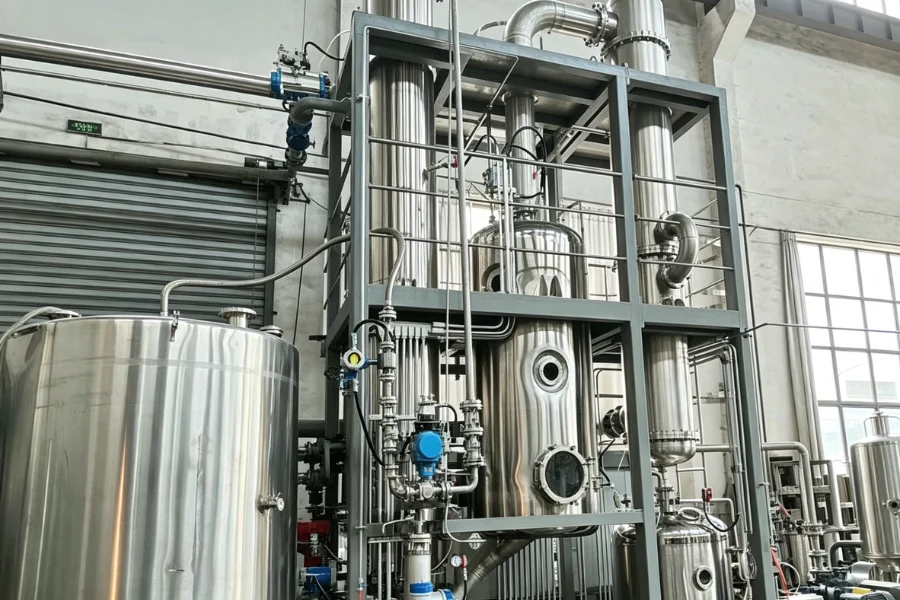
Características de funcionamiento de los sistemas de película descendente en procesos sensibles al calor
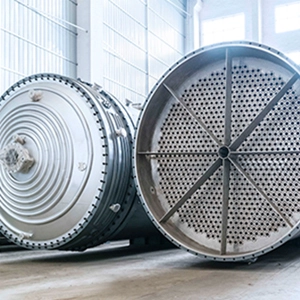
Un sistema de película descendente distribuye el líquido en la parte superior de unos tubos verticales, formando una película fina que fluye hacia abajo por la fuerza de la gravedad mientras se aplica calor a través de la pared del tubo.
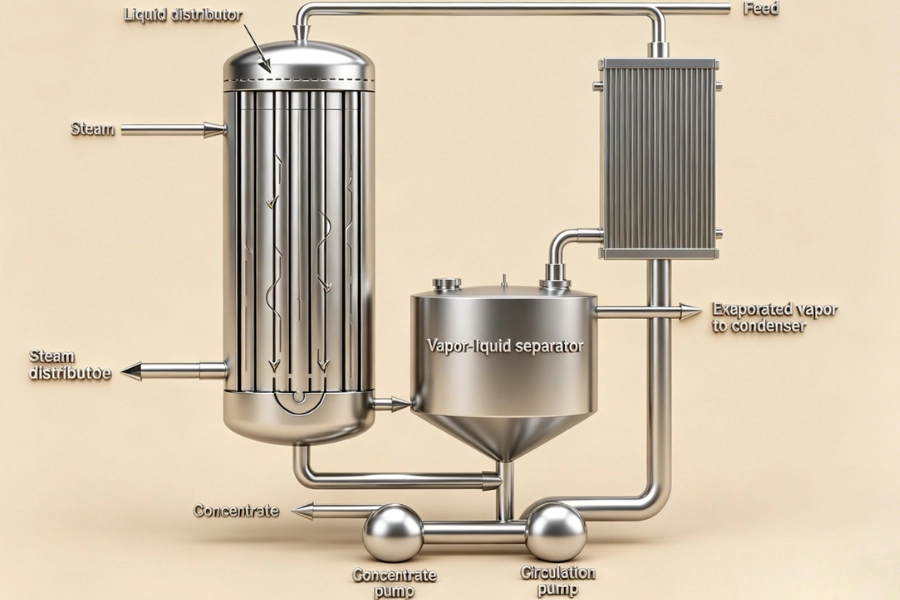
En el ámbito industrial, esta configuración se asocia con:
- El tiempo de permanencia suele oscilar entre 5 y 30 segundos
- Temperatura de ebullición reducida al vacío, a menudo entre 40 y 70 °C
- Altos coeficientes de transferencia de calor debidos al flujo en capa fina
Estas características están relacionadas con una menor exposición térmica en comparación con los sistemas de ebullición a granel.
La estabilidad del rendimiento depende de que se mantenga una distribución uniforme de la película y se minimice la acumulación de residuos en la superficie de transferencia de calor.
Propiedades de los materiales que determinan la elección del evaporador
En la práctica industrial, la elección del evaporador viene determinada por el comportamiento del material y no por las preferencias en cuanto al equipo.
Límite de estabilidad térmica
La temperatura máxima admisible antes de que se produzca la degradación determina la presión de funcionamiento necesaria y el rango de temperatura.
En el caso de los sistemas con umbrales de degradación inferiores a 60 °C, suele ser necesario el funcionamiento al vacío para mantener la integridad del producto.
Perfil de viscosidad
Las configuraciones de película descendente se aplican generalmente a fluidos de viscosidad baja y moderada.
- Rango de funcionamiento típico: por debajo de 200 cP
- Rango ampliado con un diseño optimizado: hasta aproximadamente 1000 cP
Se debe evaluar la viscosidad tanto en la entrada como en la concentración final, ya que el aumento de la viscosidad reduce la estabilidad de la película y la transferencia de calor.
Tendencia a la formación de incrustaciones y sarro
El comportamiento de las incrustaciones influye directamente en el rendimiento de la transferencia de calor.
Los depósitos en las superficies de transferencia de calor reducen el coeficiente global de transferencia de calor y requieren un aumento compensatorio de la temperatura de la pared para mantener la tasa de evaporación.
Los materiales con una elevada tendencia a la formación de incrustaciones suelen procesarse utilizando configuraciones alternativas o requieren un diseño mejorado que evite dicha formación.
Características de la formación de espuma
El comportamiento de formación de espuma varía considerablemente entre los distintos sistemas bioquímicos y aquellos que contienen tensioactivos.
Una formación excesiva de espuma puede provocar:
- Pérdidas por arrastre
- Menor eficiencia en la separación de vapor y líquido
La mitigación se consigue normalmente mediante el diseño de los separadores y el control del proceso.
Contenido en sólidos y comportamiento de cristalización
Los sólidos en suspensión o la cristalización en fase inicial pueden interferir en la distribución del líquido y en la formación de la película.
En estos casos, se evalúan tecnologías de pretratamiento o de evaporación alternativas para mantener un funcionamiento estable.
Condiciones en las que no se pueden utilizar los sistemas de película descendente
Las configuraciones de película descendente no son de aplicación universal.
En la práctica industrial, los sistemas alternativos se seleccionan en las siguientes condiciones:
- La viscosidad supera los 1000 cP aproximadamente durante el procesamiento.
- Las incrustaciones o el sarro se forman rápidamente incluso a bajas concentraciones
- La cristalización tiene lugar en el interior del evaporador
- Las corrientes de alimentación contienen una cantidad significativa de sólidos en suspensión
En estas condiciones, se suelen utilizar sistemas de circulación forzada o de película barrida.
Características de diseño que facilitan el funcionamiento en condiciones de alta temperatura
El rendimiento del sistema viene determinado por la ejecución del diseño.
Sistema de distribución de líquidos
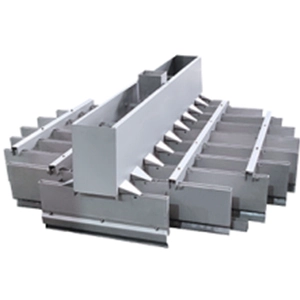
Es necesario que la distribución del líquido sea uniforme para mantener una cobertura continua de la película.
Una distribución inadecuada provoca la aparición de zonas secas localizadas, lo que da lugar a un sobrecalentamiento y a la formación de incrustaciones.
Los diseños industriales suelen mantener una distribución estable entre el 30 y el 40 por ciento de la carga nominal.
Geometría de la transferencia de calor
Entre las configuraciones típicas de los tubos se incluyen:
- Longitud: 4-8 m
- Diámetro: 25-65 mm
Al aumentar la longitud del tubo se incrementa la superficie, pero también hay que tener en cuenta la caída de presión. La optimización del diseño permite equilibrar ambos factores.
Configuración del sistema de vacío
Los sistemas de vacío se diseñan en función de la carga total de gas, incluidos los gases no condensables.
Una capacidad de vacío insuficiente provoca un aumento de la temperatura de ebullición y la exposición térmica asociada.
Selección de materiales
El material de fabricación viene determinado por la resistencia a la corrosión y los requisitos del proceso.
- Superficies en contacto con el producto: normalmente de acero inoxidable SUS316L o de calidad superior
- Superficies soldadas: acabadas para cumplir los requisitos de CIP y BPF
La elección de los materiales influye tanto en la durabilidad como en la pureza del producto.
Impacto de las incrustaciones y medidas de control
Las incrustaciones constituyen una de las principales limitaciones operativas.
A medida que avanza el ensuciamiento:
- El coeficiente de transferencia de calor disminuye
- Aumenta la temperatura de calentamiento necesaria
- Aumenta el riesgo de deterioro del producto
Medidas de mitigación basadas en el diseño
- Mantener una tasa mínima de humectación, normalmente superior al 70 % del caudal de diseño
- Aplicar un acabado electropulido a las superficies internas
- Optimizar la recirculación cuando sea necesario
Control operativo
- Aplicar los procedimientos de CIP programados
- Supervisar la caída de presión y el rendimiento térmico
- Aplicar los protocolos de limpieza adecuados
La gestión de las incrustaciones está directamente relacionada con la fiabilidad a largo plazo del sistema.
Criterios de selección de la configuración energética
El diseño energético se evalúa teniendo en cuenta tanto la sensibilidad térmica como los costes de funcionamiento.
Sistemas de efecto único
- Economía de Steam: aproximadamente entre 0,8 y 1,0
- Tiempo de permanencia menor en comparación con los sistemas de efecto múltiple
Se utiliza en procesos a pequeña escala o de gran sensibilidad.
Sistemas multiefectos
- El consumo de vapor se redujo en aproximadamente un 30-50 por ciento por cada efecto adicional
- Se aplica en operaciones continuas a gran escala
Sin embargo, otros efectos aumentan el tiempo de permanencia total y reducen los gradientes de temperatura.
Sistemas MVR
La recompresión mecánica de vapor reutiliza la energía del vapor y reduce la demanda externa de vapor.
Su aplicación depende de la estructura de los costes energéticos y de la envergadura de la planta.
Comparación de configuraciones de evaporadores
| Configuración | Tiempo de permanencia | Idoneidad térmica | Rango de viscosidad | Limitación |
|---|---|---|---|---|
| Sistema de película descendente | 5–30 s | Alta | hasta unos 1000 cP | Sensibilidad a las incrustaciones |
| Sistema de proyección ascendente | 1–3 min | Moderado | baja viscosidad | Gradiente de temperatura |
| Sistema de circulación forzada | 5-15 min | Moderado | hasta unos 5000 cP | Tiempo de permanencia prolongado |
| Sistema de película barrida | <10 s | Alta | viscosidad muy alta | Alto coste de inversión |
Los sistemas de película descendente se utilizan habitualmente en aplicaciones en las que hay sensibilidad térmica y una viscosidad moderada.
Mecanismos de fallo derivados de una selección incorrecta del evaporador
Los patrones de fallo observados en el funcionamiento industrial suelen seguir una secuencia constante:
- La distribución desigual da lugar a zonas secas
- El sobrecalentamiento local provoca la formación de incrustaciones
- El rendimiento de la transferencia de calor disminuye
- La temperatura de calentamiento aumenta para mantener la capacidad
- Se produce la degradación del producto
Esta secuencia da lugar a una disminución del rendimiento y a un aumento de la frecuencia de mantenimiento.
Marco paso a paso para la selección de evaporadores
Paso 1 — Definir los límites de los materiales
Determina:
- Perfil de degradación térmica
- Variación de la viscosidad en todo el rango de concentraciones
Paso 2 — Calcular la carga de evaporación
Establece la tasa de evaporación necesaria en función de la alimentación y la concentración deseada.
Paso 3 — Seleccionar la configuración energética
Evaluar las horas de funcionamiento y el coste energético para determinar si se opta por una configuración de un solo efecto, de múltiples efectos o MVR.
Paso 4 — Confirmar los requisitos de cumplimiento
Evaluar:
- Requisitos de limpieza
- Normas sobre materiales
- Acabado superficial
Paso 5 — Evaluar la integración en las fases posteriores
El rendimiento de la evaporación debe ajustarse a los procesos posteriores, como la cristalización o el secado.
Repercusión de la evaporación en el procesamiento posterior
La evaporación determina las condiciones de alimentación para el procesamiento posterior.
Las variaciones de temperatura y concentración afectan a:
- Rendimiento de cristalización
- Pureza del producto
- Estabilidad del proceso
En los sistemas industriales, la selección del evaporador suele evaluarse en el contexto de toda la cadena de proceso, en lugar de considerarlo como una unidad aislada.
Problemas habituales de funcionamiento y cómo solucionarlos
- Zonas secas: mantén una velocidad de alimentación adecuada y limpia el sistema de distribución
- Formación de espuma: ajustar el diseño del separador o la estrategia de dosificación
- Arrastramiento de vapor: aumento de la eficiencia de separación
- Inestabilidad del vacío: mantenimiento del condensador y del equipo de vacío
- Disminución del rendimiento: supervisar las incrustaciones y la transferencia de calor
Resumen de la selección
La elección de un sistema de película descendente para procesos químicos sensibles al calor viene determinada por:
- Propiedades de los materiales
- Requisitos del proceso
- Configuración energética
- Integración con sistemas posteriores
Cuando estos factores se combinan, las configuraciones de película descendente proporcionan una evaporación estable a baja temperatura con una alta eficiencia.
El rendimiento del sistema depende de la ejecución de los trabajos de ingeniería y no solo de la categoría de los equipos.