Por qué es importante la recuperación de CS2 en la industria del rayón
El disulfuro de carbono se utiliza ampliamente en la fabricación de fibra de viscosa, celofán y otros procesos químicos relacionados con el azufre, y sus niveles de consumo habituales siguen siendo elevados en relación con la producción.
En muchas plantas existentes, la eficiencia de recuperación de los sistemas de condensación convencionales suele situarse entre el 45 y el 55 por ciento, lo que conlleva una pérdida significativa de material.
Esta pérdida se debe principalmente a la elevada volatilidad del disulfuro de carbono y a los efectos de dilución en las corrientes de gases de escape del proceso.
El disolvente no recuperado contribuye directamente al aumento de los costes operativos y a los riesgos de emisión.
Tanto el disulfuro de carbono como el sulfuro de hidrógeno son sustancias peligrosas reguladas, a las que se aplican límites estrictos en las principales regiones productoras.
Por lo tanto, un rendimiento insuficiente en la recuperación puede acarrear tanto pérdidas económicas como el incumplimiento de las normas medioambientales.
Los sistemas de recuperación con mayor eficiencia permiten tanto la reutilización de materiales como la reducción de emisiones.
Las instalaciones que operan con niveles de recuperación superiores al 90 % pueden reducir considerablemente las necesidades de compra de disolventes, al tiempo que cumplen con los marcos normativos internacionales.
De este modo, se armonizan los aspectos económicos del proceso con las expectativas normativas, en lugar de considerarlos como limitaciones independientes.
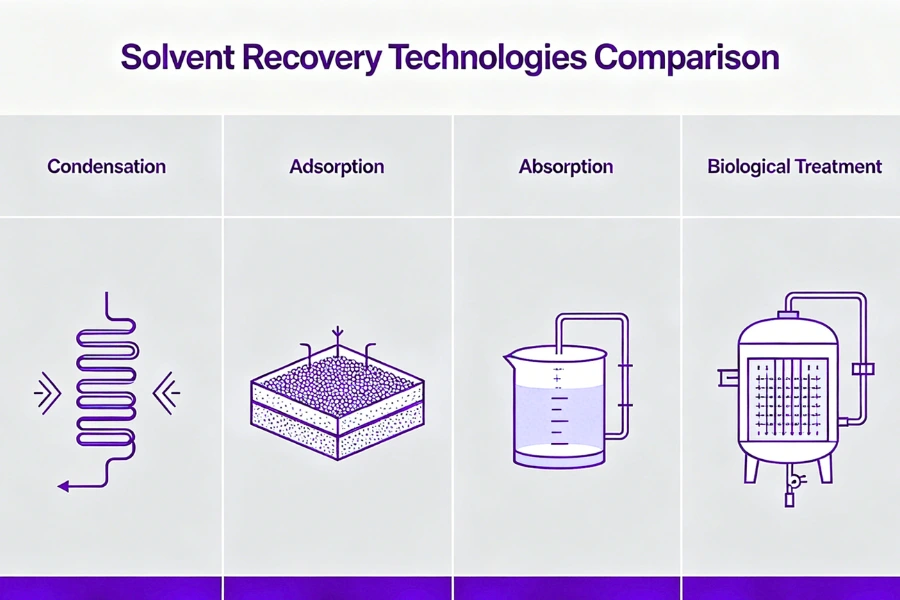
Comparación de tecnologías de recuperación de CS2
El rendimiento de los métodos de recuperación de disolventes varía en función de la concentración en la entrada, el caudal de gas y la integración con las operaciones de viscosa previas.
Las soluciones de una sola etapa suelen ser insuficientes para alcanzar objetivos de recuperación elevados en condiciones industriales.
Como consecuencia, a menudo se combinan varias tecnologías en un mismo sistema.
| Tecnología | Principio | Rango de recuperación | Ventajas | Limitaciones | Funciones habituales |
|---|---|---|---|---|---|
| Condensación | Enfriamiento por debajo del punto de ebullición para licuar el disolvente | entre el 45 y el 55 por ciento | Bajo coste de inversión, diseño sencillo | Eficiencia limitada por la dilución y la temperatura | Fase previa a la recuperación |
| Condensación en varias etapas | Enfriamiento secuencial mediante agua y medios refrigerados | del 60 al 75 por ciento | Mayor eficiencia en comparación con el sistema de una sola etapa | Mayor consumo energético | Recuperación intermedia |
| Adsorción con carbón activado | Adsorción seguida de desorción térmica y condensación | entre el 85 y el 95 por ciento | Alta eficiencia de recuperación, tecnología consolidada | Requiere la eliminación de H₂S en la fase previa | Recuperación primaria |
| Sistemas de absorción | Absorción en disolvente seguida de separación | Más del 80 por ciento | Se puede integrar con los flujos de procesos existentes | Requiere una gestión adecuada de los disolventes | Aplicaciones de modernización |
| Tratamiento biológico | Degradación microbiana de compuestos residuales | Eliminación superior al 90 por ciento | Bajo coste de funcionamiento, estable desde el punto de vista medioambiental | Ocupa mucho espacio, no es adecuado para su recuperación | Tratamiento al final del proceso |
No existe ningún método por sí solo que sea suficiente para lograr una alta eficiencia de recuperación en todas las condiciones de funcionamiento.
Para alcanzar niveles de recuperación superiores al 90 %, suele ser necesario recurrir a sistemas integrados que combinen el pretratamiento, la adsorción y la condensación.
Por lo tanto, la configuración del sistema debe determinarse en función tanto de las condiciones del proceso como del rendimiento deseado.
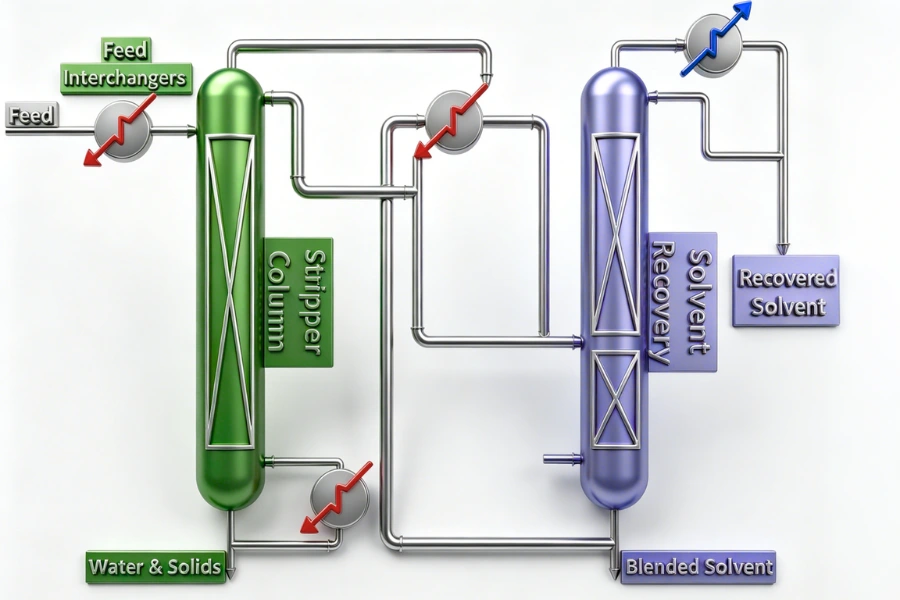
Qué incluye un sistema completo de recuperación de CS2
Un sistema completo de recuperación de disolventes consta de varias unidades de proceso que funcionan de forma secuencial, cada una de las cuales resuelve una limitación específica en el proceso de recuperación.
El diseño del sistema debe tener en cuenta tanto la eficiencia de separación como la estabilidad operativa.
Un fallo en cualquier unidad puede reducir el rendimiento global de la recuperación.
| Unidad | Función | Aspectos clave a tener en cuenta |
|---|---|---|
| Recogida y pretratamiento de gases | Capturar el gas de proceso y eliminar las partículas | Funcionamiento con presión negativa para evitar fugas |
| Eliminación de H₂S | Proteger los sistemas de adsorción situados aguas abajo | Depuración alcalina u oxidación en húmedo |
| Unidad de adsorción | Recuperación de disolvente de la fase gaseosa | Funcionamiento con múltiples lechos y conmutación continua |
| Desorción y condensación | Recuperar el disolvente del adsorbente | Calentamiento controlado y condensación a baja temperatura |
| Purificación y reutilización | Eliminar la humedad y las impurezas | Deshidratación mediante tamiz molecular o separación de fases |
| Tratamiento de los gases de escape | Garantizar el cumplimiento de las normas sobre emisiones | Tratamiento biológico o térmico |
| Sistema de control y seguridad | Mantener un funcionamiento estable | Monitorización en tiempo real de la temperatura, la presión, el oxígeno y la concentración |
DODGEN aplica los principios de integración de procesos desarrollados en el diseño de sistemas de separación para garantizar una interacción estable entre estas unidades.
La configuración del sistema se define en función de las condiciones de funcionamiento, en lugar de basarse en una selección fija de equipos.
Este enfoque permite mantener un rendimiento constante ante cargas de producción variables.
Ventajas de una mayor recuperación de CS2
La mejora de la eficiencia de la recuperación tiene un impacto directo en el balance de materiales.
En una planta típica de viscosa con una producción anual de 50 000 toneladas, el consumo de disolventes puede alcanzar aproximadamente las 15 000 toneladas al año.
Un aumento de la eficiencia de recuperación del 50 al 90 por ciento supone una recuperación adicional de aproximadamente 6.000 toneladas al año.
A un precio de referencia de 8.000 RMB por tonelada, esto supone un valor bruto de recuperación de aproximadamente 48 millones de RMB.
Una vez tenidos en cuenta los costes operativos, como la energía, el mantenimiento y los consumibles, el beneficio neto anual sigue siendo considerable.
El periodo de amortización de la inversión en el sistema suele oscilar entre 1,5 y 3 años, dependiendo de las condiciones de funcionamiento.
El rendimiento depende de varios factores, entre los que se incluyen la concentración en la entrada, el tiempo de funcionamiento del sistema y el coste energético.
Las variaciones en los precios de los disolventes también pueden afectar de manera significativa a los resultados económicos.
Por lo tanto, el diseño del sistema debe tener en cuenta tanto los aspectos técnicos como los financieros.
Diseño de seguridad para los sistemas de manipulación CS2
El disulfuro de carbono presenta un perfil de alto riesgo debido a su bajo punto de inflamación y a sus amplios límites de explosividad.
La acumulación de vapores en zonas con mala ventilación puede aumentar la probabilidad de que se produzca una ignición.
Por lo tanto, el control de riesgos debe abordarse en la fase de diseño, y no únicamente mediante medidas operativas.
Entre las medidas clave de diseño se incluyen:
- Puesta a tierra electrostática en todos los equipos y tuberías
- Sistemas de transferencia sellados para evitar fugas
- Control de la concentración de oxígeno mediante protección con gas inerte
- Límites de temperatura para evitar la descomposición térmica
- Diseño de sistemas de alivio de explosiones y aislamiento
- Monitorización continua de gases, tanto de CS₂ como de H₂S
DODGEN incorpora prácticas de diseño de seguridad derivadas de los procesos químicos que contienen azufre para garantizar un funcionamiento controlado en condiciones variables.
La supervisión del sistema está integrada en el control de procesos, en lugar de tratarse como una capa independiente.
Esto reduce la dependencia de la intervención manual.
Planificación e instalación de un sistema de recuperación
El enfoque de implementación depende de si el proyecto consiste en una nueva instalación o en una modernización.
Las instalaciones existentes suelen requerir una integración con los diseños de los procesos actuales y los sistemas de servicios.
La superficie ocupada por una planta de tamaño medio suele oscilar entre 300 y 500 metros cuadrados.
La instalación puede ser modular para reducir el tiempo de construcción in situ.
La puesta en marcha requiere una coordinación entre las unidades de proceso para garantizar un funcionamiento estable bajo carga.
La validación del rendimiento se lleva a cabo en condiciones de funcionamiento definidas.
Cómo diseña DODGEN los sistemas de recuperación CS2
DODGEN se centra en la integración de procesos y el diseño de sistemas de separación, especialmente para compuestos volátiles y que contienen azufre.
El alcance de los trabajos de ingeniería incluye la evaluación de viabilidad, el desarrollo del paquete de procesos, la especificación de los equipos y el apoyo a la puesta en marcha.
La empresa no suministra materias primas, lo que permite que el diseño del sistema no se vea limitado por restricciones relacionadas con los materiales.
Las decisiones de diseño se basan en los datos operativos, los límites del sistema y los objetivos de rendimiento.
Esto permite conciliar la eficiencia de la recuperación, los requisitos de seguridad y la inversión de capital.
El rendimiento del sistema se define a través de parámetros operativos cuantificables, en lugar de suposiciones generales.