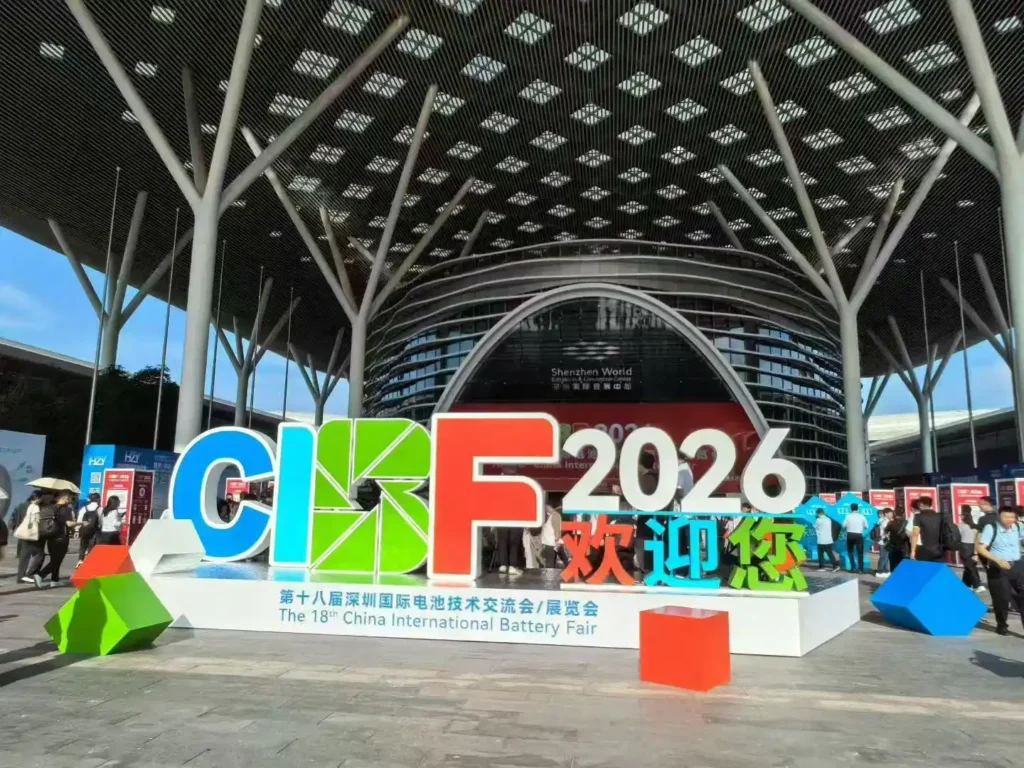
The 18th China International Battery Fair (CIBF2026) opened today at the Shenzhen World Exhibition & Convention Center. The exhibition covers the full lithium battery value chain, including battery materials, equipment, cell manufacturing, PACK, energy storage, and recycling.
Every CIBF is both a concentrated showcase of industry technologies and a barometer of where the industry is headed. This year, one core signal is particularly clear: as downstream markets such as new energy vehicles, energy storage, power tools, and consumer electronics continue to grow, the lithium battery industry is shifting from “capacity expansion” to “performance competition.” Upgrading lithium battery materials and enabling the green recycling of retired batteries have become two key areas of industry focus.
DODGEN has long been deeply engaged in chemical separation and reaction processes, building advanced process technology capabilities in carbonate solvent purification, preparation of key electrolyte additives, 및 regeneration of spent battery resources. This article introduces DODGEN’s technical approach and solutions around these two directions.
I. Electrolyte Material Upgrades: Purity and Green Processing Are the Core Priorities
The electrolyte is a core material in lithium-ion batteries that directly participates in ion conduction. Its composition directly determines interfacial stability, low-temperature performance, fast-charging capability, and cycle life. As demand grows rapidly for high-energy-density batteries, fast-charging batteries, and long-cycle energy-storage batteries, the purity requirements of each electrolyte component and the sophistication of preparation processes are becoming key factors that differentiate companies’ competitiveness.
1. Carbonate Solvents: High-Purity Purification as the Foundation of Electrolyte Quality
Carbonate solvents such as EC, DMC, EMC, and DEC account for 70% to 85% of the electrolyte. Trace substances in these solvents, including moisture, alcohols, metal ions, high-boiling impurities, and chlorinated compounds, can directly undermine lithium salt stability, affect the quality of SEI film formation, and ultimately lead to reduced battery consistency and cycle-life loss.
Contact the DODGEN assistant for technical materials.
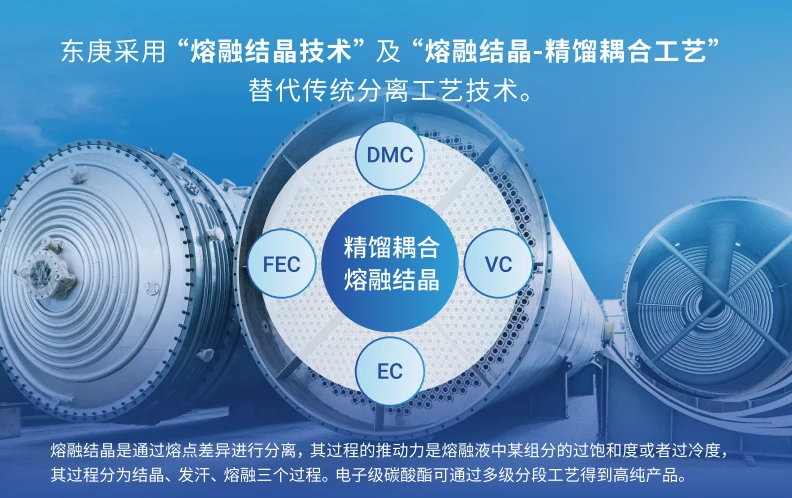
For carbonate solvent purification, 도겐 has developed a combined “distillation + melt crystallization” process route. Compared with standalone distillation, this coupled technology offers clear advantages: distillation removes light and heavy impurities, while crystallization selectively removes specific impurities that are difficult to separate through vaporization. Working together, the two processes achieve higher purity with lower energy consumption.
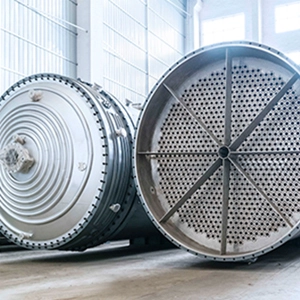
Among these technologies, DODGEN’s self-developed Swirling Falling-Film Crystallizer has achieved large-scale industrial application in the purification of electronic-grade Ethylene Carbonate (EC), accounting for approximately 56% of the relevant domestic market.
2. VC/FEC Additives: High-Value Technology Behind Low Dosage
Although Vinylene Carbonate (VC) and Fluoroethylene Carbonate (FEC) are typically added to electrolytes at less than 5%, they play a critical role.
• VC is the most widely used film-forming additive for lithium-ion batteries. It preferentially decomposes at the anode interface to form a stable SEI layer, significantly extending cycle life;
• FEC is indispensable in silicon-carbon anode, high-energy-density, and low-temperature systems, helping improve low-temperature and fast-charging performance.
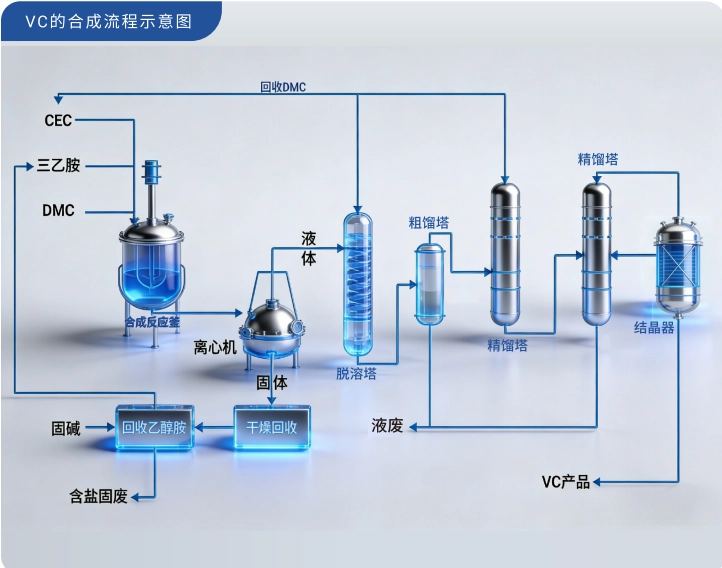
도겐 provides complete technical solutions for VC/FEC covering reaction, light/heavy component removal, melt crystallization, mother-liquor recovery, solvent circulation, and resource recovery of by-product salts. These solutions improve yield and purity while reducing pressure from waste liquid, waste salt, and energy consumption.
Contact the DODGEN assistant for technical materials.
3. Lithium Bis(fluorosulfonyl)imide (LiFSI): A Breakthrough in Continuous and Green Production of High-Performance Lithium Salts
LiFSI is regarded as an important development direction for high-performance lithium salts. It can help improve the limitations of conventional LiPF6 systems in low-temperature performance, rate capability, cycle life, and thermal stability. With the development of fast-charging batteries, long-cycle energy-storage systems, high-nickel cathodes, and silicon-carbon anodes, the application potential of LiFSI continues to expand.
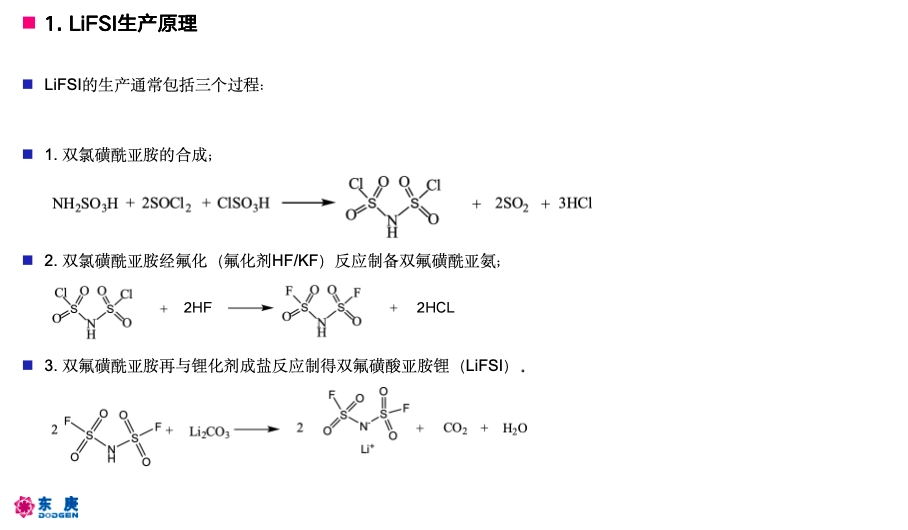
However, LiFSI industrialization presents significant challenges. It involves multiple steps, including chlorination, fluorination, salt formation, dehydration, concentration, crystallization, and drying, and places high requirements on handling highly corrosive media, reaction safety, by-product management, and product purity control.
DODGEN’s LiFSI approach emphasizes continuous, modular, and green process concepts. Through continuous reaction, continuous separation, solvent circulation, crystallization purification, and by-product resource utilization, DODGEN improves process stability, reduces batch-to-batch variation, and lowers raw material consumption as well as pressure from waste gas, wastewater, and solid waste.
Contact the DODGEN assistant for technical materials.
II. Battery Recycling: From End-of-Pipe Disposal to Resource Regeneration
As the first large batches of power batteries enter retirement, the recycling and regeneration market is expanding rapidly. Lithium battery recycling is accelerating from “environmental disposal” toward “critical resource regeneration.” DODGEN focuses on two core areas in lithium battery recycling, both highly aligned with its technical expertise in chemical separation and purification.
1. Waste Electrolyte and Organic Solvent Recovery
In waste-electrolyte treatment, the residual carbonate solvents, fluorinated electrolytes, and related decomposition products in lithium batteries are characterized by complex composition, difficult separation, and stringent safety and environmental requirements. DODGEN’s long-standing technologies in distillation, melt crystallization, solvent recovery, light/heavy component removal, impurity control, and tail-gas treatment can be applied to the separation, purification, and resource recovery of organic solvents in waste electrolytes, helping reduce hazardous-waste treatment pressure and enhance the value of solvent recycling.
2. Valuable Metal Extraction and Separation
In valuable-metal recovery, leachates from spent battery black mass typically contain key metal elements such as lithium, nickel, cobalt, and manganese. Subsequent processes require selective separation through extraction, stripping, washing, purification, and concentration. With technical capabilities in mass-transfer separation, continuous process control, extraction separation, and engineering scale-up, 도겐 provides process optimization, equipment selection, continuous separation, and engineering application support for valuable-metal extraction and recovery.
III. DODGEN’s Positioning:
DODGEN’s differentiation lies in the integrated capability of process technology packages, key equipment, and pilot-scale validation:
• Process technology packages: from reaction-route selection and solvent-system design to separation-sequence optimization, DODGEN delivers complete and implementable process solutions;
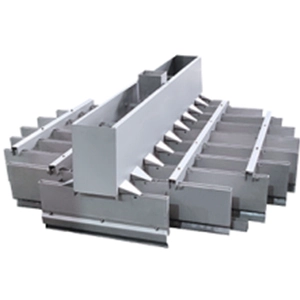
• Key equipment: DODGEN independently designs and manufactures core equipment such as DSR Polymerization Reactors, Swirling Falling-Film Crystallizers, Falling-film Evaporators, Extraction Towers, and Column Internals;
• Pilot-scale validation: with modular skid-mounted design, DODGEN supports rapid process validation and engineering scale-up, significantly reducing customers’ trial-and-error costs.
This model means that DODGEN’s services go beyond “equipment delivery.” Starting from process logic, DODGEN helps customers solve the fundamental issues of “stable production” and “low-cost production.”
결론
Competition in lithium battery materials will ultimately return to process routes, equipment capabilities, and engineering scale-up capabilities. Future competition will not only be about whether a product can be produced, but whether it can be produced stably, cost-effectively, sustainably, and at scale.
With a focus on key electrolyte materials such as Lithium Bis(fluorosulfonyl)imide (LiFSI), carbonate solvents, and VC/FEC, DODGEN uses green technologies to drive lithium battery materials from “being producible” to “being produced well,” and from “scale manufacturing” to “high-quality manufacturing,” helping the new energy materials industry achieve safer, greener, and more sustainable development.