Definition
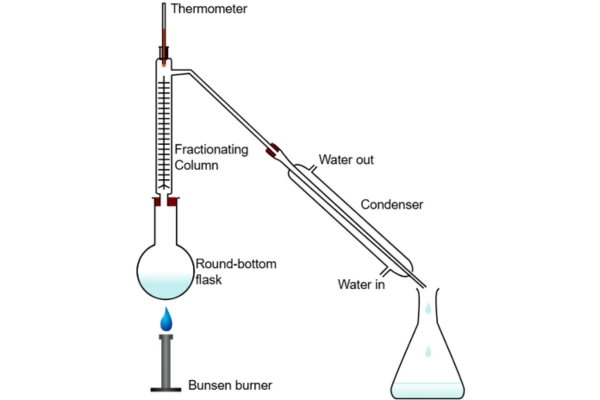
Fractional distillation, also known as rectification, is a separation process in which repeated vaporization and condensation occur within the same equipment to separate the components of a liquid mixture.
It is a specialized form of distillation designed for mixtures whose components have relatively close boiling points. By creating multiple stages of vapor-liquid contact inside a distillation column, fractional distillation achieves higher separation efficiency than simple distillation.

Core Principle
The principle of fractional distillation is based on differences in volatility and boiling point among mixture components.
As the liquid mixture is heated, the more volatile components vaporize preferentially. The vapor then rises through the column and encounters cooler zones where partial condensation occurs. The condensed liquid flows downward while vapor continues upward, creating repeated cycles of vaporization and condensation.
These repeated equilibrium stages gradually enrich the lighter components near the top of the column and the heavier components near the bottom, resulting in effective separation.
Key Equipment
A fractional distillation system typically consists of:
- Distillation column
- Reboiler
- Condenser
- Reflux system
- Column internals or packing
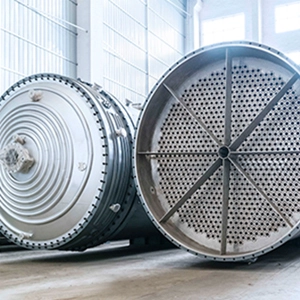
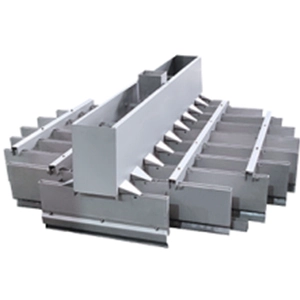
The separation performance of the process is heavily influenced by the efficiency of vapor-liquid contact inside the column. Structured packing, trays, and other column internals are commonly used to increase mass transfer efficiency and improve product purity.
Industrial Relevance
Fractional distillation is one of the most important separation technologies in the chemical process industry.
Its primary purpose is to separate, purify, and recover valuable components from liquid mixtures. Compared with simple distillation, fractional distillation can achieve significantly higher product purity and recovery efficiency, making it suitable for large-scale industrial production.
The technology remains a fundamental operation in chemical plants because many commercial products require precise composition control and impurity removal.
Industrial Applications
Fractional distillation is widely used across multiple industries.
Petroleum Refining
Crude oil refining relies heavily on fractional distillation to separate hydrocarbons into products such as gasoline, kerosene, diesel fuel, and other petroleum fractions.
Chemical Manufacturing
Chemical producers use fractional distillation to purify reaction products, recover solvents, and separate byproducts from synthesis processes.
Solvent Purification
Many specialty chemical facilities employ fractional distillation to remove impurities and achieve high-purity solvent specifications required for downstream applications.
Gas Processing
Fractional distillation is also applied in cryogenic air separation processes where liquefied air is separated into oxygen, nitrogen, and other industrial gases.
엔지니어링 고려 사항
The effectiveness of fractional distillation depends on several process variables, including:
- Relative volatility
- Reflux ratio
- Column efficiency
- 작동 압력
- Feed composition
- 에너지 소비
When boiling points are very close, achieving the desired separation often requires additional theoretical stages, improved column internals, or optimized operating conditions.
For process engineers, balancing product purity, recovery rate, and operating cost is a key consideration during column design and operation.
Relationship to DODGEN Technologies
Fractional distillation forms the foundation of many advanced separation technologies used in modern chemical manufacturing.
Technologies such as reactive distillation, solvent purification systems, structured packing columns, and other high-efficiency separation solutions are all based on the same fundamental principles of vapor-liquid equilibrium and mass transfer.
As a result, fractional distillation remains one of the core technologies supporting process optimization, product purification, and industrial-scale chemical production.
Related Terms
- Distillation Column
- 반응성 증류
- 구조화된 포장
- Relative Volatility
- Mass Transfer
- Vapor-Liquid Equilibrium