Hazards and Physical Properties of Carbon Disulfide (CS₂)

목차

Carbon disulfide is a volatile and highly flammable liquid with a boiling point of 46.24°C and a vapor pressure of 48.1 kPa at 25°C .
Its flash point is −43°C, and the autoignition temperature ranges between 90°C and 102°C, indicating an extremely low ignition threshold.

The explosion range spans from 1.3% to 50% by volume, significantly wider than most industrial solvents.
In addition to fire risk, this compound presents acute and chronic toxicity, particularly affecting the nervous and cardiovascular systems.

These characteristics define the engineering requirement
Handling systems for this material must remain fully enclosed, inerted, and strictly controlled for vapor release and ignition risk.

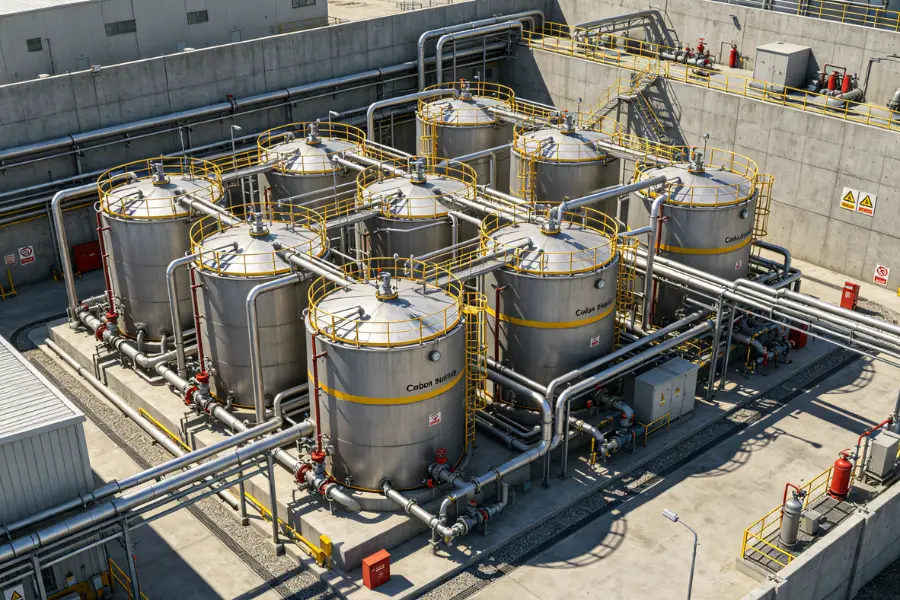
carbon disulfide storage tank and piping system in industrial facility

Core Design Principles for Safe CS₂ Storage and Handling

The design of storage and distribution systems for this compound is governed by three primary control objectives

  • Vapor containment
  • Oxygen exclusion
  • Ignition prevention

These objectives are implemented at system level rather than through isolated equipment selection.

Vapor containment is applied to restrict high-volatility emissions within sealed boundaries.
Oxygen exclusion maintains an inert internal atmosphere to reduce explosion potential.
Ignition prevention is achieved through elimination of electrostatic discharge and external ignition sources.

System integrity integrates these requirements across storage units, transfer lines, and operational interfaces.


CS₂ Storage Tank Design and Safety Requirements

Storage tank design maintains a stable, enclosed, and inert environment for the solvent.

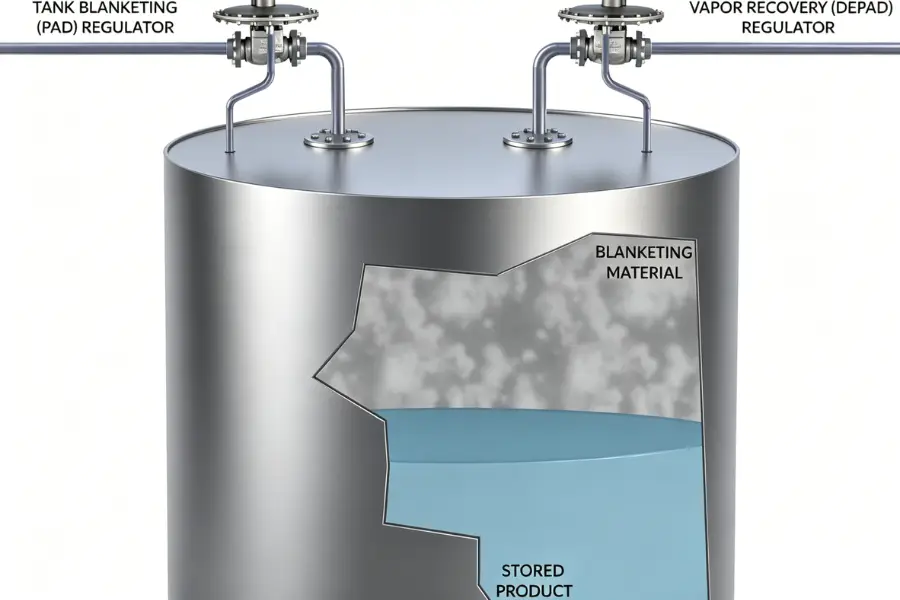
CS2 storage tank design with water padding and nitrogen blanketing system

Vapor Isolation and Inerting

Due to elevated vapor pressure, direct contact with air is not acceptable.

  • Water padding forms a physical barrier between liquid phase and vapor space
  • Nitrogen blanketing maintains low oxygen concentration in the tank headspace
  • Oxygen levels in enclosed environments are typically controlled below 2%

The water layer must remain stable under all operating conditions.
In low-temperature environments, freeze protection is implemented through heating or partial substitution with inert gas systems.


Tank Configuration and Layout

All storage units are designed as sealed systems with controlled venting.

  • All connections are located at the top to reduce leakage pathways
  • Installations are placed in shaded or temperature-controlled environments to limit vapor generation
  • Underground configurations provide thermal stability but increase construction complexity

Secondary containment is required to manage leakage scenarios.
Diked areas and sealed drainage systems are applied to prevent environmental release.


Materials and Safety Accessories

Material selection ensures chemical compatibility and structural reliability.

  • Carbon steel is used with appropriate corrosion protection
  • Critical components such as valves and relief devices use stainless steel construction
  • Flame arresters are installed on vent lines to prevent flashback

Instrumentation includes level measurement, temperature monitoring, and alarm systems for abnormal conditions.


Piping and Transfer System Design for CS₂ Distribution

The transfer system maintains containment integrity while controlling vapor formation and ignition risk.

Flow Control and Loading Design

Transfer operations are configured to limit turbulence and vapor disturbance.

  • All pipeline connections are installed at the top of storage units
  • Loading lines extend close to the tank bottom to enable submerged filling
  • Typical clearance between pipe outlet and tank bottom remains below 10 cm

Submerged loading reduces static charge generation and limits vapor release during filling.


Pump Selection and System Configuration

Pump configuration prevents air ingress and thermal accumulation.

  • Submerged pumps are required for liquid transfer
  • Pump assemblies are installed within sealed wells extending from the tank top
  • Pump bodies remain continuously covered by liquid or water seal

The use of compressed air is not acceptable.
Air introduction increases oxygen concentration and accelerates static charge generation.


Mechanical Integrity and Connections

Leak prevention remains a primary design constraint.

  • Threaded connections are avoided due to leakage risk
  • Welded or flanged connections are applied
  • All transfer lines remain electrically continuous and grounded

Operating temperatures must remain below 80°C to avoid decomposition or ignition conditions.


Explosion Prevention and Static Control in CS₂ Systems

Ignition control is implemented as a system-wide requirement.

Electrical and Equipment Classification

All equipment installed in handling areas complies with explosion-proof standards.

  • Motors, lighting, and instrumentation follow hazardous area classifications
  • Intrinsically safe systems are applied where required

Static Electricity Management

This compound exhibits extremely low ignition energy, making static discharge a critical hazard.

  • All storage units, pipelines, and transfer systems are individually grounded
  • Bonding between connected equipment eliminates potential differences
  • Ground resistance is maintained within defined industrial limits

Flame and Ventilation Control

Flammable vapor accumulation must be controlled through engineered measures.

  • Flame arresters are installed on all vent lines
  • Forced ventilation is required in pump rooms and loading areas
  • Exhaust outlets are positioned away from ignition sources and work zones

Non-sparking tools are required during operation and maintenance.


Operational Safety and Maintenance for CS₂ Systems

Operational safety is maintained through controlled procedures and continuous monitoring.

Loading and Unloading Control

Transfer operations require system verification prior to execution.

  • Grounding and bonding are confirmed before operation
  • Seal levels and inert gas pressure remain within specified limits
  • Overfilling and rapid loading are avoided

Personnel remain present throughout transfer activities.


Inspection and Monitoring

Routine inspection maintains long-term system integrity.

  • Daily checks focus on sealing performance, inert gas pressure, and temperature
  • Weekly inspection includes verification of grounding resistance
  • Alarm systems are tested at defined intervals

Maintenance and Hot Work Control

Maintenance introduces elevated risk and requires controlled preparation.

  • Systems are drained, cleaned, and inerted prior to intervention
  • Gas analysis confirms safe conditions before hot work
  • Procedures comply with NFPA 30 or equivalent standards

Personal Protection and Emergency Response

Personnel protection applies during both operation and incident response.

  • Respiratory protection includes organic vapor filters or self-contained breathing apparatus
  • Anti-static clothing and chemical-resistant gloves are required
  • Leak response involves isolation, ventilation, and inert absorbent materials

Water is not used directly for spill dispersion.


Process Safety Engineering for CS₂ Storage Systems

Effective risk control depends on system-level integration rather than isolated protective measures.

The storage and transfer of volatile and toxic media require coordinated implementation of containment, inerting, and ignition control within a unified engineering framework.

This approach is typically delivered through process engineering methodologies that combine hazard analysis, equipment design, and control system integration.

도겐 applies these principles in high-risk chemical handling environments, supporting both new installations and retrofit projects through structured process design and safety system integration.

자주 묻는 질문

What is the purpose of water padding in CS₂ storage tanks

Water padding creates a physical barrier between the liquid and air, limiting vapor release and preventing formation of flammable mixtures in the headspace. It also provides partial absorption of escaping vapors, reducing ignition risk and improving containment stability.

Freezing is controlled through insulation, heat tracing, or temperature-regulated environments. In some cases, partial replacement with inert gas blanketing is applied, provided oxygen levels remain within defined safety limits for enclosed storage conditions.

Compressed air introduces oxygen into the system and significantly increases explosion risk. High-velocity flow also promotes static charge accumulation, which can trigger ignition due to the very low ignition energy associated with this material.

관련 라이선스 기술 및 장비

화학 공정 솔루션

애플리케이션

지속 가능성

메시지 보내기

반응 및 분리 전문, 저탄소 기술 파트너

도겐-화학-공정-회사

문의하기

고객의 요구 사항을 충족하기 위해 최선을 다합니다.