정의
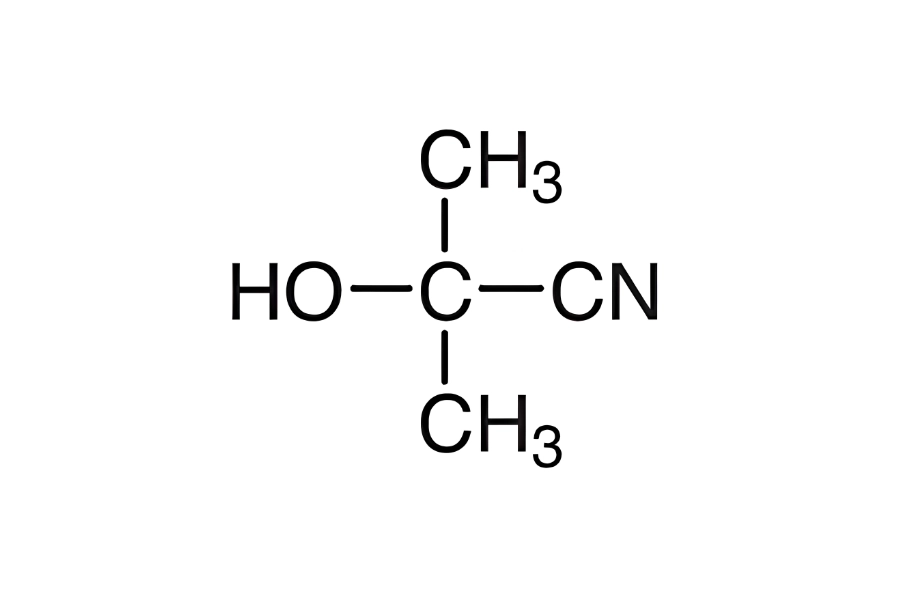
Acetone cyanohydrin (ACH), also known as 2-hydroxyisobutyronitrile, is an organic compound with the molecular formula (CH₃)₂C(OH)CN. It is a key intermediate in industrial chemical synthesis, particularly in the production of methyl methacrylate (MMA).
It is a colorless to pale yellow liquid and is highly reactive due to the presence of both hydroxyl and nitrile functional groups.
물리적 및 화학적 성질
Acetone cyanohydrin exhibits the following characteristics:
- Molecular formula: (CH₃)₂C(OH)CN
- Molecular weight: 85.11
- Appearance: colorless or light yellow liquid
- Highly soluble in water and organic solvents such as ethanol and ether
- Chemically unstable under alkaline conditions
- Can decompose to release hydrogen cyanide (HCN) under certain conditions
Because of its instability, ACH must be handled under strictly controlled conditions to prevent decomposition.
산업 분야 적용
Acetone cyanohydrin is primarily used as an intermediate in the production of methyl methacrylate (MMA), which is a key monomer for acrylic plastics.
Main industrial uses include:
- Production of MMA (methyl methacrylate)
- Synthesis of methacrylic acid derivatives
- Intermediate in fine chemical and polymer industries
- Chemical feedstock in controlled synthesis routes
It is rarely used directly in end applications due to its toxicity and instability.
생산 기술
Industrial production of acetone cyanohydrin is typically based on the reaction between acetone and hydrogen cyanide (HCN).
Typical process route includes:
- Addition reaction of acetone with HCN
- Controlled low-temperature synthesis conditions
- Stabilization of intermediate product
- Purification via distillation under reduced pressure
- Water removal and stabilization for storage
Because HCN is highly toxic, the entire production process requires closed systems, strict safety control, and continuous monitoring.
엔지니어링 고려 사항
From a chemical engineering perspective, ACH production systems involve several critical factors:
Reaction Safety
The reaction involves hydrogen cyanide, requiring strict containment and emergency control systems.
공정 제어
Temperature and pH must be tightly controlled to prevent decomposition and side reactions.
Stability Management
Acetone cyanohydrin can decompose, especially under alkaline conditions, releasing toxic HCN.
플랜트 운영 및 취급
In industrial facilities, acetone cyanohydrin is handled as a highly hazardous intermediate.
운영상 고려 사항으로는 다음이 있습니다:
- Fully closed-loop reaction systems
- Continuous gas detection for HCN release
- Strict temperature control during storage and transfer
- Material compatibility to prevent catalytic decomposition
- Emergency neutralization and scrubbing systems
Due to its toxicity, even minor process deviations require immediate corrective action.
관련 화학물질
- 아세톤
- Hydrogen Cyanide (HCN)
- 메틸 메타크릴레이트(MMA)
- 메타크릴산
- Cyanohydrin compounds