정의
Absorption is a mass transfer process in which one substance enters and becomes distributed within the bulk phase of another material. Depending on the phases involved, absorption may occur between gases and liquids, liquids and solids, or other contacting phases.
In chemical engineering, the term most commonly refers to gas absorption, where one or more components of a gas mixture transfer into a liquid absorbent. Unlike adsorption, which occurs primarily on a surface, absorption involves transport into the bulk of the receiving phase.

How Does Gas Absorption Work?
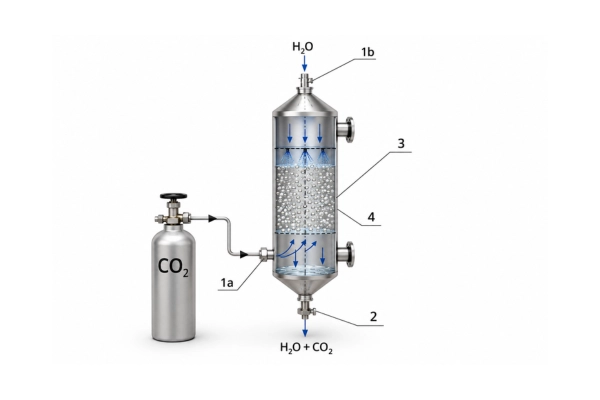
Gas absorption requires intimate contact between a gas phase and a liquid absorbent. A soluble gas component transfers from the bulk gas phase to the gas-liquid interface and then enters the liquid phase.
The absorption rate depends on mass transfer resistance, interfacial area, concentration driving force, gas and liquid flow rates, temperature, pressure, and the physical or chemical affinity between the solute and absorbent.
Industrial absorption equipment therefore aims to provide sufficient gas-liquid contact while controlling pressure drop, flooding, entrainment, and liquid distribution.
Physical and Chemical Absorption
In physical absorption, the gas dissolves in the liquid without a significant chemical reaction. Process performance depends strongly on gas solubility, operating pressure, temperature, and solvent properties.
In chemical absorption, the absorbed component reacts with the liquid absorbent. The chemical reaction can increase absorption capacity or improve removal efficiency, but solvent regeneration, reaction heat, degradation, and corrosion may become important process considerations.
The choice between physical and chemical absorption depends on feed composition, required removal efficiency, operating pressure, solvent regeneration energy, and downstream process requirements.
산업 분야 적용
Absorption is widely used for gas purification, acid gas removal, recovery of valuable components, emission control, and treatment of process off-gases.
Typical applications include removing soluble contaminants from gas streams, recovering volatile chemicals, and conditioning gases before downstream reaction, separation, or purification steps.
In chemical plants, absorption systems are often integrated with solvent regeneration, stripping, distillation, or other separation operations. The overall process performance therefore depends not only on absorption efficiency but also on solvent circulation and recovery requirements.
엔지니어링 고려 사항
Absorber performance depends on the interaction between mass transfer, hydrodynamics, phase equilibrium, and equipment design.
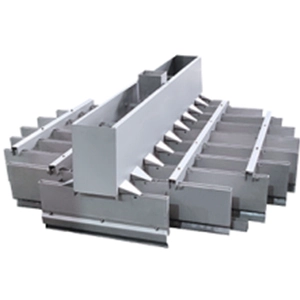
Poor liquid distribution in a packed absorption tower can create channeling and reduce effective gas-liquid contact. Excessive gas velocity may cause entrainment or flooding, while insufficient liquid flow can reduce wetting of the packing surface.
Scale-up can also change gas and liquid distribution, pressure drop, and mass transfer efficiency. For this reason, engineers must evaluate column diameter, packing or tray selection, liquid distributors, operating range, solvent properties, and required separation performance together.
Absorption Equipment and DODGEN Technologies
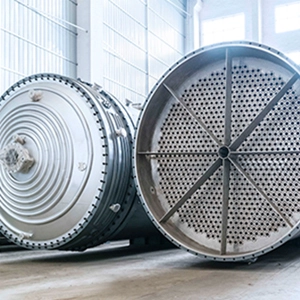
Industrial gas absorption is commonly carried out in packed towers, tray columns, spray towers, and other gas-liquid contacting equipment.
For packed absorption towers, structured packing and column internals influence interfacial area, pressure drop, liquid distribution, and mass transfer performance. Gas-liquid separators may also be installed downstream to control entrained droplets and protect subsequent equipment.
Absorption is therefore closely related to 도겐 technologies such as Structured Packings, Column Internals, Gas-liquid Separators, and Separation Technology Systems.
관련 용어
- 흡착
- Gas Absorption
- 물질 전달
- 흡수탑
- 구조화된 포장
- 칼럼 내부
- Flooding
- Stripping