PLA/PBAT Commercialization: The Race to Lower Production Costs
With the implementation of the EU Carbon Border Adjustment Mechanism (CBAM) and China’s dual-carbon strategy, conventional petrochemical production routes are facing increasing pressure. As PLA and PBAT move from laboratory development to commercial-scale production, more companies are entering the market. The question is no longer whether biodegradable materials should be produced, but who can reduce production costs first.
Material Overview
PLA (Polylactic Acid)
PLA is produced by ring-opening polymerization of lactide derived from lactic acid, which is fermented from renewable biomass such as corn starch. It is a bio-based and biodegradable polymer and is currently one of the world’s most widely produced bioplastics.
PBAT (Polybutylene Adipate Terephthalate)
PBAT is synthesized through the copolymerization of adipic acid, terephthalic acid (PTA), and 1,4-butanediol (BDO). Most of its feedstocks are currently petrochemical-based. Strictly speaking, PBAT is a biodegradable polymer rather than a fully bio-based material.
Although PLA and PBAT differ in raw materials, they share highly overlapping downstream applications in packaging, agricultural films, and flexible products. Their separation, purification, and downstream processing challenges are also remarkably similar, so they are discussed together in this article.
Four Production Bottlenecks That Cannot Be Ignored
1. High-Purity Monomer Production Is Far More Challenging Than Conventional Petrochemical Processing
Separating and purifying lactic acid, lactide, bio-based glycols, FDCA, and other renewable monomers requires polymer-grade purity (≥99.5%). Achieving this typically involves multiple processing steps, including short path distillation, fractional distillation, and melt crystallization.
2. Fermentation Broths Are Complex and Heat Sensitive
Fermentation liquids contain numerous impurities and thermally unstable compounds. Conventional distillation consumes significant energy while causing severe polymerization and thermal degradation losses.
3. Removing Residual Monomers from High-Viscosity Polymer Melts Is Extremely Difficult
Following polymerization, melt viscosity can reach hundreds of thousands of centipoise. Efficient devolatilization of residual monomers becomes one of the most critical factors affecting final product quality.
4. Batch Processes Cannot Meet Commercial Production Requirements
Batch manufacturing struggles to deliver the productivity and cost efficiency required for 10,000-ton-scale plants. Continuous processing demands sophisticated system integration throughout the entire production line.
From monomer purification to downstream polymer finishing, equipment capability has become one of the primary constraints limiting large-scale PLA and PBAT commercialization.
Three Critical Equipment Challenges
Heat-Sensitive Monomers Undergo Polymerization and Degradation During Conventional Distillation
Lactic acid readily undergoes intermolecular dehydration and self-polymerization under conventional distillation temperatures, generating oligomer impurities. Lactide is equally vulnerable, suffering ring-opening degradation and discoloration at elevated temperatures.
Traditional distillation typically results in over 10% product loss while still struggling to achieve polymer-grade purity (≥99.5%).
The preferred solution combines low-temperature pretreatment with high-precision purification. Short path distillation first removes heavy components and concentrates the feed under extremely low pressure and very short residence times. The material is then purified through either fractional distillation (for liquid monomers) or melt crystallization (for solid monomers such as lactide).
Recommended Equipment
Short Path Distillation / Thin Film Evaporator (Pretreatment & Heavy Component Removal)
↓
Distillation System / Melt Crystallization (Final Purification to ≥99.5% Polymer Grade)
High-Viscosity Polymer Melts Limit Residual Monomer Removal
During PLA ring-opening polymerization and PBAT melt polycondensation, melt viscosity can exceed several hundred thousand cP.
Traditional stirred vessels provide insufficient surface renewal and poor gas-liquid mass transfer, making it difficult to remove residual BDO, adipic acid, and other monomers. These residues directly affect mechanical properties, odor performance, and food-contact safety.
Industrial practice divides devolatilization into two viscosity ranges:
- Horizontal Thin Film Evaporators for medium-to-high viscosity melts
- Devolatilizing Extruders for ultra-high viscosity polymers
The combination of both technologies has become the preferred industrial solution for PLA, PBAT, and similar polymer systems.
Recommended Equipment
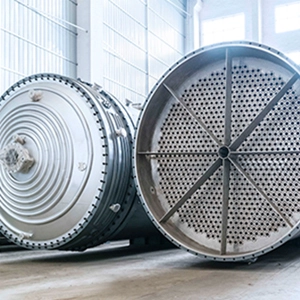
Horizontal Thin Film Evaporator (Primary Devolatilization)
Devolatilizing Extruder (Secondary Deep Devolatilization)
Continuous Manufacturing Requires Complete Process Integration
Biodegradable materials cannot compete economically with petrochemical plastics using batch production.
Transitioning to continuous manufacturing involves much more than replacing individual equipment. Distillation, reaction, separation, and devolatilization units must all operate as an integrated process.
This places significantly higher demands on engineering design, system integration, and commissioning capabilities.
Recommended Solution
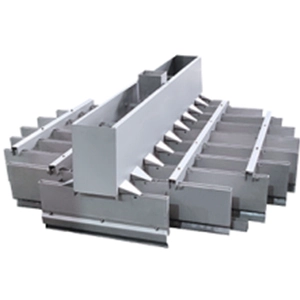
Advanced Distillation Internals
Integrated Continuous Process Package
(Including Process Simulation, System Integration, and On-Site Commissioning)
Three Core Technologies Explained
Short Path Distillation: The Essential Pretreatment Step
Short path distillation—also known as molecular distillation—reduces the distance between the evaporation and condensation surfaces to the molecular mean free path. Operating pressures can reach 1 Pa, while residence times remain below 10 seconds.
These conditions significantly reduce thermal exposure, effectively minimizing lactic acid polymerization and lactide degradation.
In monomer purification, short path distillation is used primarily for pretreatment and heavy component removal rather than final purification. It concentrates crude lactic acid, recovers valuable components from lactide residue streams, and removes oligomers and heavy byproducts before downstream purification.
Performance Comparison
| Performance Indicator | Destilación convencional | Short Path Distillation (DODGEN Industrial Data) |
|---|---|---|
| Yield (Crude Lactic Acid Concentration / Lactide Residue Recovery) | ≤90% | ≥97% |
| Polymerization & Thermal Degradation Loss | High (>10% Typical) | Reduced by More Than 80% |
| Operating Vacuum | Hundreds of Pa | As Low As 1 Pa |
| Material Residence Time | Minutes | <10 Seconds |
Data are based on industrial testing of crude lactic acid concentration and lactide residue recovery conducted by DODGEN.
Distillation and Melt Crystallization: Two Precision Purification Routes
Once pretreatment is complete, polymer-grade purity (≥99.5%) requires selecting the appropriate purification technology.
Destilación
Suitable for Liquid Monomers
Lactic acid, bio-based glycols, and similar liquid monomers are purified using high-efficiency column internals capable of separating components with very close boiling points.
Distillation also serves as an initial purification step for crude lactide.
Cristalización en fusión
Preferred for Solid Monomers
Because lactide has a well-defined melting point, cristalización por fusión utilizes solid-liquid equilibrium to achieve both chemical purity and optical purity.
It remains the industry’s preferred technology for producing L-lactide with optical purity ≥99.5%, a performance conventional distillation cannot achieve due to its inability to separate optical isomers.
When processing low-surface-tension, foaming, and heat-sensitive materials, column internals become especially important.
DODGEN has optimized the combination of structured packing and advanced liquid distributors, delivering verified industrial performance improvements of:
- 20%+ increase in theoretical plate efficiency
- 15–25% reduction in unit energy consumption
Horizontal Thin Film Evaporators + Devolatilizing Extruders
High-viscosity polymer devolatilization requires efficient gas-liquid mass transfer under extremely viscous conditions, which conventional stirred vessels cannot provide.
Industrial practice separates the process into two stages.
Horizontal Thin Film Evaporator
Suitable viscosity:
30,000–200,000 cP
The rotor continuously renews the liquid film, significantly improving mass transfer while maintaining controllable residence time.
Industrial validation in multiple commercial PLA and PBAT plants has demonstrated residual monomer removal rates exceeding 99% during primary devolatilization.
Devolatilizing Extruder
Suitable viscosity:
Above 200,000 cP (up to approximately 500,000 cP)
At these viscosity levels, film formation inside evaporators becomes increasingly difficult.
A devolatilizing extruder employs forced screw conveying and high-shear film formation to reduce residual monomer concentrations below product specification limits.
Recommended Industrial Configuration
Horizontal Thin Film Evaporator
↓
Devolatilizing Extruder
This combination effectively covers the entire viscosity range from medium-high to ultra-high viscosity and has become one of the most mature engineering solutions for commercial production of PLA, PBAT, PBS, and similar biodegradable polymers.
System Integration: The Real Challenge Behind Commercial Production
The biggest challenge in biodegradable material manufacturing is rarely a single piece of equipment.
Instead, it lies in the integration between process units.
From monomer purification to polymer devolatilization, deviations at any stage can propagate downstream and ultimately compromise final product quality.
Therefore, the ability to deliver a complete solution—from process simulation and equipment engineering to manufacturing, installation, and commissioning—plays a decisive role in reducing project risk.
Purchasing individual units from multiple suppliers often transfers the integration burden directly to the plant owner.
Shorter Project Delivery Time
DODGEN has successfully delivered multiple continuous biodegradable material production lines with annual capacities of tens of thousands of tons.
Compared with fragmented procurement, its integrated delivery approach has reduced overall project schedules by approximately 30%.
Equipment Selection Guide
Raw Material Pretreatment & Heavy Component Removal
Equipamiento
Short Path Distillation / Thin Film Evaporator
Parámetros clave
- Operating vacuum: approximately 1 Pa
- Residence time: less than 10 seconds
Selection Priority
Evaluate protection of heat-sensitive materials rather than evaporation capacity alone.
Precision Purification (Polymer Grade)
Equipamiento
High-Efficiency Distillation System (Liquid Monomers)
Melt Crystallization (Lactide and Similar Solid Monomers)
Parámetros clave
- Chemical purity ≥99.5%
- L-Lactide optical purity ≥99.5%
Selection Priority
Lactide should be purified using melt crystallization. Distillation alone cannot achieve the required optical purity.
Polymer Devolatilization (Medium-to-High Viscosity)
Equipamiento
Horizontal Thin Film Evaporator
Key Parameter
Residual monomer removal >99%
Selection Priority
Rotor design determines surface renewal efficiency and overall performance.
Polymer Devolatilization (Ultra-High Viscosity)
Equipamiento
Devolatilizing Extruder (Typically Combined with Thin Film Evaporator)
Key Parameter
Residual monomer content below product specifications.
Selection Priority
Screw configuration and vent design directly influence deep devolatilization performance.
Complete Process Integration
Required Capability
Process Simulation → Equipment Engineering → Manufacturing → Commissioning
Reference Data
Integrated project delivery can reduce project schedules by approximately 30% compared with fragmented procurement.
Selection Priority
Evaluate suppliers based on successful delivery experience for similar bio-based material projects.
KEY TAKEAWAYS
① Heat-sensitive monomers should undergo short path distillation pretreatment, reducing polymerization and thermal degradation losses by more than 80% while increasing lactic acid yield from ≤90% to ≥97%.
② Melt crystallization is the preferred purification technology for lactide, while distillation remains the primary solution for liquid monomers such as lactic acid and bio-based glycols.
③ High-viscosity polymer devolatilization is most effectively achieved through a combination of horizontal thin film evaporators and devolatilizing extruders, delivering residual monomer removal rates exceeding 99%.
④ System integration is the true barrier to commercial-scale biodegradable material production. Compared with fragmented procurement, integrated project delivery can shorten project schedules by approximately 30%.
PREGUNTAS FRECUENTES
Can short path distillation achieve polymer-grade purity by itself?
No.
Because short path distillation has a limited number of theoretical stages, it serves primarily as a pretreatment process for concentrating feedstocks, removing heavy impurities, and recovering valuable components.
Lactic acid requires subsequent fractional distillation to achieve polymer-grade purity (≥99.5%), while lactide requires melt crystallization. Only the combination of these technologies provides a complete purification solution.
Why is melt crystallization preferred over distillation for lactide purification?
Lactide is a chiral molecule, and PLA performance strongly depends on the optical purity of L-lactide.
Distillation separates compounds according to boiling point and cannot distinguish optical isomers.
Melt crystallization separates materials through solid-liquid equilibrium, making it the preferred industrial technology for simultaneously achieving chemical purity ≥99.5% and optical purity ≥99.5%.
What happens if PLA/PBAT devolatilization is incomplete?
Residual monomers directly affect product performance.
Mechanical properties such as tensile strength and elongation decrease.
Residual BDO, adipic acid, and other small molecules continue to volatilize during processing and product use, creating odor issues.
For food-contact applications, migration testing is mandatory, and excessive residual monomers represent a major compliance risk.
Industrial production generally requires residual monomer removal rates above 99%.
Why is bio-based monomer purification more difficult than conventional petrochemical processing?
Several factors contribute.
Fermentation broths contain proteins, pigments, organic acids, and numerous impurities, making initial separation significantly more complex.
The target monomers themselves are heat sensitive, with lactic acid and lactide readily polymerizing or degrading under elevated temperatures.
In addition, both chemical purity and optical purity must be achieved simultaneously. For example, producing L-lactide with optical purity ≥99.5% cannot be accomplished through conventional distillation alone.
What equipment is typically required for a commercial PLA production line?
A typical configuration includes:
- Short Path Distillation (Crude Lactic Acid Pretreatment)
- Distillation System (Lactic Acid Purification and Intermediate Separation)
- Melt Crystallization Unit (Optical-Grade Lactide Production)
- Ring-Opening Polymerization Reactor
- Horizontal Thin Film Evaporator + Devolatilizing Extruder (Multi-Stage Polymer Devolatilization)
- Integrated Continuous Process Package
These systems must operate as an integrated process rather than independent units, which is why complete engineering delivery offers significant advantages over fragmented procurement.