정의
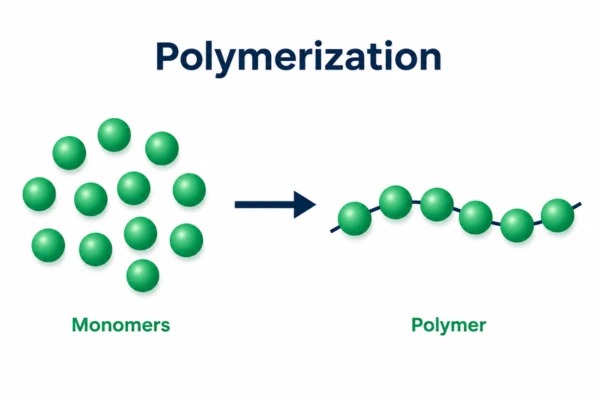
중합 is a chemical reaction in which one or more monomers combine to form high-molecular-weight polymers without producing low-molecular-weight by-products. Depending on the monomers involved, polymerization may produce either homopolymers (from a single monomer) or copolymers (from two or more different monomers).
Most polymerization reactions are irreversible chain or step-growth processes in which molecular weight increases rapidly during the reaction until the polymer reaches its desired characteristics.
Types of Polymerization
Polymerization can be classified in several ways depending on the reaction mechanism.
Based on the monomer composition:
- Homopolymerization – Polymerization of a single type of monomer.
- Copolymerization – Polymerization involving two or more different monomers to obtain materials with tailored properties.
Based on the reaction mechanism:
- Chain-Growth Polymerization – Polymer chains grow by successive addition of reactive monomers to an active center.
- Step-Growth Polymerization – Polymer molecules form through stepwise reactions between functional groups, gradually increasing molecular weight.
Different polymerization mechanisms are selected according to the desired polymer structure, product performance, and manufacturing process.
산업적 의의
Polymerization is one of the most important process technologies in the chemical industry, serving as the foundation for manufacturing numerous commercial polymers and specialty materials.
Industrial polymerization is widely applied in the production of:
- Plastics
- Synthetic fibers
- Elastomers
- Engineering polymers
- Coatings
- Adhesives
- Battery materials
- 특수 화학제품
Product properties such as molecular weight, molecular weight distribution, viscosity, mechanical strength, and thermal stability are all closely related to polymerization conditions.
엔지니어링 고려 사항
Successful polymerization requires precise control of multiple process variables throughout the reaction.
Engineers typically monitor:
- Reaction temperature
- 압력
- Monomer concentration
- 체류 시간
- Mixing efficiency
- Heat removal capability
- Conversion rate
Many polymerization reactions are highly exothermic. Without adequate temperature control, localized overheating may lead to reduced product quality, undesirable side reactions, or safety risks.
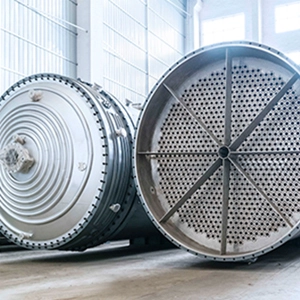
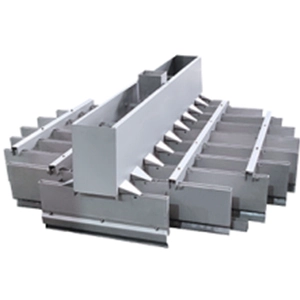
Continuous polymerization processes increasingly utilize continuous flow reactors, static mixers, 및 high-efficiency heat exchangers to improve temperature control, product consistency, and production efficiency. Selecting suitable reaction equipment is particularly important when processing high-viscosity polymer systems or rapidly reacting monomers.
관련 기술
Polymerization is frequently integrated with other chemical process technologies, including:
- 연속 흐름 반응기
- 정적 믹서
- 열교환기
- Process Intensification
- 체류 시간
- 열전달
These technologies work together to improve reaction control, energy efficiency, and scalability in modern polymer manufacturing.