التعريف
حمض البولي جليكوليكوليكوليك (PGA), also known as poly(hydroxyacetic acid), is a biodegradable aliphatic polyester produced from glycolic acid. Due to its excellent mechanical strength and hydrolytic degradability, PGA has become one of the most important bioabsorbable polymers used in medical and specialty material applications.
Among commercially available biodegradable polymers, PGA is recognized for its high crystallinity, strong tensile properties, and relatively rapid degradation behavior.
الخصائص الفيزيائية والكيميائية
PGA fibers possess several characteristics that make them suitable for demanding applications.
Typical properties include:
- Density: approximately 1.5–1.6 g/cm³
- Melting point: 224–226°C
- High tensile strength
- Good dimensional stability
- Biodegradable through hydrolysis
Unlike many conventional synthetic fibers, PGA is unstable in alkaline environments and gradually degrades when exposed to moisture. This hydrolytic behavior is a key feature that enables its use in absorbable medical products.
طرق الإنتاج
Industrial PGA production generally involves the polymerization of glycolic acid derivatives followed by purification and processing.
فيما يلي مسار إنتاج مبسط:
حمض الجليكوليكوليك
↓
Monomer Preparation
↓
البلمرة
↓
التنقية
↓
PGA Resin
↓
Fiber or Product Manufacturing
Product performance depends heavily on polymer molecular weight, crystallinity, purity, and processing conditions. Process control during polymerization and downstream purification plays a critical role in determining final material properties.
المزايا الصناعية
PGA offers several advantages compared with conventional polymers.
High Mechanical Strength
PGA exhibits higher strength than many biodegradable materials, making it suitable for applications that require temporary load-bearing capability.
Controlled Biodegradability
The polymer gradually degrades through hydrolysis, allowing materials to disappear after completing their intended function.
High Crystallinity
Its crystalline structure contributes to strength, thermal resistance, and dimensional stability.
التطبيقات الصناعية
Medical Sutures
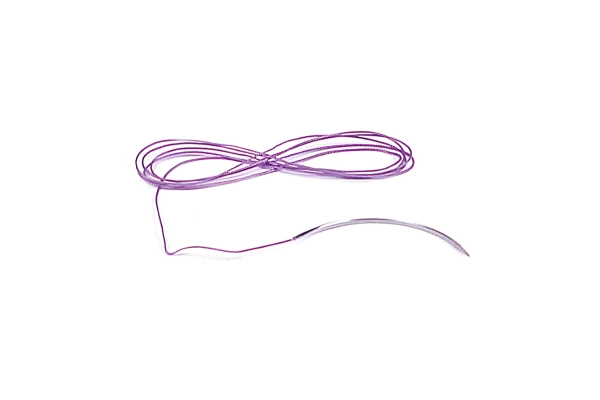
One of the most well-known uses of PGA is absorbable surgical sutures.
PGA fibers maintain sufficient strength during the early stages of wound healing. According to the reference material, tensile strength remains effective during the first 7–11 days after implantation. Over time, the material gradually degrades and is absorbed by the body, eliminating the need for suture removal.
Medical Devices
PGA is also used in:
- Absorbable implants
- Tissue engineering materials
- Drug delivery systems
- Bioabsorbable medical products
Specialty Materials
Beyond healthcare, PGA is increasingly being explored for high-performance biodegradable materials where strength and controlled degradation are important.
اعتبارات السلامة والمعالجة
For manufacturers, moisture control is a critical factor throughout PGA production and processing.
Because PGA is susceptible to hydrolysis, storage conditions, drying procedures, and processing temperatures must be carefully controlled to preserve polymer performance and molecular weight.
Process engineers often focus on:
- التحكم في الرطوبة
- Polymer purity
- Molecular weight control
- سلوك التبلور
- Thermal processing stability
These factors directly influence product quality and end-use performance.
المصطلحات ذات الصلة
- حمض الجليكوليكوليك
- البوليمرات القابلة للتحلل البيولوجي
- البلمرة
- Medical Sutures
- حمض متعدد اللبنيك (PLA)
- التبلور الذائب