أساسيات إنتاج خيوط PLA وإعداد خط الإنتاج
الطلب على مواد الطباعة القائمة على PLA يستمر هذا المجال في التوسع مع نمو تطبيقات النمذجة بالترسيب المنصهر. ويُعتمد اختيار المواد على الخصائص البيئية، واستقرار المعالجة، والكفاءة من حيث التكلفة.
بالنسبة للمصنعين، يتحدد قبول المنتج بناءً على مدى اتساقه وليس على المواصفات الاسمية.
تشمل التحديات النموذجية في مجال الإنتاج ما يلي:
- تقلب القطر بين الدفعات
- الشكل البيضاوي الناتج عن التبريد غير المتساوي
- الهشاشة الناتجة عن التدهور الناجم عن الرطوبة
- عدم الاستقرار في ضغط الذوبان والتدفق
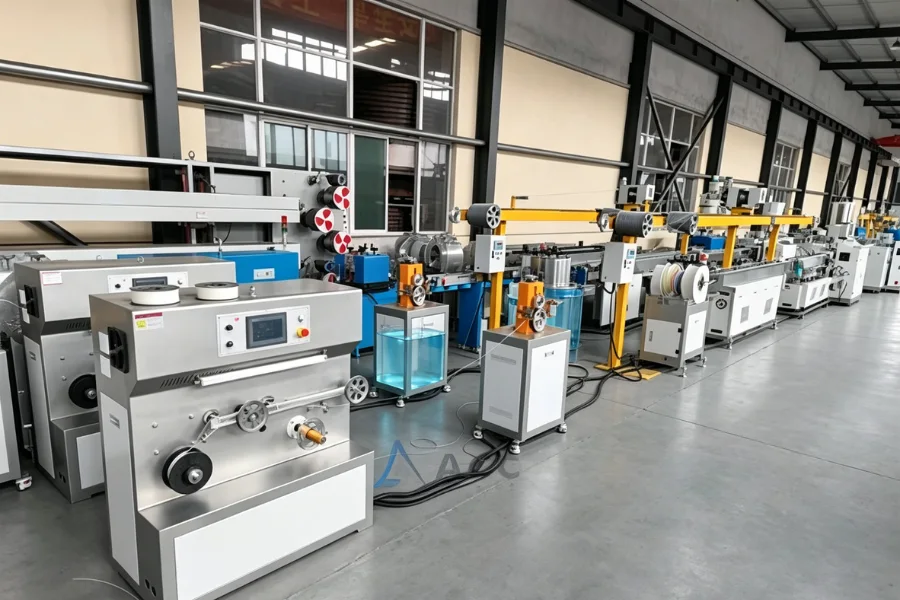
يتألف خط البثق الصناعي القياسي من:
- نظام البثق
- نظام التحكم الحراري
- نظام القياس والتغذية الراجعة المدمج
- نظام السحب واللف
- نظام التجفيف والتعبئة
يخضع الأداء لسلسلة عمليات متواصلة:
الرطوبة → جودة الذوبان → ثبات الضغط → التحكم في القطر → سلوك التبريد → الشكل الهندسي النهائي
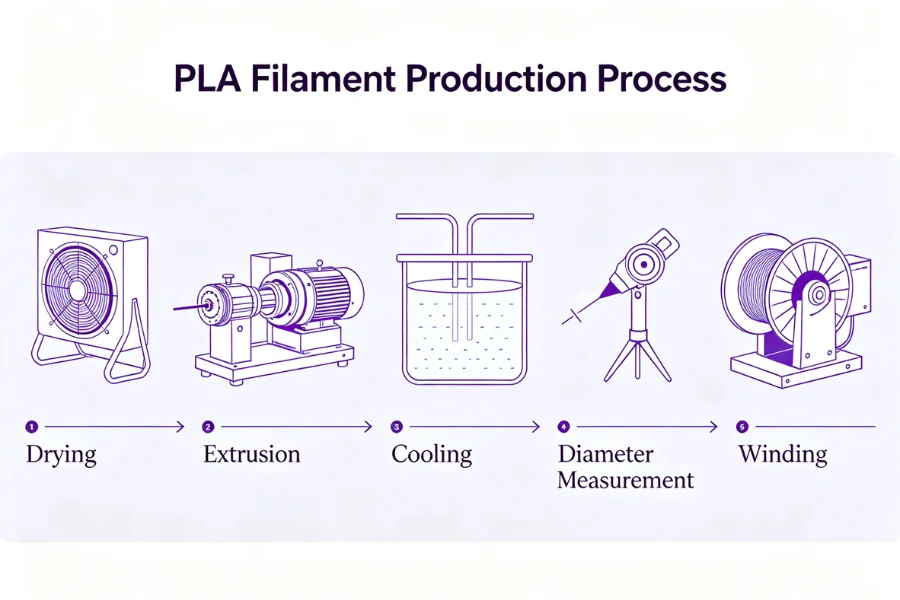
عملية تصنيع خيوط PLA ونقاط التحكم الرئيسية
تعمل عملية التصنيع هذه كنظام مستمر، حيث تؤثر كل معلمة على استقرار المراحل اللاحقة.
وتشمل العلاقات الرئيسية ما يلي:
- يؤثر محتوى الرطوبة على الوزن الجزيئي ولزوجة الذوبان
- يحدد ثبات الضغط اتساق الأبعاد
- يحدد معدل التبريد الإجهاد الداخلي ودرجة الاستدارة
- تؤثر سرعة السحب بشكل مباشر على قطر الخيط
ينتشر عدم الاستقرار في أي مرحلة عبر الخط ويظهر في شكل انحراف قابل للقياس في الناتج النهائي.
أنظمة البثق لإنتاج خيوط PLA
البثق أحادي اللولب
تُستخدم الوحدات أحادية اللولب عادةً لإنتاج المواد القياسية التي تحتوي على إضافات محدودة.
خصائص التشغيل:
- نطاق الإنتاج: 2–8 كجم/ساعة
- منحنى ضغط ثابت
- تكاليف أقل للمعدات والصيانة
القيود:
- قدرة محدودة على المزج
- غير مناسب للمواد المركبة أو المُملأة
البثق ثنائي اللولب
تُستخدم الأنظمة ثنائية اللولب عندما تتطلب التركيبة عملية الخلط.
المزايا:
- الخلط المتجانس للمواد المضافة
- القدرة على التغذية المستمرة
- مناسب لمخاليط المواد المتطورة
القيود:
- تذبذب المخرجات الناتج عن تفاعل المسمار اللولبي
- زيادة التعقيد في التحكم في الضغط
دمج مضخة الصهر
تعمل مضخة الذوبان المركبة بين آلة البثق والقالب على تثبيت تدفق المنتج.
الوظائف:
- يحول التدفق النبضي إلى تدفق ثابت
- يحافظ على ضغط ثابت عند القالب
- يقلل من تباين القطر بنسبة تزيد عن 50 في المائة
التكوين النموذجي:
- مواد قياسية → بثق أحادي اللولب مع تحكم حراري مستقر
- الخلائط المتطورة → البثق ثنائي اللولب المزود بمضخة ذوبان ونظام قياس ذي حلقة مغلقة
المعلمات الهندسية الرئيسية
يعتمد البثق عالي الجودة على:
- نسبة L/D لضمان ثبات زمن البقاء
- نسبة الضغط لتوليد الضغط
- التحكم في درجة الحرارة في مناطق متعددة على طول الأسطوانة
- معدل القص اللازم لتجنب تدهور البوليمر
تحدد هذه المعلمات مدى تجانس الذوبان وثبات الأبعاد.
المعدات المساعدة المستخدمة في خطوط إنتاج خيوط PLA
تحدد الوحدات المساعدة ما إذا كان الاستقرار النظري قد تحقق أثناء التشغيل.
نظام التحكم الحراري
يتضمن:
- معدات تجفيف الحبيبات
- خزانات التبريد ذات المرحلتين
- التحكم في درجة الحرارة بناءً على التدفق
نظام التحكم في الأبعاد
يتضمن:
- قياس القطر باستخدام الليزر
- التحكم التغذوي في وحدة التحكم المنطقية القابلة للبرمجة (PLC)
- ضبط السرعة والتدفق في الوقت الفعلي
نظام المناولة الميكانيكي
يتضمن:
- وحدة السحب
- نظام التحكم في التوتر
- معدات التخزين المؤقت
تعمل هذه الأنظمة كهيكل تحكم متكامل وليس كوحدات مستقلة.
تصميم نظام التبريد لضمان استقرار شكل الخيوط
تصميم التبريد ذو المرحلتين
تخرج المادة المبثوقة من القالب عند درجة حرارة تتراوح بين 170 و200 درجة مئوية تقريبًا. ويؤدي التلامس المباشر مع الماء البارد إلى:
- الانكماش السريع
- تكوّن الإجهاد الداخلي
- المقاطع العرضية غير الدائرية
يلزم اتباع عملية تبريد على مراحل:
- المرحلة الأولى – ماء دافئ بدرجة حرارة تتراوح بين 40 و60 درجة مئوية
- التصلب التدريجي
- التخلص من التوتر
- تثبيت الشكل
- المرحلة الثانية – ماء بارد بدرجة حرارة تتراوح بين 20 و25 درجة مئوية
- الانخفاض النهائي في درجة الحرارة
- التحضير لللف
المعلمات الرئيسية
- طول الخزان: 1–2 متر لكل مرحلة
- دقة التحكم في درجة الحرارة: ±1 درجة مئوية
- مدة البقاء: 2–4 ثوانٍ لكل مرحلة عند السرعات المعتادة للخط
الاعتبارات الهندسية
- توحيد التدفق يمنع حدوث التدرجات الحرارية
- يؤثر معدل التبريد على درجة التبلور والضغط الداخلي
- يؤثر تباين درجات الحرارة على الاستدارة والثبات
كيف تعمل أنظمة قياس القطر والتحكم فيه
قياس القطر بالليزر
تقوم أنظمة الليزر التي تعمل بدون تلامس بقياس قطر الخيط في الوقت الفعلي.
المكان المعتاد:
- بعد التبريد النهائي
- قبل اللف
قد تتضمن التكوينات المتقدمة أجهزة استشعار إضافية في اتجاه التدفق.
منطق التحكم في الحلقة المغلقة
يتم إرسال بيانات القياس إلى وحدة تحكم تقوم بضبط:
- سرعة الدوران
- معدل ضخ المادة المنصهرة
- سرعة السحب
التفاوت المسموح به المستهدف:
- ±0.02 مم للإنتاج القياسي بقطر 1.75 مم
اعتبارات التحكم
- يؤثر تأخير القياس على دقة الاستجابة
- يجب أن يتوافق ضبط التحكم مع سرعة الخط
- يعتمد الاستقرار على التزامن بين الأنظمة
إعدادات معالجة الخيوط ولفها
يجب معالجة المواد دون أن تتعرض للتشوه أثناء المراحل اللاحقة من التصنيع.
المتطلبات الأساسية:
- توتر منخفض ثابت، يتراوح عادةً بين 5 و10 نيوتن
- تزامن السرعة بين عملية البثق وعملية السحب
- لف متجانس دون تداخل
تشمل طرق المكافحة ما يلي:
- الأنظمة التي تعمل بمحركات مؤازرة
- آليات الأسطوانات العائمة
- اللف المتحكم فيه بالعزم
يتم اختيار أحجام البكرات بناءً على متطلبات الاستخدام النهائي.
تجفيف المواد والتحكم في الرطوبة في جيش التحرير الشعبي الصيني
هذه المادة ماصة للرطوبة وحساسة للرطوبة أثناء المعالجة.
متطلبات التجفيف
- يجب أن يظل محتوى الرطوبة أقل من 0.02 في المائة
- شروط التجفيف: 80 درجة مئوية لمدة 4–6 ساعات
- نقطة الندى: ≤ -40 درجة مئوية
يؤدي التجفيف غير الكافي إلى:
- تكوين الفقاعات
- التحلل الجزيئي
- انخفاض القوة الميكانيكية
متطلبات التغليف
فور الانتهاء من المعالجة:
- التغليف بالشفط أو التغليف بحاجز الألومنيوم
- إضافة مواد مجففة
- حماية اختيارية بالغاز الخامل
طريقة التخزين الموصى بها:
- درجة الحرارة: 15–25 درجة مئوية
- الرطوبة النسبية: أقل من 30 في المائة
معايير جودة خيوط PLA والمؤشرات الرئيسية
تتحدد الجودة النهائية من خلال معايير قابلة للقياس مرتبطة بالظروف في المراحل الأولية.
| النظام المتري | نطاق الهدف | العامل الرئيسي |
|---|---|---|
| تفاوت القطر | ±0.02 مم | استقرار الضغط |
| الاستدارة | ≤ 0.02 مم | توحيد التبريد |
| قوة الشد | 38–48 ميجا باسكال | سلامة البوليمر |
| الاستطالة عند الكسر | 40–60% | البنية الجزيئية |
| نسبة الرطوبة | < 0.02% | كفاءة التجفيف |
| مؤشر تدفق الذوبان | 5–10 غرام/10 دقائق | اتساق المواد |
يمكن إرجاع كل انحراف إلى متغير عملية محدد.
العيوب الشائعة في خيوط PLA وأسبابها
| عيب | السبب الجذري | التعديل |
|---|---|---|
| التقلبات الدورية في القطر | تذبذب الخرج | تركيب مضخة الصهر |
| التباين العشوائي | الرطوبة أو عدم استقرار التغذية | تحسين عمليات التجفيف والتغذية |
| مقطع عرضي بيضاوي الشكل | تبريد غير متساوٍ | تحسين التدفق ودرجة الحرارة |
| عيوب السطح | التلوث أو عدم الاستقرار الحراري | تحسين عملية الترشيح والتحكم |
| الهشاشة | تحلل البوليمرات | تقليل الرطوبة والقص |
يتطلب التصحيح الفعال ربط العيوب بأسبابها الجذرية.
كيفية تحسين استقرار إنتاج خيوط PLA
يعتمد الأداء على التوازن على مستوى النظام.
وتشمل المفاضلات الرئيسية ما يلي:
- السعة مقابل اتساق الأبعاد
- السعة التبريدية مقابل معدل البثق
- استجابة التحكم مقابل تأخير القياس
يركز التحسين على:
- الحفاظ على ضغط ذوبان ثابت
- مزامنة عملية السحب مع معدل إنتاج البثق
- ضمان الاتساق الحراري على طول الخط
يتم تحقيق استقرار الإنتاج من خلال التحكم المنسق بدلاً من التعديلات المنفصلة.
الخاتمة
يتم تحديد جودة تصنيع الخيوط من خلال استقرار النظام وليس من خلال أداء المعدات الفردية.
تعمل عمليات البثق والتبريد والقياس والمناولة والتجفيف كسلسلة عمليات متكاملة. وتنتشر التغيرات في درجة الحرارة أو الضغط أو الرطوبة عبر النظام وتؤثر على التفاوتات المسموح بها في الأبعاد والأداء الميكانيكي.
وينطبق نفس المنطق التحكمي على جميع صناعات المعالجة المتقدمة. فالإدارة الدقيقة للظروف الحرارية وظروف التدفق، كما يتضح في أنظمة التبلور، لها نفس الأهمية في التصنيع القائم على البثق.
دودجن يُطبق هذا النهج الموجه نحو العمليات على الأنظمة الصناعية التي تُعد الاتساق فيها عاملاً حاسماً في جودة المنتج. وبالنسبة للشركات المصنعة التي تخطط لتحديث خطوط الإنتاج أو تحسين التحكم في العمليات، فإن اتباع نهج تصميمي على مستوى النظام أمر ضروري لتحقيق إنتاج مستقر وقابل للتكرار على نطاق واسع.