التعريف
كربونات الإيثيلين (EC)، المعروفة أيضًا باسم 1,3-ديوكسولان-2-ون، هي مركب كربونات عضوي حلقي صيغته الجزيئية C₃H₄O₃. وهي مادة صلبة بلورية عديمة اللون في درجة حرارة الغرفة، وتذوب عند درجة حرارة أعلى قليلاً من درجة حرارة الغرفة لتشكل سائلًا شفافًا.
ويُستخدم على نطاق واسع كمذيب عالي القطبية ومكون رئيسي في الإلكتروليت في أنظمة بطاريات أيونات الليثيوم والتطبيقات الكهروكيميائية الأخرى.
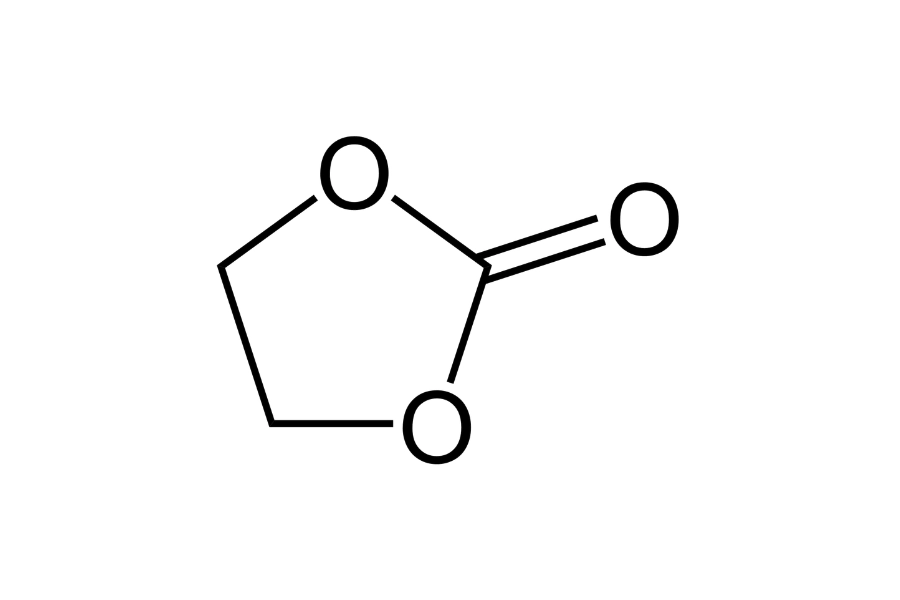
الخصائص الفيزيائية والكيميائية
تتميز كربونات الإيثيلين بقطبية قوية وقدرة ممتازة على إذابة الأملاح غير العضوية.
تشمل الخصائص الرئيسية ما يلي:
- الصيغة الجزيئية: C₃H₄O₃
- المظهر: مادة صلبة بلورية بيضاء (في درجة حرارة الغرفة)
- نقطة الانصهار: حوالي 35–38 درجة مئوية
- درجة الغليان: ~243–248 درجة مئوية
- الكثافة: ~1.32 غ/سم³ (في الحالة السائلة)
- ثابت عازل كهربائي مرتفع
- قدرة تذويب قوية لأملاح الليثيوم
نظراً لارتفاع قطبيته، يلعب EC دوراً حاسماً في تثبيت التوصيل الأيوني في أنظمة الإلكتروليت.
التطبيقات الصناعية
يُستخدم كربونات الإيثيلين في المقام الأول كمذيب وظيفي ومادة وسيطة في الأنظمة الكيميائية عالية الأداء.
وتشمل التطبيقات الرئيسية ما يلي:
- إلكتروليتات بطاريات الليثيوم-أيون (المكون المذيب الأساسي)
- أنظمة تخزين الطاقة الكهروكيميائية
- ملدن للبوليمرات والراتنجات
- مستوى متوسط في التخليق العضوي
- المواد المضافة المستخدمة في معالجة المنسوجات والألياف
- عمليات تنقية الغاز وفصله
في أنظمة البطاريات، يتم عادةً خلط EC مع الكربونات الخطية لتحقيق التوازن بين اللزوجة والتوصيلية وتكوين واجهة الإلكتروليت الصلب (SEI).
تكنولوجيا الإنتاج
يعتمد الإنتاج الصناعي لكربونات الإيثيلين عادةً على التفاعل بين أكسيد الإيثيلين وثاني أكسيد الكربون.
مسار العملية النموذجي:
- التفاعل التحفيزي لأكسيد الإيثيلين مع ثاني أكسيد الكربون
- عملية الإضافة الحلقية تحت الضغط العالي
- ظروف درجة الحرارة والضغط الخاضعة للتحكم
- التنقية عن طريق التقطير والتبلور
- إزالة المواد الوسيطة والمنتجات الثانوية التي لم تتفاعل
تُعتبر هذه العملية مثالاً تمثيليًّا لكيمياء استخدام الكربون في الأنظمة الصناعية الحديثة.
الاعتبارات الهندسية
من منظور هندسة العمليات، ينطوي إنتاج وتطبيق الكهرباء المولدة من الطاقة المتجددة (EC) على عدة عوامل حاسمة:
التحكم في رد الفعل
تتطلب تفاعلات تثبيت ثاني أكسيد الكربون تحكماً دقيقاً في درجة الحرارة والضغط ونشاط المُحفز للحفاظ على كفاءة التحويل.
متطلبات النقاء
يمكن أن تؤثر الشوائب بشكل كبير على أداء الإلكتروليت، لا سيما في تطبيقات بطاريات أيونات الليثيوم.
السلوك الحراري
تتميز مادة EC بدرجة انصهار مرتفعة نسبيًا، مما يتطلب استخدام أنظمة تسخين محكومة للتعامل معها ونقلها.
عمليات المصنع والمناولة
في البيئات الصناعية، يتم التعامل مع كربونات الإيثيلين عادةً كسائل منصهر في ظل ظروف درجة حرارة خاضعة للرقابة.
تشمل الاعتبارات التشغيلية ما يلي:
- أنظمة التخزين ذات التحكم في درجة الحرارة فوق نقطة الانصهار
- منع التصلب في خطوط الأنابيب
- التحكم في الرطوبة للحفاظ على استقرار المنتج
- تكامل نظام تنقية السائل الكهربائي (EC) المخصص للبطاريات
- أنظمة النقل المغلقة في مصانع إنتاج الإلكتروليت
في مجال إنتاج مواد البطاريات، يمكن حتى لأدنى قدر من التلوث أن يؤثر بشكل كبير على الأداء الكهروكيميائي.
المواد الكيميائية ذات الصلة
- أكسيد الإيثيلين (EO)
- كربونات ثنائي الميثيل (DMC)
- كربونات ثنائي الإيثيل (DEC)
- كربونات البروبيلين (PC)
- أملاح الليثيوم (LiPF₆،, LiFSI)